
How to Build an SEO Content Strategy in 2026 (Agency Guide)
If your content strategy is still rooted in “find a big keyword, create a 2,000-word article, and publish it,” it is already outdated in 2026.
SEO content strategy in 2026 focuses on building search ecosystems that promote understanding, discoverability, authority, and value – both for traditional search engines and emerging AI search platforms.

Google has emphasized that many traditional SEO practices continue to apply to Google AI-powered features, including AI Overviews and AI Mode, but AI search changes discoverability, comparison, research, and trust dynamics – fundamentally redefining content creation and management.
Your SEO content strategy for 2026 should be able to address how to create content that serves multiple discovery environments, not just rank for a single keyword.
In this post, I share our agency’s approach to SEO content strategy, including keyword research and prioritization, search intent, topic clusters, content production, internal linking, measurement, and management, that help get found in search, earn authority, and drive revenue in 2026.
Quick Answer: What Is an SEO Content Strategy in 2026?
An SEO content strategy in 2026 refers to the planning, creation, optimization, publishing, internal linking, measurement, and refresh cycle of content that is informed by business goals, audience, search volume and intent, topical authority, and search environment, including traditional search and AI search.
A good SEO content strategy in 2026 is informed by:
Business goals → audience → search volume and intent → topics → content → internal linking → authority → conversion
There is a growing emphasis on content that can appear and perform across multiple search environments, including:
- Google organic search results
- Google AI Overviews
- Google AI Mode
- Featured snippets
- People Also Ask
- Conversational and voice searches
- ChatGPT
- Gemini
- Perplexity, and other AI search platforms
However, Google’s guidance continues to stress the importance of traditional SEO practices for the AI era; there are no special technical factors that influence the ranking in AI Overviews or AI Mode.
So here is how I would define an SEO content strategy in 2026:
Create content that is excellent for users first, technically optimized, easily understood, and trusted enough to be cited.
Why SEO Content Strategy Changes in 2026
SEO content strategy used to be simple.
You identified keywords, did some competitor research, created an article, optimized it, added internal links, and waited for traffic.
This approach still works – but it has become increasingly insufficient in 2026 for several reasons.
First, search has become fragmented.
A user may look for an SEO platform on Google, ask ChatGPT for recommendations, compare products in AI Mode, watch a YouTube review video, read Reddit comments, and go back to Google before making a purchase decision.
Second, research shows that the presence and impact of AI search vary by interface, with certain types of content benefiting more from AI discovery than others – further complicating the visibility landscape.
There are four major forces that have changed the SEO content strategy in 2026.
1. Keywords are becoming topic systems
A keyword is good. But a keyword list is not a strategy.
A SaaS company wanting to target project management software cannot create 50 pieces of content about it and expect to rank for all of them.
Instead, we need to identify the topic clusters around project management software, including:
- project management software
- project management tools
- project planning
- project collaboration
- task management
- project tracking
- team workflows
- project management templates
- project management for remote teams
- project management for agencies
- project management reporting
And then decide what can be grouped on one page and what deserves its own content asset.
2. Search intent matters more than keywords
Two similar keywords may require completely different types of content.
An example includes SEO agency and how to choose an SEO agency.
While they may seem similar at first glance, the former has commercial intent, whereas the latter is informational and comparative.
So assuming that similar keywords equal similar content is a recipe for disaster.
3. AI changes content discovery
AI-driven search can summarize information, which means that your content should be discoverable and understandable by AI, at least at a basic level.
That means avoiding content that is optimized for humans but not machines.
So your content needs to have definitions, specifics, context, examples, recognizable entities, logical structure, evidence, and first-hand expertise.
4. Business goals determine content
A page with 20,000 impressions is great, but it does not mean that it is driving revenue.
If there is a page that only gets 500 impressions but delivers 10 qualified leads, it is arguably more valuable.
That is why your content strategy should focus on linking your content assets to your business goals.
The 9-Step SEO Content Strategy Framework for 2026
Step 1: Start With Business Goals, Not Keywords
Many people make the mistake of jumping into keyword research when developing an SEO content strategy.
They open up a keyword tool, find thousands of keywords, export them to Excel or CSV, and move on to the next step.
I propose the opposite: always start with your business.
Ask yourself or your client the following questions:
- What are we selling?
- Who is buying?
- Why are they searching?
- What products or services do we want to promote?
- What is our margin?
- Who is our most valuable customer?
- What does our sales team need?
- What topics influence their decisions?
- What marketplaces do we want to target?
For example, a B2B SaaS company that sells automation software needs to understand that the keyword automation has commercial intent, so creating content about automation is good, but focusing exclusively on the keyword automation is shortsighted.
We also want to target automation software for operations teams, workflow automation for SaaS, business automation, automated approval workflows, no-code workflow automation, and workflow automation ROI, among others.
A good content goal framework could look like this:
| Goal | Content’s purpose |
|---|---|
| Awareness | Introduce the problem or category |
| Consideration | Help users evaluate options |
| Conversion | Facilitate purchasing |
| Retention | Assist with product use |
Not every content piece needs to have a conversion goal, but it should have a purpose that aligns with your business objectives.
Step 2: Define the ICP and Customer Search Journey
Your ideal customer persona (ICP) should inform your keyword selection, topics, and even content formats.
Your ICP should affect your:
- Vocabulary
- Topics
- Use cases
- Pain points
- Buying criteria
- Content formats
- Funnel stages
The term SEO content strategy, for example, has different meanings to various people, including:
- A startup founder: How can I drive qualified organic traffic with limited resources?
- An SEO manager: How can I scale content creation while maintaining quality?
- An agency owner: How can I develop content strategies for multiple clients?
- An enterprise marketing leader: How can I align content with revenue generation?
A single keyword can represent vastly different opportunities for different audiences.
Define your target audience and the problems they want to solve.
I often like to outline the buyer’s journey, which usually follows this pattern:
Problem → Question → Research → Comparison → Decision → Action
Let’s take a cybersecurity software example:
Problem: We are receiving too many suspicious login attempts.
↓
Question: How does automatic threat detection work?
↓
Research: Best practices for threat detection
↓
Comparison: Threat detection solutions
↓
Decision: Threat detection platform X vs. Y
↓
Action: Schedule a demo
Step 3: Do an Audit of Your Existing Content Before Creating New Stuff
If I take on a new client tomorrow, the first thing I will do is audit their content.
A content audit helps you understand:
- Performance: Traffic, impressions, clicks, rankings, conversions
- Backlinks: Volume and quality
- Relevance: Topics, freshness, cannibalization, internal linking
- Audience: Intent, search queries
- Indexing: Page indexing issues
Once you understand what you have, you should classify your content into the following categories:
- Keep: Pages that perform well and meet your criteria.
- Improve: Articles that have potential.
- Consolidate: Pages with similar intent.
- Refresh: Content that requires updating.
- Expand: Pages that need more coverage.
- Remove: Content with no strategic value.
I think this is a more practical approach to content creation than publishing random articles and praying that they will rank.
After all, who would invest time and effort into writing an article that will languish on page three of search results?
You want to maximize your chances of success by choosing the right content to create or update.
Digehub’s 2026 SEO framework also prioritizes content audits, existing content improvement, internal linking, and strategic content creation over random publishing.
Step 4: Create a Keyword Universe Instead of a Keyword List
Keyword research is an essential SEO task, but it should be focused on demand identification rather than chasing volume.
So instead of asking, “What keywords can we target?” ask, “What search demand reflects the problems, questions, and decisions of our ideal customers?”
Start with your seed keywords or topics and use the following methods to expand your list:
- Google autocomplete suggestions
- Related searches
- People Also Ask
- Search Console
- Competitor research
- Keyword research tools
- Customer interviews
- Sales team feedback
- Support tickets
- Forums and communities
- AI-generated suggestions
Next, you need to classify your list according to several criteria, including:
- Topic
- Intent
- Funnel stage
- Business value
- Difficulty
Here is an example:
| Keyword | Intent | Funnel | Business value | Difficulty |
|---|---|---|---|---|
| SEO content strategy | Informational | Awareness | Medium | |
| SEO content strategy framework | Informational | Consideration | High | |
| SEO content strategy agency | Commercial | Consideration | Very high | |
| SEO content services | Commercial | Conversion | Very high | |
| hire SEO content agency | Transactional | Conversion | Very high |
This is arguably more informative than sorting keywords by search volume.
Step 5: Cluster Keywords by Search Intent
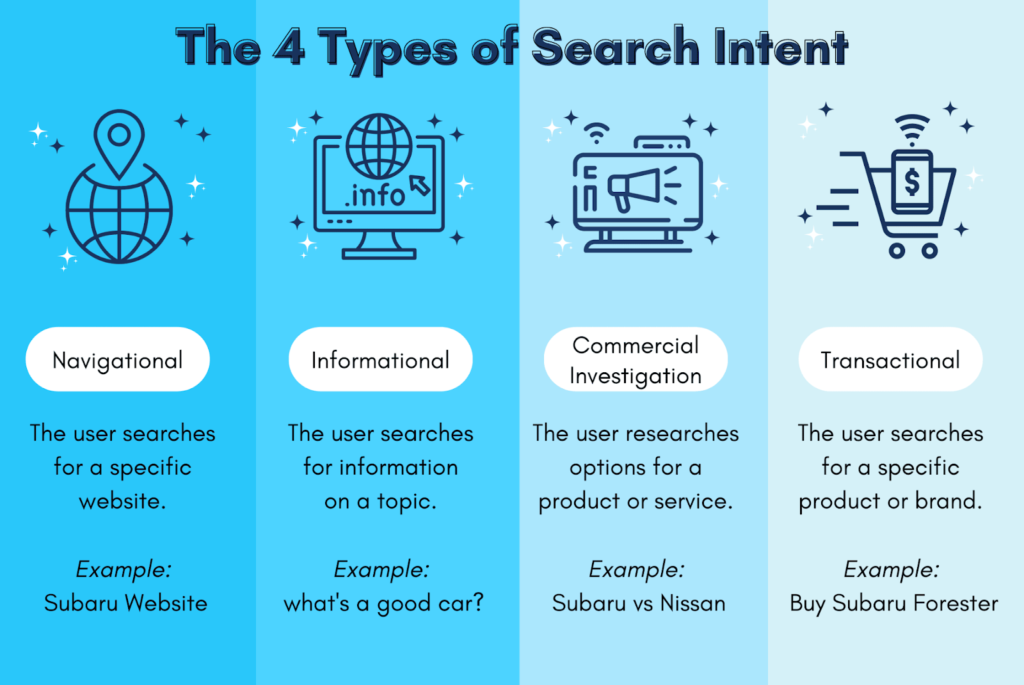
Keyword clustering is one of the most important aspects of SEO content planning.
The assumption that one keyword equals one article is flawed and can lead to the creation of hundreds of low-quality thin content pieces.
Instead, you need to group your keywords into clusters based on:
- Semantic similarity
- Search intent
- SERP similarity
- Your audience
- Business value
For example, the following keywords may be grouped together:
- SEO content strategy
- SEO content strategy framework
- SEO content strategy process
- SEO content planning strategy
However, there are also clusters around specific subtopics or audiences:
- SEO content strategy
- SEO content strategy template
- SEO content strategy for SaaS
- SEO content strategy pricing
- SEO content strategy agencies
You should also examine the SERP to see if Google is grouping similar content types for related queries.
If that is the case, you can likely cover multiple keywords with one piece of content.
On the other hand, if the SERP shows different content formats for similar queries, it may indicate varying levels of intent or audience needs.
My preferred keyword clustering approach combines semantic relationship, intent, SERP content similarity, your audience, and business value.
Never underestimate the value of a manual review.
Step 6: Build a Topical Map
Now that you understand your search universe, it is time to build a topical map.
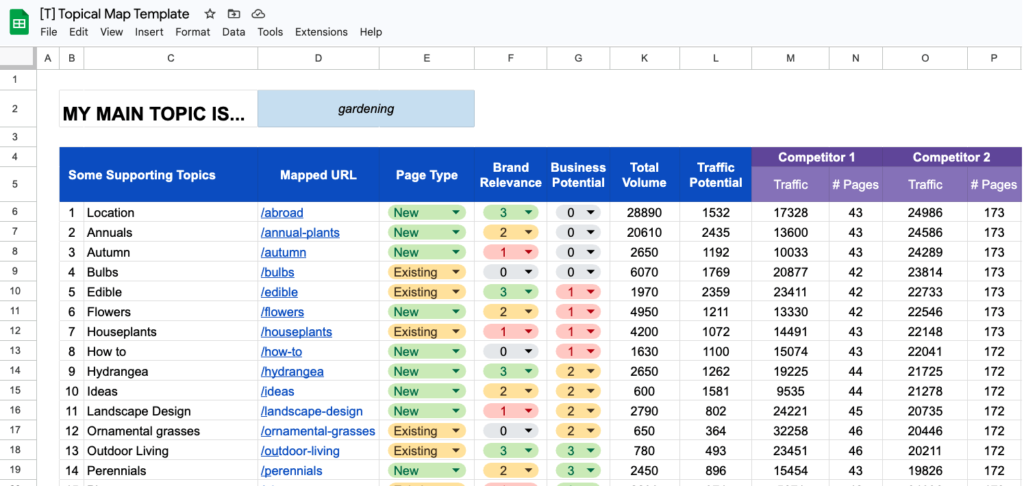
A topical map is essentially a hierarchical representation of your content, typically organized as:
Pillar topic → Core topics → Supporting topics
It may look something like this for the topic of SEO content strategy: For example:
Pillar
SEO Content Strategy
Cluster 1: Keyword Research
- keyword research
- keyword mapping
- search intent
- keyword clustering
- long-tail keywords
Cluster 2: Content Planning
- SEO content calendar
- content briefs
- editorial workflow
- content prioritization
Cluster 3: Content Architecture
- topic clusters
- pillar pages
- internal linking
- topical authority
Cluster 4: AI Search
- AI Overviews
- AI search optimization
- AEO
- GEO
- LLM visibility
Cluster 5: Measurement
- organic traffic
- rankings
- conversions
- content ROI
- content refreshes
This makes relationships clear.
The structure also serves your internal linking strategy, giving it a clear hierarchy and purpose.
Step 7: Prioritize Content by Opportunity, Not Volume
This is where I would disagree with a content calendar, and propose that you plan on publishing the high-opportunity, low-volume keyword first.
A better prioritization model reflects factors such as:
- Business value
- Search opportunity
- Ranking feasibility
- Topical importance
You can score each on a scale from 1 to 5, for a rough calculation of content opportunity:
| Content opportunity | Business value | Search opportunity | Feasibility | Priority |
|---|---|---|---|---|
| Commercial service guide | 5 | 4 | 4 | 80 |
| High-volume informational post | 2 | 5 | 2 | 20 |
| Supporting cluster page | 4 | 4 | 5 | 80 |
| Highly competitive head term | 5 | 5 | 1 | 25 |
The math is simple, but the concept is not simplistic. Search volume is not business value. A 500-volume keyword driving paying customers could be more valuable than a 20,000-volume keyword attracting students and irrelevant researchers.
Step 8: Better Content Briefs
A content brief should not just say something like, “write 2,000 words about SEO.” That’s a brief for a spammy post. A professional SEO content brief should include:
- Primary keyword
- Secondary keywords
- Search intent
- Target audience
- SERP analysis
- Content gap
- Required sections
- Internal linking
- External sources
- Conversion objective
- Differentiation
Notice this is not just a list of things to write about, but also considerations for who should read the page, what it should say, and what it should do. The final point is particularly important, where I think you should now begin to differentiate between the noise that competitors are generating and what your article should actually provide. In short: if there is little that your article does that the top 5 results don’t also say, you have created more content, not more value.
Step 9: Publish, Measure, Refresh
Your content strategy should not end when the article is published – in fact, you should only begin measuring from this point onward. Here are some suggested metrics to follow:
- Impressions
- Clicks
- Rankings
- CTR
- Conversions
- Assisted conversions
- Engagement
- Backlinks
- Internal-link performance
- Content decay
- New keyword visibility
- AI visibility where applicable
This leads to the next step: content audits and refreshes. Here is a suggested 0–3, 3–6, 6–12, and 12+ month refresh framework:
0–3 months:
- Indexing
- Impressions
- Early rankings
- Technical issues
3–6 months:
- Ranking movements
- CTR improvements
- Content gaps
- Internal-link value
6–12 months:
- Updating dated sections
- Improving weak areas
- Authority-building improvements
12+ years:
- Re-evaluating search intent
- Reassessing competitive landscape
- Valuing traffic and conversions
- Relevance to the business
SEO content is an investment, so treat it as one.
How to Make SEO Content Useful for AI Search in 2026
We’re getting to the truly interesting part of your strategy – what makes contentfit for purpose in a world with AI search.
Google’s guidance is refreshingly straightforward: fundamental SEO practices apply to AEO and GEO, too, but the presentation of information matters for AI systems, which aim to help users arrive at their own conclusions. To that end, here are five quick guidelines to make your content fit for discovery and digestion by AI:
1. Put direct answers near the top
If somebody asks what an SEO content strategy is, define it, don’t bury it in six paragraphs of unrelated text. Same goes for any other question your page is targeting. This also improves chances that the direct answer will be accurately extracted and displayed separately.
2. Use question-led subheadings
If your page has a section about SEO content strategy, make the subheading How Do You Build an SEO Content Strategy?instead of Strategic Considerations for Modern Content Development.
3. Strengthen entity relationships
Avoid vague notions of “tools that help you with rankings” and specify exactly what tools and how they are used, such as Google Search Console helping identify impressions with little engagement, thus informing improvements to titles, search intent, and content. Specificity will improve the relationships your page’s entities have with other entities.
4. Add first-hand expertise
This one is huge for agencies: avoid stating what anybody can state (“content should demonstrate expertise”) and aim to demonstrate expertise yourself, such as when discussing the findings of an audit: “when we look at the site, it becomes clear that the client’s issue stems from poor internal linking; ten articles on different subjects do not generate nearly the same topical authority as ten interlinked articles would.”
5. Build authority beyond your own site
GEO research has shown that AI systems often behave differently from traditional search and that Google favors first-party publishing and authoritative third-party mentions. Put another way, your site is an ecosystem unto itself, but it exists in the greater ecosystem of the internet. Aim to get discovered and referenced there, both to improve rankings and to get meaningful information out to users searching with AI tools.
For more nuance on what SEO, AEO, GEO, and LLMO mean and how they overlap, see Digehub SEO vs AEO vs GEO Guide.
How to Use AI in Your Content Strategy
Let’s turn to the tool that will make some of this much easier: AI.
However, it’s crucial to distinguish between what AI can do and what only humans can do. I would personally use AI for:
- Keyword expansion and clustering
- SERP analysis and summarization
- Content outlining and writing
- FAQ discovery and suggestion
- Content comparisons to competitors
- Internal-link suggestions and implementation
- Content-gap analysis and suggestions
- First-draft writing and updates
- Meta description variations
And leave these tasks to humans:
- Strategic positioning and considerations
- Fact-checking, firsthand research, and information-gain opportunities
- Unique insights, observations, and expertise
- Voice, tone, and brand-building elements
- Review, fact-checking, and final editing of AI-generated text
These considerations are critical because Google has stated that the value of AI-generated content will diminish in the short term, as spammers will use it to create thin content at scale. In other words, if everyone has a robot writing 3,000-word blog posts, the real value will come from what those posts actually say, not the 3,000 words themselves.
The Digehub AI SEO Blog Writing Tool can help you generate content and optimize it, but it should go through a thorough review and editing process by humans before being published, with considerations for the factors listed above.
The Agency Content Workflow I Recommend
If you are managing SEO for clients, you will need a repeatable process. Here’s my personal recommendation, which involves a 30-day cycle:
Week 1: Research
- Business discovery
- ICP research
- Competitor research
- Content audit
- Keyword research
- Search Console analysis
- Search intent classification
Deliverables:
Keyword universe, content audit, opportunity map
Week 2: Strategy
- Topic clusters
- Pillar pages
- Supporting pages
- Keyword mapping
- Content prioritization
- Internal linking structure
- Content calendar
Deliverables:
90-day content roadmap
Week 3: Production
- Content briefs
- First drafts
- Expert input
- Visuals
- Internal linking
- Metadata
- Schema markup, where applicable
Deliverables:
Publication-ready content
Week 4: Launch + measurement
- Indexing check
- Technical SEO
- Internal links
- Search Console setup
- Analytics setup
- Conversions and assisted conversions
- Rankings and visibility
- AI visibility, where applicable
Deliverables:
Visibility report, content performance, baseline launch metrics
Then, of course, you begin the cycle anew and use the metrics from the previous month to refine the current month’s strategy. That’s how you begin to leverage first-party data to improve your SEO content strategy over time.
SEO Content Strategy 90-Day Example
Let’s say that your business is a B2B SaaS company that wants to drive more qualified organic leads. Instead of launching into a generic content marketing campaign, I would begin the 90-day strategy with this content plan:
Month 1
Pillar: Complete guide to workflow automation
Supporting content:
- What is workflow automation
- Workflow automation examples
- Workflow automation benefits
- Manual vs automated workflows
- Workflow automation for small businesses
Month 2
Commercial cluster: Best workflow automation software
- Workflow automation platforms
- Workflow automation tools
- Workflow automation software comparison
- How to choose the best software
Month 3
Bottom-funnel cluster: [Product] vs [Competitor]
- [Product] alternatives
- Workflow automation pricing
- Workflow automation ROI calculator
- Implementation guide for [Product]
Now your blog is primed to support first-party lead-generation efforts by guiding prospects from broad informational topics through narrowing commercial topics to landing pages or gated assets. In the meantime, the interstitial pages help with on-page SEO and internal linking. That, to me, is a strategy.
Common SEO Content Strategy Mistakes
Mistake 1: Prioritizing search volume over business value
High-volume keywords should be evaluated on a case-by-case basis, but in general, always consider your business goals, intent, competition, and conversion potential.
Mistake 2: Planning one page per keyword
This is a dangerous SEO scalability model that sees content marketers wasting time and resources on keyword cannibalization and maintenance.
Mistake 3: Copying competitors
Researching competitors is essential, but copying them will get you punished in both traditional and AI search.
Mistake 4: Finishing the work with AI
AI tools can generate spammy content with little information value, so always consider your first-party expertise and review processes.
Mistake 5: Overlooking existing content
Sometimes the most valuable opportunity is right in front of you – before launching into new content, always consider an existing content audit.
Mistake 6: Measuring rankings without tying them to business outcomes
Rankings are vanity metrics if your content does not contribute to leads, sales, assisted conversions, or other business metrics.
Mistake 7: Publishing content with no internal links
A content silo not only hurts discoverability but also topical authority and SEO performance in general.
Mistake 8: Trying to replace SEO with AI visibility
Another growing mistake, fueled by misinformation, is attempting to retrofit traditional SEO to AI visibility, whereas Google has stated that its fundamental SEO guidelines still apply to AEO and GEO.
Expert Advice: The Best Content Strategy Is Usually Smaller Than You Think
People seem to forget that content marketing is an investment, not an expense. I have heard so many consultants and agencies claim to need to publish thousands of words yearly without analyzing their existing content, audiences, or opportunities for topical authority.
It makes me wonder why they are investing so much in quantity over quality. Yes, I think you should publish frequently, but if your daily content is not improving your topical authority in the eyes of Google and your audience, you are wasting resources. This is where an on-page SEO audit becomes critically important.
In addition, I think the entire content marketing space has gotten too obsessed with volume at the expense of information value. “Publish 20 articles per month.” “Publish 50 articles per month.”Publish every day!”
I would say, if your content architecture is unhealthy, it’s better to build links to ten well-structured, comprehensive pieces of content than it is to publish fifty articles that nobody reads, because the former can serve as pillars supporting dozens of other pieces of content.
This is why I think it’s so important to ask, not how much content you can publish, but how much value you can capture with the resources you have allocated to content creation. It is possible that you can update five pieces of content, build one pillar, and publish eight articles, all while earning some links and mentions, rather than trying to publish 40 generic articles that will get little traffic and no links.
My current SEO guidelines happen to value information gain and topical authority, and my current advice focuses on making your content as useful and informative as possible rather than simply longer.
What Will Change Next? SEO Content Strategy Predictions for the Next Few Years
SEO content strategies will become increasingly connected to AI discovery in the next few years. Here are my predictions for the next 12–24 months:
1. Conversational search will become even more prevalent
This means that discoverability will become increasingly dependent on your content architecture and that you will need to optimize for both long-tail questions as well as broad, conversational prompts.
2. Content performance will be measured across multiple surfaces
Google rankings will continue to matter, but brands will begin to pay more attention to AI Overviews, AI Mode, ChatGPT, Gemini, Perplexity, voice assistants, and social platforms for traffic, visibility, and mentions.
3. First-party expertise will be rewarded
The more that generic long-tail content becomes automated, the more value real-world research, experimentation, customer interviews, examples, screenshots, and commentary from experts will provide.
4. Content operations will become more automated
AI tools will play a bigger role in research, clustering, brief writing, production, optimization, and measurement, and the competitive advantage will shift to organizations that have invested in their content operations.
5. Brand authority will be strategically prioritized
The next frontier of SEO will be about how the web evaluates your brand in terms of who you are, what you know, and what you offer in a holistic manner – and that will make content, SEO, digital PR, entity optimization, and AI visibility increasingly interconnected.
How to Turn Your SEO Content Strategy Into a Growth Engine
A mature content strategy should create a flywheel: increased content quality and volume lead to increased visibility, which drives traffic, which ultimately builds brand recognition, links, and mentions, which strengthen topical authority and visibility.
SEO content should begin to feel less like publishing and more like acquiring users, and that acquisition process should be turned into a continuous flywheel of improvement. However, it all must begin with strategic planning and consideration of how content fits into the overall picture.
If you are a company that knows what it wants to publish but lacks the infrastructure and expertise to execute on large-scale SEO content production, Digehub SEO Services can help you build a comprehensive acquisition strategy that covers traditional SEO, AI visibility, and more.
Meanwhile, if you work at an agency and need to help clients improve their presence inside AI search, Digehub’s AI Visibility Services are designed to help you identify opportunities for mentions, citations, and strategic publishing.
Frequently Asked Questions About SEO Content Strategy
A scalable strategy uses standardized processes for auditing, keyword research, intent mapping, topic clustering, prioritization, briefing, production, QA, publishing, reporting, and content refreshes. Templates and automation can improve efficiency, but each client’s strategy should still reflect its audience, competitive environment, and business goals.
Use AI for research assistance, keyword expansion, clustering, outlining, content-gap analysis, internal-link suggestions, and optimization. Human experts should remain responsible for strategy, fact checking, original insights, expertise, brand voice, and final editorial approval.
Measure qualified organic traffic, conversions, assisted conversions, revenue contribution, CTR, impressions, ranking distribution, engagement, backlinks, content decay, and visibility across relevant search experiences. The appropriate metrics depend on the client’s business objectives.
Maintain a centralized keyword and topic map, assign a primary intent to every important URL, review existing rankings before creating new pages, and consolidate overlapping content when multiple URLs compete for substantially the same search intent.
First-hand experience can differentiate content from generic summaries. Agencies can incorporate original observations, client insights, experiments, examples, screenshots, proprietary data, and expert commentary to demonstrate knowledge that is difficult for competitors to reproduce.
Start with strong technical SEO and helpful content, then make important information clear, well structured, factually accurate, and supported by credible sources and expertise. AI optimization should complement traditional SEO rather than replace it.
Topical authority comes from demonstrating meaningful coverage of a subject through closely related, useful content. A strong strategy connects pillar and supporting pages through logical internal links while covering the questions and subtopics relevant to the target audience.
Score each opportunity using factors such as business value, search demand, ranking feasibility, topical importance, existing authority, and conversion potential. This creates a prioritized roadmap instead of an arbitrary publishing calendar.
Group keywords together when they share the same search intent and produce substantially similar SERPs. Create separate pages when the queries represent different audiences, goals, content formats, or clearly different search results.
The best strategy does not prioritize keywords by search volume alone. Evaluate search intent, commercial relevance, ranking difficulty, topical importance, conversion potential, and the value of the audience before assigning content priority.
Final Takeaways on SEO Content Strategy in 2026
The best SEO content strategy in 2026 is often not about quantity, but about the quality of your content discovery, organization, planning, and production. You must value information gain, build your topical authority, produce useful content, and refresh it regularly.
At a deeper level, your strategy should reflect a holistic understanding of how your content fits into the greater media and information economy, where your expertise is valuable and where your target customers are searching. After all, AI has made it much easier to create content, so strategic thinking is more valuable than ever.
The next frontier of SEO content strategy is not about writing more articles – it is about writing articles that matter, that represent you and your expertise accurately, and that provide real value to your customers.
This is what the entire SEO content strategy process should be about. If you want to learn more about SEO beyond content, see Digehub SEO Best Practices for 2026. If you need to scale your content production while still adhering to SEO strategy, try Digehub’s SEO Blog Writing Tool.
And if you want to turn your content strategy into a content acquisition and visibility strategy rather than a content production strategy, consider Digehub SEO Services.
