
What Is SEO in 2026? The Complete Guide for Digital Marketers
Back in 2026, search engine optimization runs nothing like the old playbook marketers once studied – change is obvious. From where I stand, watching results roll in worldwide, one thing stands out: strategies now bend differently, particularly for software firms, online stores, plus local services aiming at tough regions such as America or Britain.
Finding things online has shifted far beyond Google listing webpages one after another. Now it mixes smart responses made by machines, grasping real-world people and objects, guessing what users really mean, along with appearing across many different platforms at once.
Still stuck on outdated SEO tricks, most sites fail to grow. Publishing often doesn’t help because their approach misses what works now.
What matters most isn’t how much content exists. The problem lies in mismatched search results.
Picture this. What SEO stands for in 2026 isn’t what it was five years ago. Think deeper than keywords. Ranking leans on live behavior signals more now. Since tools like Google SGE stepped in, results shift faster. Machines shape relevance, not just links. Big companies can’t rely on old playbooks. Adjustments matter, especially when traffic swings without warning. Staying seen takes constant testing. Growth hides in small tweaks most ignore.
Clear thinking only. Real search trends shape every move. Simple truths guide the way.
Quick Answer
Out there in 2026, SEO shapes how pages, brands, and site layouts appear when AI searches dig through them. Instead of just chasing clicks, it lines up content with smart systems such as Google SGE. Visibility now twists beyond old-style rankings into voice tools and chat-based queries.
Structure matters more because machines parse meaning fast. Brand presence isn’t built on keywords alone – it leans on clear signals across digital spaces. Even navigation paths influence whether a page surfaces in answers. Not everything shows up the way it used to; context steers the outcome.
Modern SEO differs from earlier models
- Semantic search intent
- Entity-based optimization
- AI-generated search results
- User experience signals
- Topical authority across content ecosystems
Think of it like this: by 2026, showing up first means less. What matters more is being seen as reliable within smart search engines that learn. Instead of chasing clicks, focus shifts toward earning digital trust where answers are built behind scenes. Machines start deciding who knows best – so credibility becomes invisible fuel. The game changes slowly, yet completely.
Key Takeaways
-
SEO in 2026 is no longer just about keywords and rankings — it is about visibility across AI-powered search experiences.
-
Google AI Overviews, ChatGPT, Perplexity, and Gemini are changing how users discover information online.
-
Entity SEO, topical authority, and user intent have become more important than keyword density.
-
Modern SEO requires a combination of technical optimization, content quality, E-E-A-T, and AI visibility strategies.
-
Businesses that optimize for both traditional search engines and AI answer engines gain a significant competitive advantage.
-
Content must be structured for humans, search engines, and AI systems simultaneously.
-
The future of SEO belongs to brands that build authority, trust, and comprehensive topic coverage.
Table of Contents
- What Is SEO in 2026?
- How SEO Has Changed in the AI Era
- How Search Engines Work in 2026
- The Core Types of SEO Explained
- Key SEO Ranking Factors in 2026
- The Impact of AI on Modern SEO
- A Step-by-Step SEO Strategy for Digital Marketers
- Common SEO Mistakes to Avoid
- SEO Tools and Technologies Shaping 2026
- Real-World SEO Use Cases and Examples
- The Future of SEO Beyond 2026
- Frequently Asked Questions About SEO in 2026
- Final Thoughts and Next Steps for Marketers
The Real Meaning Of SEO In 2026
Looking at sites now, one thing stands out. The majority believe SEO means this
- Keywords
- Backlinks
- On-page optimization
Yet come 2026, search engine visibility evolved into something more complex. Layers stack beyond simple keywords now. Each level connects differently to user intent. Algorithms interpret context with sharper precision. Signals multiply across devices and behaviors. Old rules fade under new patterns. What worked before barely fits today’s framework.
Modern SEO includes:
1. Entity Optimization
Now it’s about real things, not just words typed into search. Google sees brands like actual objects, almost alive. People show up as clear identities, not vague mentions. Tools get recognized for what they do, not just their names. Topics link together through meaning, held by invisible threads.
2. AI Search Integration
Google SGE and AI assistants summarize content instead of just listing links.
3. Intent Prediction
Next up, guesses shape search results more than keywords alone. What you might need comes before you ask. Predictions step in where typing ends. Instead of only matching queries, systems now guess ahead. Not limited to entered phrases anymore. Looking past the last keystroke matters most. Assumptions guide suggestions just as much as words do.
4. Cross-Platform Visibility
SEO now includes visibility on:
- YouTube
- AI tools like ChatGPT Perplexity and Gemini
- Social search platforms
Here’s the thing about SEO in digital marketing by 2026 – ranking high on Google isn’t the full picture anymore. Instead, it’s showing up where people actually look, whether they type or talk their queries.
SEO in 2026 simplified
To get how SEO works these days, here’s my way of seeing it – split into something straightforward
Input Layer
- Keywords
- User queries
- Voice search
- AI prompts
Processing Layer
- Google AI understands what users mean
- Entity recognition systems map meaning
- Content is evaluated for trust and relevance
Output Layer
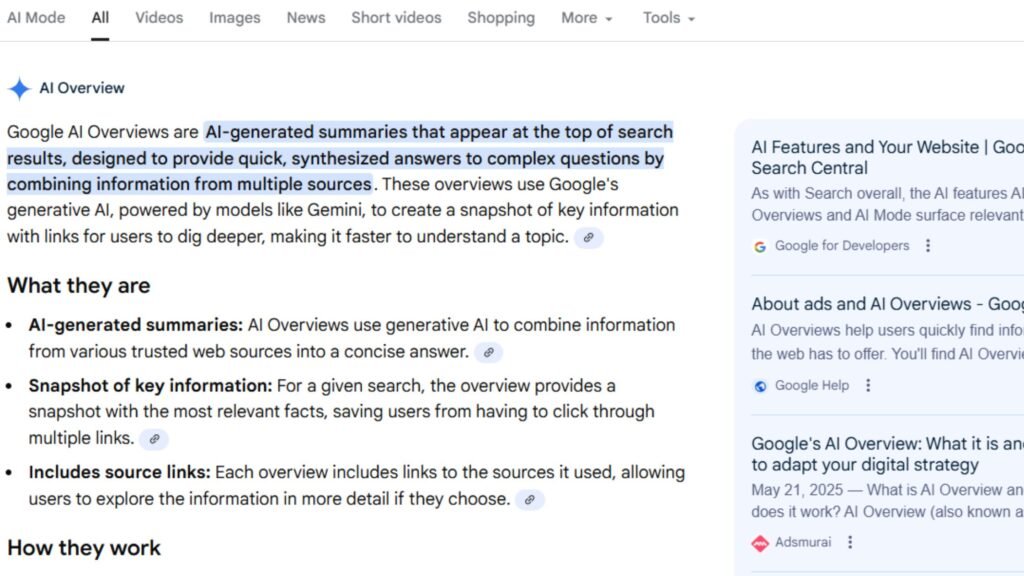
- AI-generated summaries (SGE)
- Traditional SERP links
- Featured snippets
- Video and social results
Ranking now stretches beyond a single line of thought.
Winning isn’t about ranking on one webpage anymore. Getting into AI responses is the real challenge now.
Big SEO Shifts Coming in 2026
Here is the truth on shifts that happened.
1. Google SGE Changes How Visibility Works
Right off the bat, Search Generative Experience gives responses on the spot for plenty of questions. Sometimes it just knows what you need without making you click around.
This means:
- Fewer clicks to websites
- Higher importance of being cited in AI answers
- Stronger need for authoritative content
Without clear structure, machines skip right past your words. When meaning hides behind messy layouts, artificial readers move on without a pause. Hidden patterns lose attention before the first line ends. Unseen logic means zero recognition by smart systems scanning online. Shape matters more than effort when bots decide what counts.
2. Keywords Alone Don’t Work
Ranking by 2026 won’t come just from loading pages with keywords, nor from placing them perfectly. Instead, results depend on how well content connects with what people actually search for.
Instead, Google evaluates:
- Topic depth
- Semantic coverage
- Content credibility
- Supporting entities
Figuring out what SEO means in digital marketing by 2026 isn’t just one idea stacked on another – it unfolds differently depending on who you ask. Instead of echoing the same lines, peeling back layers reveals shifting priorities, evolving tools, sometimes even contradictions. Each perspective adds weight without copying the last. Seeing it this way keeps things from sounding like a broken record.
3. Authority Beats Volume
One blog after another means little if trust isn’t built. A handful of powerful pieces, carefully crafted, tend to stick better in people’s minds. Depth often beats repetition when expertise shows. Thin content spreads fast but fades faster. Substance lingers even when shared less. Ten strong posts can outweigh fifty shallow ones simply by standing firm.
Authority is built through:
- Internal linking strategy
- External references
- Consistent topical coverage
- Brand mentions
4. AI Content Filtering Exists
Finding things is what AI does today
- Generic content
- Low-value rewriting
- Surface-level explanations
Survival in tough search rankings demands substance – thin material fades fast. When depth goes missing, pages vanish without a trace. Only ideas with weight hold ground where results fight for attention. Weak content crumbles under pressure from better alternatives. What offers little value gets pushed aside, quietly replaced.
SEO ranking factors 2026
Based on current global SEO patterns, these are the dominant ranking factors:
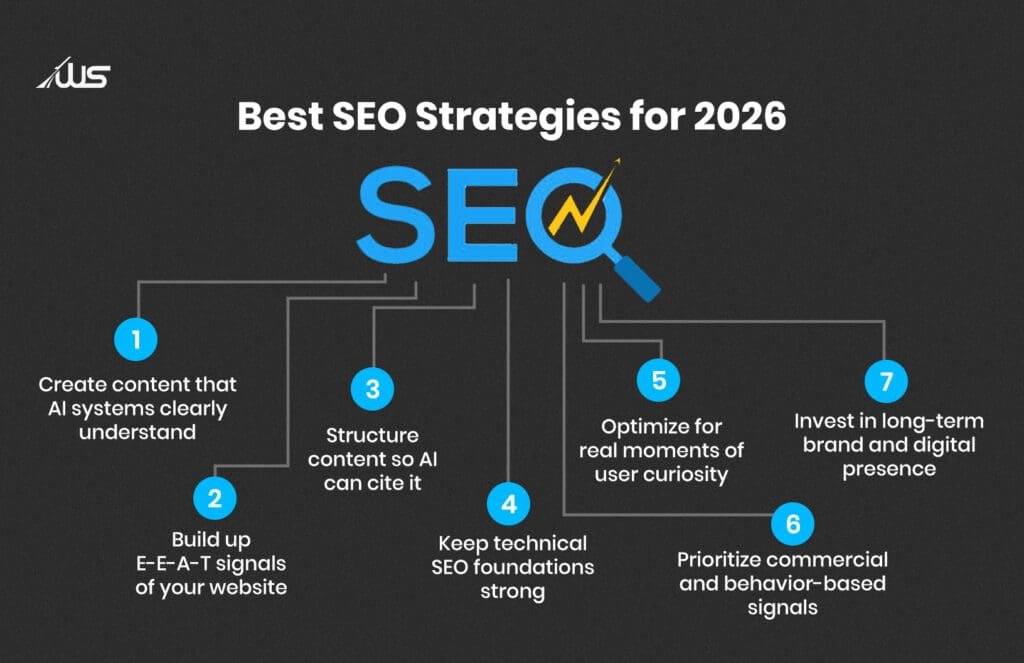
1. Entity Strength
What stands out to search engines? Your brand showing up like a known entity. Recognition matters when machines decide relevance. Think of it as being seen, not just heard. Machines notice if people treat your name as real. Familiarity shapes digital visibility. Not every mention counts – only the ones that stick
2. Content Depth
Not word count, but conceptual completeness.
3. User Engagement Signals
- Time on page
- Scroll depth
- Return visits
4. Topical Authority
Going deep into a single area rather than skimming several. Focusing fully on one thing beats spreading effort thin across many. A narrow path can reveal more than wide trails ever show.
5. AI Readability
Content must be structured so AI systems can extract clean answers.
6. Trust Signals (E-E-A-T)
- Experience
- Expertise
- Authority
- Trust
Practical SEO Approaches for 2026
Out of habit, I stick to a hands-on method while shaping SEO plans for international customers.
Build Topic Ecosystems
Instead of writing random blogs, build clusters.
Example:
- SEO fundamentals
- AI SEO
- Technical SEO
- Content strategy
- SEO tools
- Good hosting plan (you may use Hostinger for this)
One group helps another move forward. Another way keeps things linked together. This connection runs both ways at once.
Optimize for AI Search Before Anything Else
Before publishing, ask:
- AI Summarizing This Accurately?
- Follow-up questions – does it handle those well?
- Clear definitions – do they appear here?
Without that, performance in SGE won’t happen.
You may use modern AI SEO tools for this including Semrush & Ahrefs. You don’t need both, you can choose one tool that fulfills your needs more accurately between Semrush vs Ahrefs.
Focus on intent instead of keywords
Every keyword represents a problem.
Example:
“what is SEO in 2026”
User intent:
Understand modern SEO
Learn changes
Apply strategies
Your stuff has got to handle every one of those three things, nothing less.
You can use modern SEO tools like Semrush & Ahrefs to optimize your content for AI. Although choosing seo & ai seo tools depends on your specific needs.
Traditional vs Modern SEO
| Traditional Keyword-Focused SEO | Modern Intent-Focused SEO (2026) |
|---|---|
| Targets exact keyword phrases | Targets the user’s underlying goal |
| Measures keyword density | Measures topic completeness |
| Creates one page per keyword | Creates content hubs around topics |
| Focuses on rankings alone | Focuses on solving user problems |
| Optimizes for search engines | Optimizes for users and AI systems |
| Relies heavily on exact-match terms | Uses semantic and contextual relevance |
| Prioritizes traffic volume | Prioritizes qualified traffic and conversions |
| Often produces repetitive content | Produces comprehensive, helpful content |
| Keyword variations require separate pages | Multiple related queries can rank from one authoritative page |
| Success = Higher rankings | Success = Visibility, engagement, and business outcomes |
Build seo across formats
Modern SEO includes:
- Blog content
- Video content
- Short-form content
- AI-visible structured content
- Improve Connections Between Pages
Even now, few people notice how powerful this ranking cue really is.
Internal links help Google understand site structure
“This website understands its topic deeply.”
Start digging into extra methods through Digehub’s collection of tools and step-by-step walkthroughs covering digital promotion setups. While you’re at it, fresh ideas pop up in their material on online outreach frameworks.
Common SEO Errors in 2026
Writing for Keywords Not People
This leads to shallow content that fails to engage real readers or satisfy search intent.
Ignoring AI Search
Most websites focus solely on classic Google rankings instead of optimizing for newer AI-powered search formats.
Publishing Without Structure
Content without clear hierarchy or topical structure loses authority. No clear lead means no clear signal to search engines.
Overusing AI Content Without Editing
Unedited AI-generated text is increasingly detected and filtered before it reaches real audiences.
Weak Brand Signals
No consistent identity across platforms weakens trust signals that both users and AI systems rely on.
The Shift That Changes Everything
SEO in 2026 is no longer just about page rankings — it is about trust within AI systems. Authority now matters more than visibility. Credibility decides who gets seen, not just who ranks.
Most businesses are fading from AI search results without even realizing it. The fix is not a single post or a burst of activity — it is consistent, structured content built over time. Think of it like tending a garden: regular care always beats occasional effort.
SEO Future 2026 Onward: What Is SEO 2026 Becoming?
Out there, SEO’s path splits into three distinct lanes. One leans heavily on how people actually search. Another builds around trust signals that feel real. The third thrives where content meets context in surprising ways. Understanding what is SEO 2026 means looking at how these changes reshape visibility online.
1. AI-First Search Ecosystems
Finding things online might shift toward instant replies instead of page listings. Answers could show up right away, skipping the need to click through sites. This shift is becoming a major part of what is SEO 2026 and how search visibility is earned.
2. Predictive Search Results
Users will receive answers before fully forming queries. As search engines anticipate intent, what is SEO 2026 becomes less about keywords alone and more about understanding user needs before they are explicitly expressed.
3. Zero-Click Dominance
Search engines keep pulling more visits their way instead of sending users off elsewhere.
This means:
What you see often counts more than what gets clicked.
Visibility today doesn’t wait for someone to visit a site. A name shows up in searches, tags, shares – without clicking through. Presence spreads outside owned pages. Recognition builds in moments people aren’t even looking. Attention arrives before arrival. That’s increasingly becoming the reality of what is SEO 2026.
How SEO Works in Practice Today
Now it’s about more than showing up in search results. One step at a time, visibility shifts beyond simple terms. Reaching users means moving past old tactics. Standing out happens through deeper signals. Effort spreads across touchpoints, not just queries. Visibility builds where attention lives now. For anyone asking what is SEO 2026, this broader approach defines the answer.
They must:
- Show up in AI summaries
- Be cited as a trusted tool
- Have structured feature content
- Stay visible when people compare options
When performance slips in a single spot, what’s seen takes a sharp dip.
What Is SEO 2026? The Optional Growth Layer with AI and Automation
What stands out most with teams worldwide? Automated processes now shape how they handle SEO tasks.
Instead of manual research, teams now use AI systems to:
- Generate content briefs
- Cluster keywords
- Analyze SERPs
- Identify gaps
Here’s when artificial intelligence blends into search engine optimization systems. For many marketers, this evolving relationship between AI and optimization is exactly what SEO 2026 looks like in practice.
Explore:
Frequently Asked Questions About SEO and AI
Businesses should shift toward:
- Building topic authority instead of isolated blogs
- Optimizing for AI search (SGE, chat-based engines)
- Improving brand entity strength
- Using structured content systems and internal linking
- Investing in content + AI visibility strategies
Content that performs best is:
- Deep and intent-driven
- Structured for AI extraction
- Focused on one topic cluster
- Written with strong E-E-A-T signals
- Supported by real insights or experience
SEO typically takes 3 to 6 months for noticeable results, but in 2026, results depend heavily on authority signals, content depth, and how well your content is optimized for AI-driven search systems.
Traditional SEO focuses on keywords, backlinks, and page rankings. AI SEO focuses on semantic understanding, entity relationships, and visibility inside AI-generated search results like Google SGE and conversational AI platforms.
No, AI will not replace SEO professionals, but it will change their role. In 2026, SEO experts focus more on strategy, intent mapping, entity optimization, and AI search visibility, while AI handles execution tasks like keyword clustering, content drafting, and data analysis.
Create structured, clear, and authoritative content that answers questions directly and contextually.
Strong entities matter most when building a topic’s weight. Yet how deep the material goes can shift its impact entirely. Readability for machines plays a role too, though not always obvious at first glance. Authority on the subject often shows up through consistency rather than claims. What sticks tends to combine clarity with substance, somehow.
What powers Google’s search now isn’t mere word matching. Hidden behind each result are AI systems spotting real-world things in queries. These models guess what users actually mean, even when words stay the same. Meaning shifts – machines adapt. Context flows beyond vocabulary through layers that learn from patterns. One phrase, many possibilities. Prediction shapes retrieval. Recognition of entities steers relevance. Algorithms evolve quietly beneath every click.
True, though things have shifted over time. These days, getting seen by AI matters more than old-style ranking games. Trust and recognition play bigger roles now.
By 2026, showing up in both regular searches and smart systems means shaping your content carefully. Not just filling pages – building trust through clear messages helps visibility grow. While old tricks fade, real value gains ground slowly across digital spaces. Instead of chasing clicks, attention shifts toward being useful consistently over time.
