
SEO Tool For Agency 2026 : How to Choose the Right SEO Tool for Your Agency in 2026
These days, picking an SEO tool for your agency isn’t decided by how many keywords it tracks. In fact, understanding how to choose SEO tool for agency teams will actually use has become far more important. What matters more now is whether it fits how you actually work. A long list of features doesn’t help if they’re never used. Instead, teams look at what makes daily tasks smoother. Tools must adapt fast because search keeps changing. Speed beats size when updates happen weekly.

Real value shows up in reports clients understand without explanations. Simplicity wins over complexity every time someone logs in. The right fit feels invisible, just doing its job quietly.
Years back, that method actually did what it needed to do.
Facing shifts unseen before, today’s agencies navigate a search world transformed entirely.
Out of nowhere, Google’s search results keep shifting. Discovery now bends toward AI-crafted responses. What clients want is clear, honest updates on progress. When old-school SEO tasks pile up, automation becomes the only way forward – because doing it by hand collapses under its own weight.
Is it possible that we might be asking the wrong thing altogether?
“Which SEO tool has the most features?”
What really matters might be this
“Which SEO tool helps my agency deliver better results, manage more clients, and adapt to the future of search?”
Most teams end up stuck with tools they hardly touch. Months go by before anyone notices how little gets used. Fancy demos sway decisions, even when reality falls short afterward. Spending big doesn’t mean using more – often the opposite happens.
The issue lies elsewhere. It’s never been about the program itself.
Most times people pick software because it has many options. Yet that choice misses the real goal. Tools fit best when they solve actual work problems. Focusing only on functions leads to poor results. What matters most is how well it handles daily tasks.
One step at a time, a tiny SEO team juggling ten nearby businesses faces needs worlds apart from a global firm running big campaigns in various nations. While size shapes scope, location twists the tools they lean on – each caught in its own rhythm of demands.
A software service aiming to grow steadily across countries requires a different set of skills compared to an online store juggling vast numbers of item listings.
By 2026, top SEO tools won’t win because of price tags. Success hides in how well a platform clicks with your team’s rhythm, client needs, where you stand now – also where you’re headed.
This guide walks through picking SEO tools for agencies by focusing on real needs instead of shiny extras. Features that drive results stand out when tested in daily work. AI shows up quietly across tasks like content ideas or data sorting. Building a tech setup means linking pieces that talk well together. Tools grow stronger when they fit how teams already move.
Key Takeaways
-
The best SEO tool for an agency depends on business goals, client needs, workflow efficiency, and scalability, not feature count alone.
-
Agencies should evaluate SEO software based on keyword research, technical SEO, reporting, automation, AI visibility, and ROI.
-
AI-powered search is changing how agencies measure visibility, making AI search tracking increasingly important.
-
Different agency types require different SEO tool stacks, from local SEO agencies to enterprise and SaaS-focused agencies.
-
A combination of traditional SEO capabilities and AI visibility monitoring creates a more future-proof SEO strategy.
-
The right SEO tool should reduce manual work, improve client reporting, and support long-term growth.
-
Agencies should prioritize workflow fit and team adoption over industry popularity.
-
Future SEO platforms will increasingly focus on automation, predictive insights, and business-impact metrics.
Table of Contents
- How to Pick the Best SEO Tool for Your Agency in 2026?
- Choosing the Right SEO Tool Matters More in 2026
- The Biggest Mistake Agencies Make With SEO Tools
- What Your Agency Needs to Know About SEO Tools Before You Buy
- A Strategic Framework for Evaluating SEO Tools
- The Essential Features Every Agency SEO Tool Should Have in 2026
- AI Shifts Agency Approaches to Picking SEO Tools
- Common SEO Tool Selection Mistakes Agencies Make
- How Various Agencies Pick SEO Tools
- Semrush, Ahrefs, SE Ranking, Surfer SEO Comparison for Agencies
- Creating an Effective SEO Toolkit for Agencies in 2026
- The Future Of SEO Tools After 2026
How to Choose SEO Tool for Agency in 2026 – How to Pick?
To choose the right SEO tool for your agency, evaluate it based on:
- Your agency size and client volume
A single tool won’t fit a solo worker, small team, or large firm. Each setup demands something tailored to its scale.
- Core SEO requirements
Start by figuring out what matters most to you – could be keywords, site performance fixes, links from others, tweaking your content, showing up locally, sharing results, or how well machines notice you.
- Client reporting capabilities
Finding ways to show worth means agencies rely on straightforward dashboards. Reports that run themselves help paint a clearer picture over time. White-labeled tools let firms present results under their own name without raising eyebrows.
- AI search readiness
These days, keeping an eye on how well AI shows up in searches matters a lot. Tracking what content actually does out there turns out to be key. Shifts in how people look things up can’t just be ignored either.
- Workflow automation
A well-chosen tool cuts down on repeated work without adding layers of confusion. Instead of making things harder, it simplifies what you already do every day.
- Scalability and pricing
Your SEO platform should support growth without destroying your profit margins.
Right now, top SEO tools for agencies act less like reports. These work more like guidance engines – shaping choices, lifting results for clients, while smoothing daily workflows.
Choosing the Right SEO Tool Matters More in 2026
These days, SEO firms face stiffer challenges just to stand out. Competition pushes them harder than before.
Back then, climbing search rankings pretty much defined how well SEO worked. A decade in the past, results were judged almost entirely on position gains.
Now, agencies are responsible for much more:
- increasing organic revenue
- improving brand visibility
- generating qualified leads
- Showing up where artificial intelligence guides what people see in searches
- proving ROI to clients
- adapting strategies faster than competitors
Now things look different for teams picking tools to handle search rankings. How they choose what works shifts under new conditions.
A tool now does more than show where you stand or uncover search terms.
Buried deep, it settles into the core of how your machine runs.
Mistakes in platform choice by an agency lead to fallout beyond just lost fees.
Working in separate tools slows teams down. When software does not connect, tasks take longer. Effort gets lost moving between apps. Focus breaks with every switch. Time drains without smooth workflows.
Most SEO experts find themselves buried in gathering numbers rather than spotting chances. What fills their hours is pulling reports, not thinking through possibilities. Instead of exploring what could shift rankings, they’re stuck copying stats. Time meant for insight goes toward stacking up spreadsheets. Digging into logs replaces real strategy too often.
Account managers struggle to explain campaign performance.
Numbers fill the reports clients receive, yet strategy stays missing. What shows up on paper rarely connects to real decisions. Pages packed with data leave little clarity behind. Figures dominate every section, though insight slips away. Details pile high without building understanding. Metrics appear everywhere while direction remains absent.
It seems winners among agencies aren’t winning by owning extra gear. Most of the time, it’s not about what they’ve got lying around. Strength often hides in how things are used, not how many things sit on shelves. Quiet moves beat loud setups. Skill shapes outcomes more than stockpiles ever could. What matters tends to be invisible at first glance.
Victory comes their way because they have a better system for turning data into decisions. Knowing how to choose SEO tool agency teams can rely on is only part of the equation. What separates strong agencies is how effectively they use the information available to them.
Software follows where strategy leads. Not the other way around.
The Biggest Mistake Agencies Make With SEO Tools
What stands out most? Picking software because everyone else uses it. That happens far too often.
Just because everyone talks about a big-name SEO tool doesn’t mean it fits what your agency actually needs.
Questions pop up first for lots of teams: what matters here? A few wonder silently. Others ask out loud. Some jot notes. Each group finds its own rhythm early on.
“Does this tool have the biggest keyword database?”
“Does it have the most features?”
“Is this what other agencies use?”
It’s normal to wonder about those things, yet the wider view slips away.
Getting things right means beginning here:
“What problem are we trying to solve?”
For example:
Your Agency Handles Multiple SEO Clients
Your priority might be:
- Automated reporting
- Client dashboards
- Team collaboration
- Project management integration
Problem: Your Clients Struggle to Compete Organically
Maybe your main concern is:
- Competitor analysis
- Content gap research
- Keyword intelligence
- Backlink opportunities
Search Evolves With AI Delivering Direct Answers
Maybe you’re focused on this instead:
- AI visibility monitoring
- Content authority signals
- Entity optimization
- Generative search tracking
Solving one issue might not fix another. Each challenge needs its own approach.
Most times, getting a tool without knowing the issue leads to cluttered, costly apps piling up.
SEO tools now part of how agencies grow
Facing 2026, think of SEO platforms not as separate gadgets. Instead, picture them working together like parts of one machine.
Now showing up within wider systems that handle outreach.
A modern SEO technology stack usually includes:
- Research Layer
- Tools that help discover:
- keywords
- competitors
- market opportunities
- search trends
Optimization Layer
Platforms that improve:
content quality
- technical SEO
- on-page performance
- internal linking
Measurement Layer
Systems that track:
- rankings
- traffic
- conversions
- revenue impact
Reporting Layer
Tools that communicate:
- progress
- wins
- opportunities
- recommendations
AI Visibility Layer
Some new ideas are starting to show up around:
- AI search presence
- brand mentions in AI answers
- generative search optimization
Most powerful agencies go beyond just gathering SEO information.
Out of information comes movement. A rhythm builds when details turn into doing.
What Your Agency Needs to Know About SEO Tools Before You Buy
Before comparing platforms, define your agency profile.
Most people skip right past this part, yet it shapes how useful a tool turns out to be – or if it just gathers dust.
Find Your Agency Style
Small SEO Agencies
Usually need:
- affordable pricing
- simple dashboards
- keyword tracking
- client reporting
- essential audits
What matters most is getting things done without waste.
Working fast means skipping long training sessions. A few people need tools that just work right away.
Growing Digital Marketing Agencies
Usually need:
- multiple project management
- advanced reporting
- competitor analysis
- content workflows
- automation
- Growth creates complexity.
Teams need ways to handle extra clients while keeping effort steady. A good tool cuts busywork instead of increasing it. Fewer repetitive tasks mean room for growth. Handling volume should not demand longer hours. Work smarter by reducing steps. More client capacity comes from streamlining actions. Less labor per case opens space to scale. Efficiency lets groups stretch further naturally.
Enterprise Agencies
Usually require:
- large-scale crawling
- API access
- advanced analytics
- integrations
- custom reporting
At this level, SEO software becomes a business intelligence system
A Strategic Framework for Evaluating SEO Tools
Before committing to any platform, score each tool across these areas:
This framework helps agencies avoid emotional buying decisions.
A tool should earn its place in your workflow.
The Essential Features Every Agency SEO Tool Should Have in 2026
Some tools matter more than others when it comes to SEO.
Most agencies stumble when they mix endless features with actual results. Lengthy options often hide poor outcomes. A checklist grows while purpose fades. Value slips away behind busywork noise. Real impact gets lost in the clutter. Priorities blur under surface activity. Substance gives way to volume every time.
Most tools pack in endless functions. Yet when those pieces fail to sharpen choices, boost outcomes for customers, or cut down effort, they just pile on noise instead. Complexity grows where value should.
Start by looking at how well an SEO tool fits into daily tasks. Instead of chasing features, pick what simplifies reporting. Some platforms speed up audits – others slow them down. Choose one that cuts extra steps. Workflow harmony matters more than flashy options. Tools should follow your pace, not dictate it.
1. Keyword Research and Search Intent Study
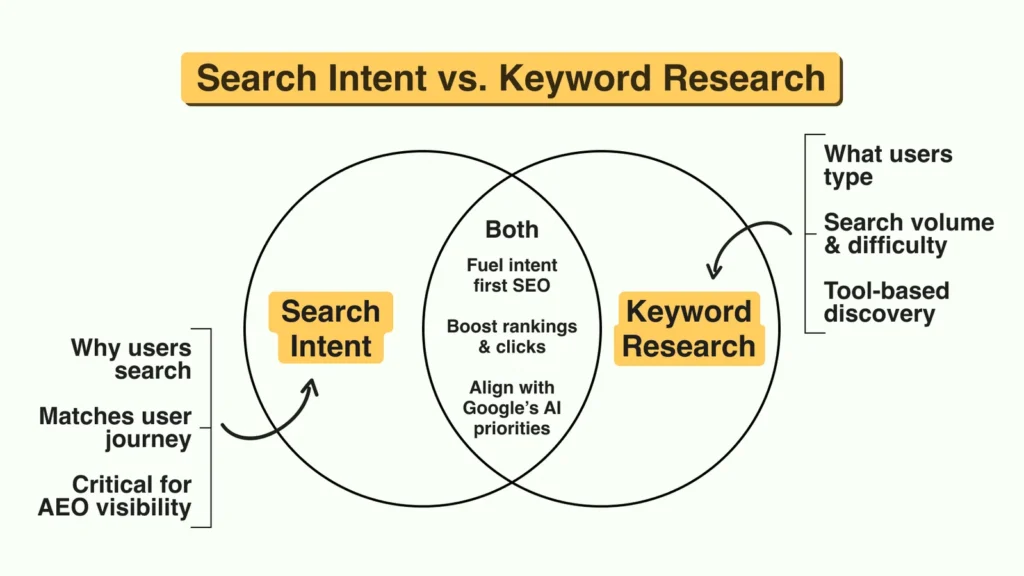
Still key for SEO, keyword research sees new methods from agencies now. Though basic in concept, how teams dig up terms shifts constantly. What used to work slowly fades as search evolves.
Tools adapt, so do strategies around finding phrases people actually type. Old habits give way to live data and real queries. Not just volume or ranking, but intent shapes choices today. Search isn’t static – neither is how pros study it.
Once upon a time, teams cared mostly about how often people searched.
These days, it falls short.
A keyword with 100,000 searches does not always create business value.
SEO teams today must grasp new search dynamics
- search intent
- commercial value
- user journey stage
- competition difficulty
- topical authority opportunities
- conversion potential
A software business aiming at “best project management software” wants something far from what another firm seeks when it talks about “how project management works.”
Buyers might show up because of the first term. Researchers could arrive thanks to the second one.
A good SEO tool lets agencies see what sets things apart. It shows the gaps between results clearly. One that works well points out contrasts naturally. The best options highlight distinctions without confusion. Tools like these make differences obvious fast.
Strong keyword research capabilities should include:
- keyword clustering
- competitor keyword analysis
- SERP analysis
- content gap discovery
- search intent classification
- keyword trend tracking
The goal is not collecting thousands of keywords.
Looking for words that grow a business drives the search. Words matter when they bring results into view. Success hides in terms people actually type. Spotting these shifts what works over time. The right ones pull attention where it counts.
2. Track Rankings Reliably for Many Projects
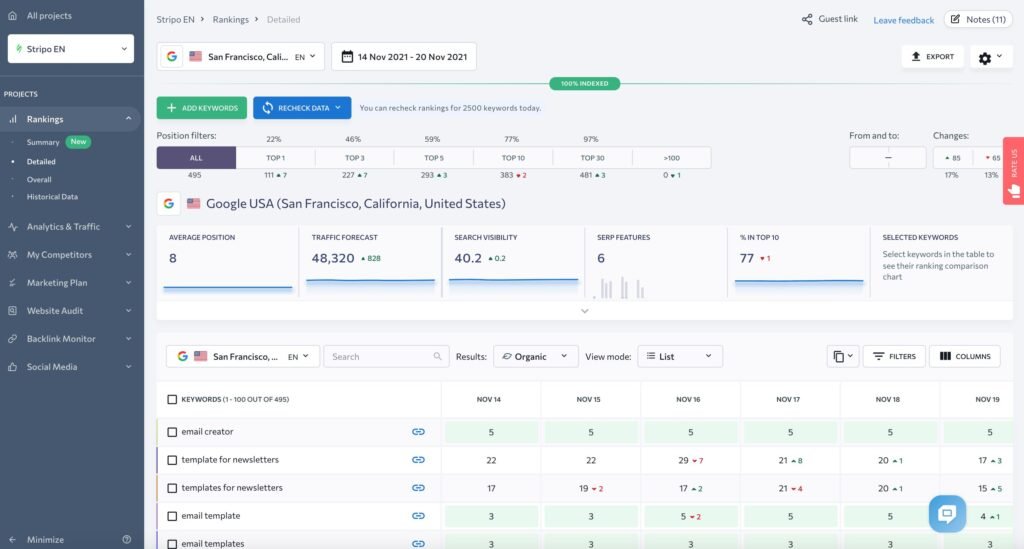
Still, rank tracking matters – yet agencies ought to shift attention past basic ranking shifts.
Position shifts matter. Still, jumping from eight to five misses what lies beneath. Numbers shift. Yet context hides behind each step up. A climb feels good. Even so, it might mean little without more clues. Progress shows. But only partly. Real understanding needs deeper look. Not just rankings alone.
Agencies need context.
A modern rank tracking system should help answer:
- Improving ranks on high-value search terms – happening yet?
- Visibility slipping away to others? Might be time to wonder why.
- Are AI search results changing click opportunities?
- Do the numbers show growth in each place we’re aiming at?
- Could better results be bringing more visitors plus sales?
Tracking people by where they are matters a lot to worldwide groups. Location data shapes how these organizations operate across borders.
Markets like the USA, UK, Canada, or Australia can show unique search patterns for one company. Each region responds differently on results pages. What appears high in one country might not rank at all in another. Search engines adjust locally, so outcomes shift across borders.
The SEO Tool Should Support
- country tracking
- city-level tracking
- desktop and mobile tracking
- competitor comparison
- SERP feature monitoring
3. technical seo audit and priority setup
Fixes often hide where most tools look first. A few spots stay overlooked, even by strong software.
What truly sets them apart boils down to guiding agencies toward priorities. Whether that guidance sticks makes all the difference.
Most site checks spill out a flood of fixes. Sometimes it’s hard to tell which ones matter most.
Yet some problems weigh more than others. Still, their effects aren’t always obvious.
A seasoned SEO expert tackles problems without promising miracles.
They prioritize based on:
- business impact
- ranking opportunity
- user experience
- implementation difficulty
A good agency SEO tool should identify:
- crawl issues
- indexing problems
- duplicate content
- broken links
- page speed problems
- structured data issues
- internal linking opportunities
Most crucial though, getting teams to grasp this matters
“Which problem should we solve first?”
4. Content Optimization Capabilities
Content has become one of the most competitive areas of SEO.
These days, just putting out extra posts won’t push things forward. Growth doesn’t come from volume alone anymore.
Agencies need tools that support:
- topic research
- competitor content analysis
- content briefs
- optimization recommendations
- semantic coverage
- content performance analysis
In 2026, content optimization also needs to consider AI search visibility.
Finding tools plus smart software now judge things more often
- expertise
- information completeness
- originality
- topical authority
- trust signals
Becoming a reliable reference matters just as much as showing up in search results, so agencies must shape material that ranks well while offering real value.
Here’s when mixing SEO planning with skilled content promotion starts to matter.
When agencies want to grow their content workflow, they might look into Digehub’s options for support. One path opens through their Content Marketing Services, built to handle expanding needs.
5. Backlink Check and Authority Score
Links pointing to your site still carry serious weight when search engines judge credibility. Though methods shift, outside references keep shaping how platforms view a page’s trust level. Even as algorithms evolve, these connections stay central to visibility. Their influence persists across updates and trends alike.
Yet shifting focus from sheer backlink counts makes sense for teams. Still, counting links alone misses bigger picture needs often.
One site could have ten thousand poor links yet still lose out. Another might only carry a hundred connections – sharp ones, trusted ones. Power hides in quality, not quantity. Think twice before counting numbers. Strength often sits where attention focuses deeply. Less can weigh more when each piece matters.
Modern backlink analysis should evaluate:
- referring domains
- link quality
- competitor link strategies
- lost backlinks
- link growth patterns
- anchor text distribution
- industry relevance
When agencies handle tough markets, spotting rivals’ links might show hidden paths they’ve taken. What works for others could work here too – clues hide in who points where.
6. Client reporting with white label options
Most teams don’t see how much power sits inside basic SEO software.
Anyone might pick up a tool, not just those focused on search engine work.
Messages about worth reach customers through it too.
A client usually does not care about:
- crawl statistics
- keyword difficulty scores
- technical errors
They care about:
- Are we growing?
- Are leads increasing?
- Is SEO working?
- What happens next?
Strong agency SEO software includes tools for tracking rankings keyword research site audits and managing client reports
- automated reporting
- customizable dashboards
- white-label options
- performance summaries
- easy client access
When reports get clearer, clients stick around longer – suddenly they see what you actually do. A light turns on when numbers make sense instead of vanishing into noise. Seeing progress in black and white makes trust grow without anyone saying a word. The result? They stay, not out of habit but because it just feels worth it.
AI Shifts Agency Approaches to Picking SEO Tools
Artificial intelligence is the biggest shift affecting SEO in 2026.
Yet plenty of teams get AI wrong when it comes to search rankings. Still, confusion sticks around about how machines shape online visibility. Often, the real role of smart software gets twisted in planning meetings. Rarely does clarity win out over assumption in these talks.
AI is not replacing SEO.
Search visibility keeps shifting its shape, reshaped by new tracking methods. How it grows now depends on different signals. Measurement tools adapt faster than before. Old rules fade while fresh patterns emerge quietly.
Back in the day, getting pages to rank was pretty much the whole game.
Modern SEO includes:
- ranking visibility
- AI-generated answers
- brand mentions
- entity recognition
- content authority
- user satisfaction signals
This sets a fresh demand
For agencies, seeing how content shows up outside regular search pages is key. Tools made for SEO must make that clear. Not just rankings matter anymore. What appears in voice answers or image feeds counts too. Clarity on those spots helps teams adjust better. Seeing it all together makes strategy easier to shape.
The Rise of AI Visibility Optimization
Finding companies now often happens by chatting with smart tools online. These days, people land on brand pages without typing a single web address.
Besides showing up in regular search results, some firms pop into view through artificial intelligence summaries. These appearances happen even when no one clicks on their website via Google. Instead of relying on links, visibility comes from being mentioned directly by smart systems. Not every visit needs a tap anymore. Information can float free of old pathways. Recognition builds in new ways now.
A fresh hurdle pops up in how we reach people now
“Is my brand visible when customers ask AI systems for recommendations?”
Agencies are beginning to measure:
- AI mentions
- brand presence
- citation opportunities
- content authority
- competitor visibility
This new area usually goes by the name of AI visibility tuning or sometimes Generative Engine Optimization.
Businesses getting ready can turn to Digehub, where AI Visibility Services help brands stay seen as search keeps changing. Their support targets visibility, adapting to how people now find things online.
Traditional SEO Tools vs AI SEO Tools
The future is not replacing traditional SEO tools with AI tools.
The strongest agencies will combine both.
A complete agency SEO stack will likely include both categories.
Common SEO Tool Selection Mistakes Agencies Make
Mistake 1 Relying Solely on Brand Name
A favorite among crowds doesn’t mean it’s the right fit.
Some agencies need one thing. Others find themselves looking for something else entirely.
Just because something helps a big team doesn’t mean it fits a tiny one. Size changes what tools matter. A hundred people might need structure, while five could drown in it. What’s essential at scale can feel heavy elsewhere. Efficiency shifts when fewer hands are on deck.
Mistake Two Overbuying Tools
Tool overload is a real problem.
Most offices go for
- multiple keyword tools
- multiple audit tools
- multiple reporting platforms
The result?
Spending more money while tasks get split across too many steps. Work moves in pieces, making everything slower than it needs to be.
Smaller setups tend to win when links flow smoothly. Well-linked pieces? They carry more weight than bulk. Size matters less if connections run deep. Often, compact groups outshine crowded ones. Tight networks beat loose collections every time.
Mistake 3 Not Considering Team Use
A tool can be packed with features, yet sit untouched when people ignore it. What matters isn’t power under the hood – it’s whether hands actually turn it on.
Before investing, consider:
- learning curve
- workflow fit
- training requirements
- daily usage
Most times it’s the basic thing people actually use that works best. Not always what looks fancy on paper but sits unused. Regular effort beats rare perfection. A clunky method skipped daily loses to a light one followed every day. What gets done matters more than what could be done.
Mistake 4 Ignoring How Search Might Change Later
Out of nowhere, search engines now shift almost daily. Speed matters more than before.
Over time, a gadget aimed solely at old-school rankings might start falling short. One built just for standard positions could lose edge as things shift. As days pass, something targeting only classic spots may feel narrow. Focusing purely on usual standings risks growing outdated slowly. A system stuck on conventional rank tracking can seem restricted later on.
Agencies should consider whether the platform supports:
- AI search changes
- automation
- data integrations
- evolving content strategies
How Various Agencies Pick SEO Tools
Small SEO Agencies
Priority:
- affordability
- easy reporting
- essential SEO features
- client management
Pay only for what you actually need, skipping costly extras that sit idle. A single tool might do more than required – stick to basics instead.
SaaS Marketing Agencies
Priority:
- competitor research
- content intelligence
- technical SEO
- international SEO
SaaS companies usually compete in crowded markets, so deeper research capabilities matter.
Ecommerce SEO Agencies
Priority:
- product page analysis
- category optimization
- technical scalability
- search demand insights
Running a big online store means managing loads of pages at once. Tools built for scale make that task possible without breaking down. Handling massive amounts takes software designed to keep up.
Local SEO Agencies
Priority:
- location tracking
- Google Business Profile data
- review monitoring
- local competitor analysis
Local SEO requires different measurement systems compared to national SEO.
SEO tools for agencies in 2026
By 2026, plenty of tools fill the SEO software space.
Fresh tools driven by artificial intelligence keep arriving every week. Meanwhile, long-standing search optimization firms slowly add new functions.
Finding solutions becomes tough when teams face these hurdles.
Too many options can make picking harder. Sometimes fewer picks lead to clearer minds.
The right comparison is not:
“Which SEO tool is the best?”
What really matters might be this:
“Which SEO tool is the best fit for our agency model?”
A small-town SEO team might pick one tool, while a software service leans another way. Shop-focused marketers often go somewhere else entirely. Big corporate campaigns? They tend to land on yet another option altogether.
Here’s how different strategies stack up when measured against real agency demands.
Semrush, Ahrefs, SE Ranking, Surfer SEO Comparison for Agencies
Semrush
Still widely known, Semrush stands out by doing more than just basic search engine optimization work.
Its strength is being a complete marketing intelligence system, pushing into areas that go past standard practices.
Agencies often use it for:
- Keyword research
- Competitor analysis
- Backlink analysis
- Site audits
- Position tracking
- Content research
- Advertising research
Where Semrush Is Most Effective
For teams handling several platforms at once, Semrush tends to fit well. Insights once scattered now sit close, reducing delays and helping decisions flow faster.
Potential Limitation
For smaller agencies, the platform can feel overwhelming. The challenge isn’t access to information, but knowing which insights truly matter.
Ahrefs
Ahrefs shines when it comes to backlinks and SEO analysis, earning trust with teams who dig deep into search rankings.
Its edge comes through competitor insights, pulling ahead when others lag behind. Agencies often rely on it for detailed link intelligence and organic search visibility.
Agencies analyzing with Ahrefs often focus on:
- Competitor backlink profiles
- Content opportunities
- Organic search competitors
- Keyword opportunities
Where Ahrefs Is Most Effective
When your SEO plan focuses on backlink strength and studying rivals, Ahrefs becomes a key tool. Its real worth shows up during deep competitive dives, revealing referral sources and link paths that others overlook.
Potential Limitation
For certain teams, more features could help with detailed reports or broader marketing workflows. Expanding beyond backlink analysis may be necessary when client demands grow.
SE Ranking
These days, SE Ranking shows up often when teams weigh tools against budgets. Not flashy, just steady where it counts.
It provides flexibility for agencies that want solid SEO capabilities without jumping straight into high-end pricing tiers.
SE Ranking offers capabilities such as:
- Rank tracking
- Competitor analysis
- Website audits
- Reporting
- Keyword research
Where SE Ranking Is Most Effective
For expanding agencies, skipping straight to premium pricing isn’t always necessary. SE Ranking fits tighter budgets while still delivering enough power to support growth. A balanced choice often works well when scaling carefully.
Potential Limitation
Larger teams with complex workflows may find SE Ranking less suited for tangled processes. A single tool rarely covers every need when operations get messy.
SurferSEO
Surfer SEO works well for improving content, putting its weight behind optimized on‑page performance.
Agencies often use it to streamline content production, ensuring articles align with search intent and SERP expectations.
Surfer SEO provides capabilities such as:
- Content briefs
- On‑page recommendations
- SERP‑based content analysis
- Optimization guidance
Where Surfer SEO Works Best
Teams focused on content creation often see the most benefit. For agencies producing large volumes of SEO‑driven articles, Surfer SEO fits neatly into workflows, helping streamline bulk tasks and improve consistency.
Potential Limitation
Surfer SEO isn’t built to stand in for an entire SEO system. It works best when tied into other tools, complementing broader strategies rather than replacing them.
The Best SEO Tool Changes Based on How Your Agency Works
Look at how your organization operates before picking a tool. What works depends on the way you work.
If Your Agency Works With Large Companies on SEO
Prioritize:
- advanced analytics
- integrations
- API access
- large-scale crawling
- reporting customization
Big companies often need clearer views into their information.
If Your Agency Prioritizes Growing Content
Prioritize:
- keyword intelligence
- content briefs
- topic research
- competitor content analysis
- optimization workflows
For content agencies, better output matters more than higher positions. Tools should lift the work’s standard, not chase scores on a list. Quality drives value, far beyond where something lands in search.
If Your Agency Works With Local SEO Clients
Prioritize:
- local rank tracking
- location monitoring
- Google Business Profile data
- reputation tracking
Getting local search right means pinning down exact locations. Where things sit on the map shapes how they show up nearby.
Agency SEO Tool Spending 2026?
One size fits none. What works changes every time. Depends on who you ask. Truth shifts with context. Answers differ by situation.
The correct budget depends on:
- number of clients
- service pricing
- team size
- workflow complexity
- expected ROI
- A simple calculation:
Tool Cost Should Support Revenue Growth
For a platform that charges three hundred dollars every month, the real issue isn’t:
“Is this expensive?”
The question is:
“Can this tool help us generate or retain more than $300 in monthly value?”
A single upgrade might shift how fast tasks get done. When tools work better, time bends differently. Speed grows where effort once piled up. A firm handling big accounts may find old steps vanish. Smarter systems often cut through clutter. Performance lifts without loud announcements. Precision tends to spread when software sharpens. Important jobs move smoother than before.
Yet needing less means smaller teams might skip costly tools too soon. Still, waiting until it’s necessary keeps things practical.
Creating an Effective SEO Toolkit for Agencies in 2026
A strong team rarely leans on just a single method. Options multiply when needs shift. Tools change as problems evolve. Flexibility matters more than any single device ever could.
What works today might fail tomorrow. Relying on one fix creates risk. Many paths lead forward — better to have several.
A web of links forms around it.
A Practical SEO Stack Includes
Core SEO Platform
Purpose:
- Keyword research
- Competitor analysis
- Technical SEO
- Rankings
Examples:
- Semrush
- Ahrefs
- SE Ranking
Content Intelligence Tool
Purpose:
- Content planning
- Optimization
- Briefs
- Topic research
Examples:
- Surfer SEO
- AI writing tools
Analytics and Measurement
Purpose:
- Traffic analysis
- Conversions
- User behavior
Essential systems include:
- Google Analytics
- Google Search Console
AI Visibility Layer
Purpose:
- Tracking brand visibility in AI-powered search
- Spotting opportunities with generative search
- Adapting content strategy
When artificial intelligence reshapes search, relying solely on old-style ranking metrics can hide shifts in how visible a brand really is.
A 2026 Guide to Choosing SEO Tools
What questions should you consider before choosing an SEO tool
Matches Client Needs?
Most times, a tool fits best when it lines up with where you work and who you serve. Sometimes that match just makes everything run smoother.
A worldwide online sales team operates differently than one focused on neighborhood needs. How they measure success must reflect that difference. One size never fits both.
Improving Efficiency?
The Best Tools Reduce
- manual reporting
- repetitive analysis
- data collection time
When machines handle routine tasks, experts shift toward planning. A different pace emerges when tools take over repetition. With fewer manual steps, thinking deepens naturally. Time opens up once systems run themselves. Focus grows where human effort moves upstream.
Client Understanding of Results?
Business results come from clear SEO reports, not just data. Turning numbers into meaning helps teams move forward. Insight happens when complexity becomes plain talk. What matters shows up when jargon gets left behind. Reports work best if they speak like people, not machines.
A Good Report Explains
- what changed
- why it matters
- what happens next
Supports Ai Search Changes?
SEO evolves past ranking focus.
agencies might look at tools for understanding
- AI visibility
- content authority
- changing search behavior
AI automation shifting how seo agencies work
Tomorrow’s edge? It’s built on smart machines doing the work. Agencies that skip this shift might fade without notice. Speed comes alive when decisions happen faster than humans manage alone. Staying ahead means letting software learn, adapt, then act – without waiting. Quiet changes now shape who leads later.
Tasks in SEO that repeat often might now work better with automated tools
- reporting preparation
- keyword categorization
- content analysis
- competitor monitoring
- data summaries
Still, machines work best when they back up human skill instead of taking over.
The Strongest Agencies Will Combine
People plan. Machines move fast. Numbers tell the truth.
One way some teams speed up online tasks is by using smart tools that handle routine steps automatically. These systems often cut down time spent on repeat actions while making daily workflows run smoother. Instead of doing the same thing over, workers shift focus to what needs real thought. Digehub offers support in adding these kinds of automated solutions to marketing routines. Their services guide companies through setting up tech that adapts and learns.
The Future Of SEO Tools After 2026
SEO tools keep changing.
The Next Generation Of Platforms Will Likely Focus On
Predictive SEO Recommendations
Looking ahead, tools won’t just highlight issues – they’ll point toward what might come next.
For example:
“This competitor is gaining visibility for this topic. Creating content now could capture market share.”
AI Search Monitoring
Brands tracking more
Here’s where these show up when AI gives responses
Frequency of Competitor Mentions
Which Content Sources Influence AI Responses
Automated SEO Workflows
SEO platforms linking more.
A future workflow might appear something like this:
Start by spotting a research opening. From there, shape how to move forward. Next comes laying out what needs saying. Watch closely as things unfold afterward. Then suggest tweaks based on what shows up.
More Business-Focused Metrics
What matters most won’t be rankings anymore.
agencies shifting focus
- revenue contribution
- qualified leads
- customer acquisition cost
- brand visibility
SEO tools becoming more like business intelligence systems.
Digehub seo tool strategy approach
Tools mean little without a plan behind them. That’s what shapes choices at Digehub – growth comes first, tech follows. What matters is direction, not gadgets. Clarity drives every move made here.
Software provides data.
Strategy creates results.
The strongest SEO campaigns mix research testing and consistent updates
- accurate research
- high-quality content
- technical optimization
- competitor intelligence
- AI visibility planning
- continuous improvement
Businesses aiming for steady, long-term growth find value in our SEO Services. These services blend careful planning with consistent effort plus clear results. Strategy shapes each step, yet real progress shows through performance. Growth happens not by chance, but through focused work that delivers visible impact. The approach stays grounded in what actually works – over time.
The Final Choice For Agency SEO Tools In 2026
A good pick isn’t tied to how many tools it packs. What matters slips through when you look past sheer volume.
What matters most is choosing a system where your people can see clearer paths forward. Decisions get sharper when the tool fits how they work. The right setup lifts thinking, not weighs it down.
The best SEO software matches three criteria
1. Your Current Business Model
2. Your clients’ needs
3. Your Future Growth Direction
Most teams jump between software, chasing fixes for their search issues. A fresh tool feels like hope – but rarely delivers. Switching endlessly becomes the real problem instead.
Most times, it’s not really about the tool at all.
Without a solid plan, SEO falls apart.
A solid method works something like what follows
Study Plan Act Check Adjust
While the SEO tool helps at each step, strategy still needs a human mind. Still, without smart planning, even the best tools fall short. Every phase gets support from the software, yet clever choices remain essential. Though it guides every move, real insight comes from thought, not tech alone.
A Simple Way to Choose SEO Tools for Agencies
Start by checking what problems you actually need to solve. Then look at how each tool handles those tasks differently. One thing matters more than anything else – does it fit your workflow? Try spotting where most users struggle with these platforms. Finally consider talking to someone who already uses the system.
Define Core SEO Goals
What matters first? Your agency’s aims. Begin there.
Ask:
Why ask what outcomes matter most right now?
Examples:
Increase Organic Traffic
Prioritize:
- keyword research
- competitor analysis
- content intelligence
Improve Client Retention
Prioritize:
- reporting
- dashboards
- performance tracking
Goal: Scale operations
Prioritize:
- automation
- integrations
- team collaboration
Get Ready for AI Search
Prioritize:
- AI visibility tracking
- content authority analysis
- entity optimization
Focusing on results matters more than fixating on the method. A device serves its purpose only when it helps reach an aim.
Evaluate Current Workflow Problems
Find where your team wastes time before choosing software.
common agency challenges include
- Spending Too Long Preparing Reports
- manually analyzing competitors
- having trouble deciding which SEO tasks to focus on first
- Handling Data Across Multiple Platforms
How Clients Understand SEO Outcomes
The Right SEO Platform Reduces Effort.
Speed comes easier for experts when tools sharpen their focus. Clarity follows once choices cut through noise.
Test First Keep Options Open
Some agencies buy yearly plans fast.
A better approach:
- test the workflow
- include seo team
- Create Sample Client Reports
- measure time saved
- compare output quality
Most of the time, teams stick with tools they start using without being told.
Measure Business Impact
SEO tools tied to business outcomes.
Just measuring isn’t enough
- keyword positions
- backlinks
- technical scores
Also measure:
- organic conversions
- qualified leads
- customer acquisition opportunities
- client satisfaction
SEO shifts toward business priorities.
Tomorrow’s winners will be firms linking traffic growth to actual profits. Success comes from matching online reach with cash results. Only those turning clicks into income will lead ahead. Growth follows where rankings meet real business impact.
Build a flexible seo technology stack
Your SEO Stack Should Evolve.
Avoid Relying Solely on One Platform for Your Agency.
A Flexible Approach Allows You to Combine
- SEO research tools
- analytics platforms
- content optimization systems
- AI visibility solutions
- automation workflows
Over time, this builds something more durable underneath. A lasting base takes shape when things are done this way. What sticks around begins here, quietly holding up what comes after.
Frequently Asked Questions About Selecting SEO Tools for Agencies
A future-proof SEO tool combines traditional SEO fundamentals with emerging search technologies. It should support keyword research, technical SEO, backlink analysis, content optimization, automation, AI visibility monitoring, and advanced reporting. Most importantly, it should adapt to changes in search behavior, AI-driven discovery, and evolving search engine algorithms without requiring agencies to rebuild their entire workflow.
Agencies managing international campaigns should prioritize country-specific keyword data, local SERP tracking, multilingual SEO support, regional competitor analysis, and market-level reporting. For multi-location businesses, accurate local rank tracking and location-based performance insights are critical for measuring visibility across different geographic markets.
Content optimization has become one of the most important evaluation criteria because content remains a primary driver of organic visibility. Agencies should assess whether SEO tools support content briefs, search intent analysis, semantic optimization, topic clustering, competitor content research, and content performance measurement. Strong content capabilities often have a direct impact on traffic growth and lead generation.
Agencies should evaluate client capacity, reporting flexibility, user permissions, integrations, API availability, automation options, and international SEO capabilities. A scalable SEO platform should support additional clients, team members, markets, and services without requiring a complete technology migration as the agency grows.
The highest-ROI features are typically automated reporting, competitor intelligence, technical SEO auditing, keyword opportunity discovery, content optimization, and workflow automation. These capabilities help agencies save time, improve decision-making, scale client management, and increase the impact of SEO campaigns without significantly increasing operational costs.
AI visibility tracking is becoming increasingly important because users are discovering brands through AI-generated answers, conversational search experiences, and recommendation engines. Agencies should evaluate whether SEO tools provide insights into brand mentions, entity recognition, content authority, and visibility within AI-powered search environments alongside traditional ranking data.
For most small and mid-sized agencies, an all-in-one SEO platform provides better efficiency and lower operational complexity. Larger agencies often benefit from a specialized SEO stack that combines keyword research, content optimization, technical SEO, reporting, automation, and AI visibility tools. The ideal approach depends on agency size, service offerings, and workflow complexity.
The biggest mistake is purchasing software based on popularity instead of operational requirements. Many agencies invest in expensive enterprise-level tools without evaluating whether their team will fully utilize the features. Successful agencies first identify workflow bottlenecks, client requirements, and growth objectives before comparing software options.
Five years ago, agencies mainly evaluated SEO tools based on keyword databases, backlink indexes, and ranking reports. In 2026, agencies must also consider AI-generated search experiences, automation capabilities, content intelligence, entity optimization, and brand visibility across AI platforms. Modern SEO tools are evolving from reporting systems into strategic decision-making platforms.
Agencies should prioritize business alignment over feature quantity. The most important factors include keyword research accuracy, technical SEO capabilities, reporting automation, competitor analysis, AI search visibility tracking, workflow integration, scalability, and return on investment. The best SEO tool for an agency is the one that supports client outcomes, operational efficiency, and future search trends rather than simply offering the largest feature set.
