
AI Writing Tools 2026: How to Choose the Best?
The market for artificial intelligence has officially shifted from exciting novelty to standard corporate infrastructure. As we navigate 2026, over 94% of digital marketers and enterprise software architectures have integrated generative text applications directly into their daily workflows.
However, this massive explosion in technology has created a major problem: extreme platform saturation.
With hundreds of software tools claiming to write human-grade text, select high-intent keywords, and automate multi-channel campaigns, choosing the wrong platform can result in a wasted budget and generic text that gets completely buried by search algorithms.
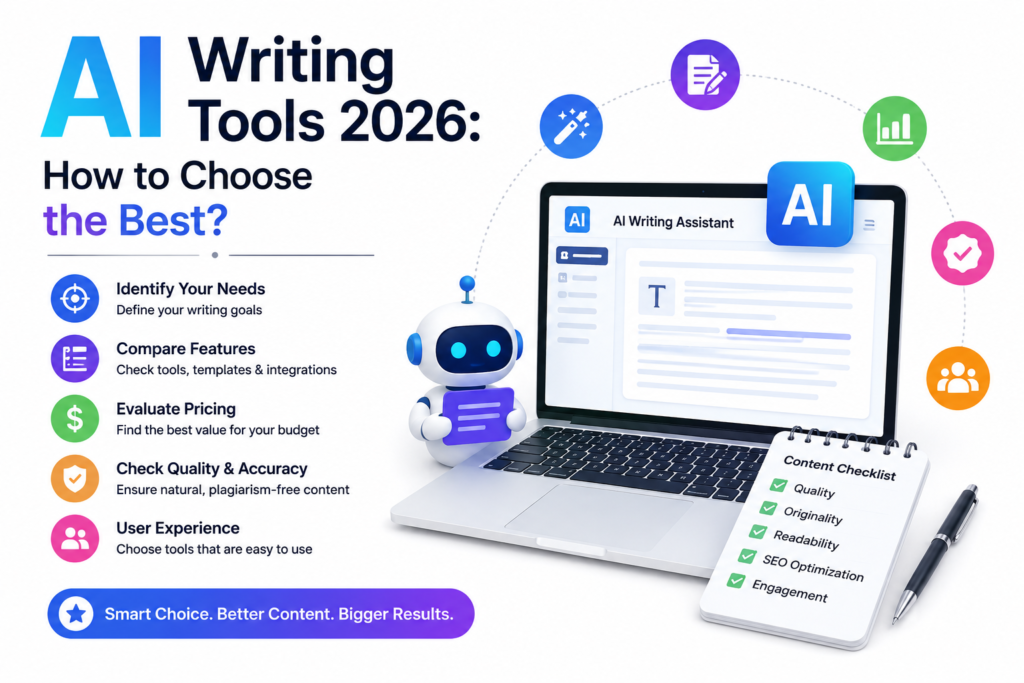
To help your business cut through the marketing noise, ask these five critical qualifying questions to identify the absolute best system for your content workflow.
What is the Underlying Core Engine (Wrapper vs. Proprietary Model)?
The single most critical technical detail you must uncover before entering your corporate credit card into an application is how the tool processes text under the hood.
TIER 1: AI WRAPPER APPS
┌──────────────────────┐      ┌──────────────────────────┐      ┌───────────────────────┐
│  User Input Prompt   │ ───► │  Basic UI UI Layer       │ ───► │ Public Foundation API │
│                      │ ◄─── │  (Subscription Markup)   │ ◄─── │  (Standard ChatGPT)   │
└───────────────────────┘      └──────────────────────────┘      └───────────────────────┘

TIER 2: ENTERPRISE COGNITIVE ENGINES
┌──────────────────────┐      ┌──────────────────────────┐      ┌───────────────────────┐
│  User Input Prompt   │ ───► │ Custom Brand Memory      │ ───► │ Multi-Model Router    │
│                      │ ◄─── │ & Retrieval Vector (RAG) │ ◄─── │ (GPT + Claude + SGE)  │
└───────────────────────┘      └──────────────────────────┘      └───────────────────────┘
The Basic App Framework
A significant percentage of budget-friendly platforms on the market are basic software wrappers. This means the software provider does not own any artificial intelligence technology. Instead, they charge you a premium monthly fee simply to pass your prompt through a basic application programming interface (API) link to a public foundational engine like standard ChatGPT. If you can achieve identical outputs by running a well-crafted prompt through a free alternative, that platform does not deserve a line item in your budget.
Deep Cognitive Architectures
Advanced enterprise-grade platforms differentiate themselves by building custom operational layers on top of top-tier foundational models. These systems leverage retrieval-augmented generation (RAG) pipelines to parse your private data sheets, integrate real-time search engine optimization (SEO) data, and run multi-agent workflows.
If your core goal is to generate high-performing organic assets instantly without managing multi-layered software bills, you can streamline your draft production by utilizing our premium Free SEO Blog Writing Tool. It automatically structures entity networks to deliver high-ranking text on demand.
Does the Platform Support Custom Brand Memory and Voice Training?
Generic text is the absolute death sentence of modern digital marketing. If an application only generates text based on broad, generic public internet training data, your copy will sound exactly like your competitors’.
- Static Tone Adjustments: Beware of tools that only offer simple dropdown menus for style choices (such as selecting “Professional,” “Witty,” or “Casual”). These filters simply append basic instructions to your text prompt, which frequently results in cliché phrases and overly robotic sentence structures.
- Dynamic Brand Vectors: Premium software allow you to train the underlying models by uploading authentic corporate whitepapers, past high-performing advertisements, and unique style blueprints. To see how top-tier engines handle this process, check out our in-depth Jasper AI Review 2026 Analysis, which details how modern brand memories isolate distinct corporate communication styles.
How Does the System Handle Generative Engine Optimization (GEO)?
Traditional keyword insertion is no longer enough to secure complete market visibility. In 2026, search optimization has split into two separate paths: ranking on traditional search engines and securing citations inside conversational AI Writing Toolsresponse boxes like ChatGPT Deep Research and Google SGE.
               ┌────────────────────────────────────────┐
               │    MODERN DISCOVERY CHANNEL MATRIX     │
               └───────────────────┬────────────────────┘
                                   │
         ┌─────────────────────────┴─────────────────────────┐
         ▼                                                   ▼
┌─────────────────────────┐                         ┌─────────────────────────┐
│ Traditional SERP Rank   │                         │ Generative Engine Box   │
│  (Google Crawl Bots)    │                         │  (Conversational SGE)   │
└─────────────────────────┘                         └─────────────────────────┘
         │                                                   │
         ▼                                                   ▼
┌─────────────────────────┐                         ┌─────────────────────────┐
│ High Intent SERP Clicks │                         │ Premium Direct Citations│
└─────────────────────────┘                         └─────────────────────────┘
Your chosen application must include dedicated features engineered for AI Visibility Services. The software shouldn’t just count keyword frequency; it must actively analyze user intent, structure schema markup, and build clear informational data tables so conversational engines can easily crawl, extract, and cite your content.
Is the Interface Optimized for Solo Editing or Full-Scale Content Marketing Teams?
The right software tool must match the human resourcing structure of your business. A platform built for a solo blogger will create massive friction if forced into an enterprise creative agency, and vice versa.
Solo Platforms
For individual creators or freelance copywriters, speed, accessibility, and budget-friendly pricing models are the absolute priority metrics. Content creators frequently evaluate lightweight, flexible platforms by reviewing an in-depth Copy.ai Review to understand how single-user layouts optimize personal productivity.
Enterprise Marketing Workspaces
If you are managing a large team, your text infrastructure requires robust multi-user workspaces, version tracking, custom permission levels, and integrated editorial calendars. Organizations frequently track these complex production steps by checking a comprehensive ClickUp Review or analyzing workflow efficiencies through the detailed Asana vs. ClickUp comparison.
To see how these visual dashboards stack up against document-native platforms, teams often read our technical guide comparing Notion AI vs. ClickUp.
What is the Real Cost-to-ROI Ratio Across Formats?
A software application is only valuable if its feature set directly matches your actual content distribution channels.
                                ┌───────────────────────────┐
                                │   PRIMARY CONTENT ENGINE  │
                                └─────────────┬─────────────┘
                                              │
         ┌────────────────────────────────────┼────────────────────────────────────┐
         ▼                                    ▼                                    ▼
┌─────────────────┐                  ┌─────────────────┐                  ┌─────────────────┐
│ Long-Form Blogs │                  │ Paid Ad Copy    │                  │ Omni Socials    │
└─────────────────┘                  └─────────────────┘                  └─────────────────┘
         │                                    │                                    │
         ▼                                    ▼                                    ▼
┌─────────────────┐                  ┌─────────────────┐                  ┌─────────────────┐
│ Capture Organic │                  │ Direct Purchase │                  │ Community Brand │
│ Search Traffic  │                  │  Conversions    │                  │   Engagement    │
└─────────────────┘                  └─────────────────┘                  └─────────────────┘
Before committing to a high-tier annual subscription plan, map your primary marketing goals against the tool’s specific strengths:
- Long-Form Search Dominance: If your growth strategy is built entirely on long-form authority articles, your platform needs strong SEO integrations. See how different engines handle research phases by tracking a head-to-head Jasper AI vs. Copy AI comparison.
- Multi-Channel Marketing Variation: If your campaigns require launching hundreds of different copy variants for paid acquisition funnels, you need software that connects directly with digital ad engines. You can discover how alternative platforms handle live search data inputs by reviewing our technical Copy.ai vs. Writesonic comparison or checking our comprehensive Writesonic Review.
Connecting Your Tech Stack to High-Performance Acquisition Funnels
Selecting the perfect software application is only the first step toward long-term digital growth. To transform your automated draft production into scalable business revenue, your platform must connect seamlessly with an expert, multi-channel marketing infrastructure.
The Organic and Paid Scaling Protocol
- Search Optimization Infrastructure: To ensure your automated text ranks at the top of traditional and generative search networks, your content should be continuously audited by professional SEO Services.
- Strategic Distribution Architecture: Raw drafts must be built into an omni-channel distribution pipeline designed to engage modern consumers, a framework managed by expert Content Marketing Services.
- Paid Funnel Amplification: High-performing content ideas can be instantly repurposed into highly targeted paid acquisition campaigns. Launch conversion-focused text variations across search channels using specialized Google Ads Services and scale high-impact visual funnels with professional Meta Ads Services.
- High-Performance Web Design: To protect your search rankings and maximize conversion rates, your public landing pages must feature fast loading speeds and clean code layouts engineered by Website Development Services.
Global Expansion and Regional Audience Optimization
Large-scale enterprise operations must look beyond simple language translation. True digital authority requires deep cultural localization, precise regional keyword intent matching, and total alignment with country-specific privacy and compliance frameworks.
If your brand utilizes generative creation engines to deploy web assets across international borders, maximize your operational performance by partnering with dedicated regional growth hubs:
- United States Market Penetration: Drive large-scale search visibility, competitive analysis, and premium revenue growth within North American markets via our Digital Marketing Agency in USA.
- United Kingdom & European Operations: Navigate localized search behavior variations and manage strict European data guidelines securely through our Digital Marketing Agency in UK.
- Canadian Cross-Border Scaling: Deploy highly targeted, culturally relevant, and fully optimized bilingual content systems using our Digital Marketing Agency in Canada.
- Australia & APAC Regional Growth: Capture southern hemisphere market shifts, localized search trends, and premium transaction query patterns with our Digital Marketing Agency in Australia.
Core Operational Dimensions
To give your procurement team an instant bird’s-eye view of how the market’s leading platforms compare across core business parameters, review this technical evaluation framework:
| Evaluation Dimension | Foundational Assistants | Premium Workflow Hubs | Specialized SEO Copilots |
|---|---|---|---|
| Best Operational Fit | Solo creators, basic brainstorming | Marketing teams, agencies | Growth teams, SEO managers |
| Brand Voice Customization | Basic system instructions | Advanced multi-profile training | SERP-based intent matching |
| Data Ingestion Model | Single text prompts | Deep knowledge base parsing | Competitor site scraping |
| Primary Output Goal | Creative exploration, drafting | Multi-channel campaign variants | Long-form search rankings |
| Deployment Setup | Instant, zero integration needed | Medium, requires workspace setup | Medium, relies on keyword tools |
Deep Formatting Architecture: Polishing Output for High Value
To protect your brand’s digital reputation, raw machine drafts should never be copied and pasted directly onto public web properties without human oversight. Implement a strict editing workflow to ensure quality.
The Editing and Alignment Pipeline
- The Content Polish: Refine your sentence pacing, eliminate repetitive phrasing, and correct structural errors. Marketers frequently review the Grammarly vs. QuillBot guide to select the right processing layer to polish their text.
- Document Infrastructure: If you want your writing assistants natively embedded directly into your internal company databases and knowledge wikis, read our full Notion AI Review.
- Strategic Growth Alignment: To build an authoritative content machine that consistently satisfies search engine quality guidelines, align your team’s execution with a comprehensive AI Content Marketing Strategy.
- Algorithmic Optimization: For an step-by-step breakdown on structuring your content to rank at the top of generative search interfaces, check out our master manual on AI for SEO Content Writing.
Step-by-Step Guide: How to Safely Audit and Onboard a Tool
To ensure your team selects the ideal platform without risking data leaks or blown software budgets, execute your onboarding sequence using this exact operational flow:
1. Isolate Your Core Use Case
Do not buy a tool based on general industry hype. Document your team’s most frequent writing bottleneck—whether it is generating short-form ad variants, structuring long-form blogs, or drafting outbound sales sequences.
2. Verify Data Security Compliance
Review the software provider’s data governance terms. Ensure the contract explicitly states that your input data, company documents, and proprietary brand information are encrypted and never used to train public models.
3. Activate a Ring-Fenced Sandbox Trial
Launch a limited 7-day trial using a designated test account. Have your core editors run actual, real-world prompts through the system to measure output quality, check integration limits, and evaluate the learning curve.
[Identify Bottleneck] ──► [Verify Security Terms] ──► [Run Sandbox Trial] ──► [Confirm ROI Sync]4. Review the Real Cost-to-ROI Ratio
Before upgrading to an annual enterprise tier, verify that the platform’s added features (like brand memory vectors and SEO integration dashboards) save your team enough hours to completely justify its premium monthly cost over free foundational models.
The Verdict
Choosing the right platform is not about chasing the loudest industry hype; it is about finding the architecture that matches your specific content production needs. By asking these 5 core questions, protecting your data privacy, and integrating your tools with professional digital marketing pipelines, you transform simple software into a powerful growth asset that drives real, long-term business scale.
For a comprehensive video breakdown on selecting digital tools, setting up user profiles, and evaluating model accuracy across modern corporate environments, check out this detailed industrial procurement and software analysis guide. This specialized walkthrough provides full clarity on balancing software seat configurations to maximize team output.
10 FAQs on Choosing AI Writing Tools
1. What is the difference between a standalone AI writing tool and a public model?
Public models (like standard ChatGPT or Claude) are general-purpose assistants that require custom prompting for every task. Dedicated writing tools are built on top of these models but add specialized user interfaces, step-by-step templates, brand voice training vectors, and built-in plagiarism or SEO checkers to streamline specific workflows.
2. Can AI writing platforms match my company’s specific brand tone?
Yes, high-tier platforms feature brand voice training vectors. By uploading past marketing campaigns, company style guides, and product whitepapers, you can train the software to analyze and duplicate your company’s distinct tone, phrasing, and vocabulary across all generated text.
3. Will using automated software hurt my website’s Google rankings?
Google’s search guidelines state that the use of automation or AI tools is not penalized as long as the generated content provides high-quality, original value to the user. However, copying and pasting unedited machine text that lacks unique insights can cause your pages to drop in rankings during core algorithm updates.
4. How do modern platforms assist with Generative Engine Optimization (GEO)?
Modern platforms assist with GEO by structuring your content to be easily crawled and cited by conversational search assistants (like ChatGPT Deep Research and Google SGE). They help by organizing text into bulleted takeaways, clear FAQ blocks, and data-dense tables that directly match long-tail user intents.
5. Is it safe to upload proprietary corporate documents into these apps?
It depends entirely on the tool’s data privacy policies. Free public tools often use your prompt history to train future public models, creating a massive risk for data leaks. Enterprise-grade tools offer secure workspaces with end-to-end data encryption, explicitly stating that your data will never be used for public model training.
6. Do these creation platforms feature built-in plagiarism checks?
Many premium marketing platforms feature native integrations with premium plagiarism checkers like Copyscape. This allows you to verify that your text drafts are completely original and free of accidental matches against existing web pages before you hit publish.
7. Why do some writing applications cost significantly more than others?
Higher-priced platforms typically invest heavily in specialized workflows, multi-agent automated pipelines, real-time search engine scraping, deep brand memory storage, and robust team collaboration dashboards. Cheaper tools are often simple layout wrappers around basic public APIs.
8. Can automated text engines completely replace human copywriters?
No. High-performance teams deploy writing engines to handle the first 60-70% of the production workflow—such as brainstorming topic angles, building detailed content outlines, and creating rough drafts. Human editors are always required to fact-check the data, inject real-world experiences, and polish the final tone.
9. What should I look for during a software sandbox trial?
During your sandbox trial, focus heavily on output quality, ease of use, and integration fit. Measure how much manual rewriting your editors have to do to make drafts ready for publication, and check if the interface plugs smoothly into your existing content management systems (CMS).
10. Which type of platform is best for large marketing teams?
Large marketing teams should look for enterprise workflow hubs that offer multi-user seat configurations, shared asset libraries, robust knowledge base integration, and clear campaign canvas boards to maintain total messaging consistency across multiple marketing channels simultaneously.
