
Ahrefs Backlink Checker: How to Use It for SEO in 2026
What Is Ahrefs Backlink Checker?
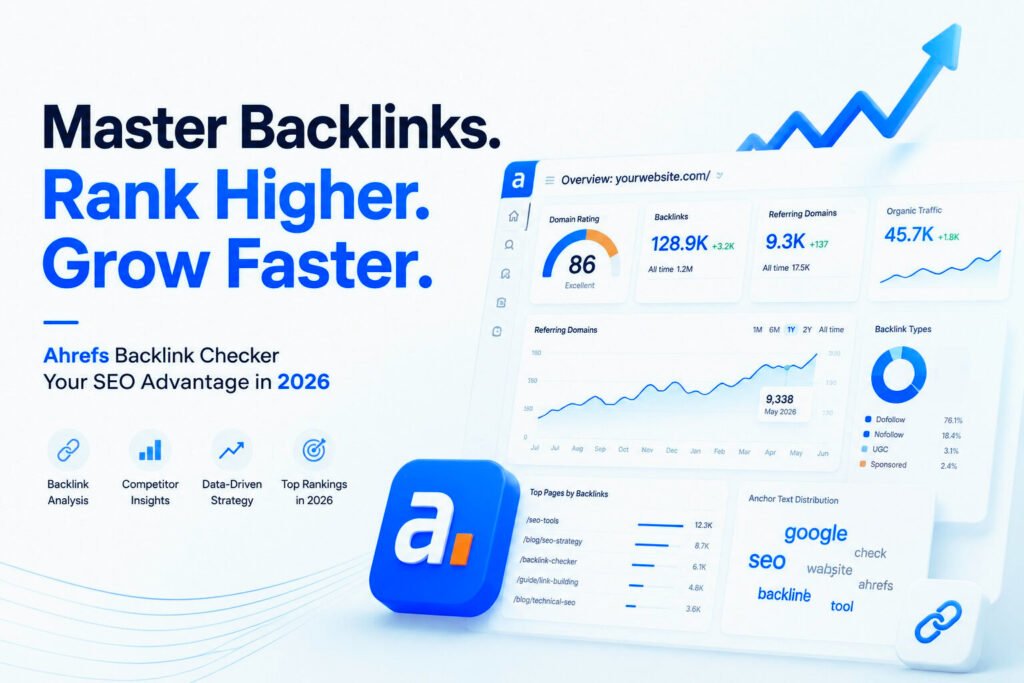
Ahrefs Backlink Checker allows you to analyze the backlinks pointing to your website or the websites of your competitors. Using Ahrefs Site Explorer, you can uncover valuable SEO insights, including:
- Backlinks
- Referring domains
- Domain Rating (DR)
- URL Rating (UR)
- Anchor text
- Dofollow/nofollow backlinks
- New and lost backlinks
- Broken backlinks
- Top linked pages
- Link growth trends
- Competitor backlinks
Unlike many other backlink analysis tools, Ahrefs has one of the largest and most regularly updated backlink databases in the industry, making it easier to identify both opportunities and threats.
For SEOs, this means that Ahrefs can help answer many critical questions, including:
- Why is my competitor outranking me?
- What pages are getting the most backlinks?
- Which websites are open to publishing my content?
- What backlinks should I go after?
- What backlinks am I losing?
- What opportunities do I have in terms of lost backlinks?
What’s New in Ahrefs for 2026?
Ahrefs has made numerous updates to its backlink analysis tools in 2026. However, there are a few major updates that are particularly noteworthy.
Enhanced page categorization
One of the most important updates in Ahrefs in 2026 is the enhanced page categorization. When analyzing referring domains, you can now see what type of page the backlink is coming from.
This can be immensely helpful, especially when it comes to prioritizing different types of backlinks. For example, blog posts and news articles typically carry much more authority than category pages or product pages.
As such, it is much more important to invest time and effort in earning backlinks from resource pages, blog posts, and other high-value assets.
More filtering options
The new filtering options allow you to find the best backlink opportunities much faster. In particular, you can combine multiple filters, including Domain Rating, organic traffic, type of link, platform, language, page categories, and page types, to narrow down your search.
Easier reporting
Reports are now much easier to read and understand. This is especially important for clients and stakeholders who want a high-level overview of the backlink analysis without getting bogged down in the details.
Better fit for modern SEOs
As mentioned above, Ahrefs now allows you to better identify the types of pages that are most likely to earn mentions, backlinks, and other types of visibility. As such, it is a great fit for SEOs who want to build authority in the era of AI search.
In particular, instead of asking “how many backlinks does this page have,” you can ask “what types of content are most likely to help my page earn mentions and backlinks?” This subtle but important shift in mindset will allow you to maximize the long-term value of your backlink-building efforts.
Understanding the Metrics Before You Start
When you open Ahrefs for the first time, there is a good chance that you will start by looking at Domain Rating (DR). While it is a useful metric, it is just one piece of the puzzle.
To truly understand your backlink profile, it is important to look at all the metrics in the backlink analysis report. In particular, make sure that you know how to interpret the following metrics:
- Domain Rating (DR)
- URL Rating (UR)
- Referring domains
- Backlinks
- Anchor text
- New and lost backlinks
Domain Rating (DR)
Domain Rating is a metric that estimates the strength of a website’s backlink profile on a scale from 0 to 100. In general, the higher the Domain Rating, the more high-quality backlinks the website has.
However, keep in mind that Domain Rating should not be used in isolation. When analyzing backlinks, it is important to look at the relevance of the referring domain. A natural backlink from a high-authority but irrelevant website will typically provide much less SEO value than a high-quality backlink from a relevant niche website.
URL Rating (UR)
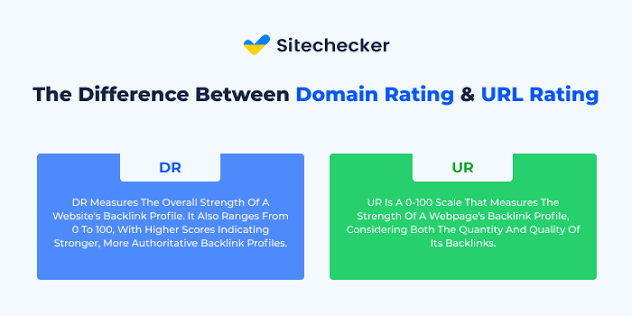
URL Rating works similarly to Domain Rating, but it focuses on the link equity of a specific page, not the entire website. In other words, it measures how much authority a page has and how much link juice it can pass on to other pages.
Referring domains
This metric shows how many unique domains are linking to your website. As a rule of thumb, it is much better to have 100 high-quality backlinks than 1,000 low-quality backlinks.
Backlinks
This metric shows how many links are pointing to your website or page. Keep in mind that a single referring domain can have multiple backlinks, so this metric should always be taken in the context of referring domains.
Anchor text
Anchor text is the clickable text in a hyperlink. It is one of the most important on-page SEO elements, so it is critical to ensure that your anchor text is optimized.
In general, avoid using exact match anchor text, especially if you are building backlinks from unrelated websites. A natural backlink profile will typically have a mixture of branded, naked URL, generic, partial match, and descriptive anchor text.
New and lost backlinks
These two metrics can provide valuable insights into your backlink-building efforts. In particular, it is important to keep track of new backlinks so that you can identify what types of content or outreach strategies are working.
At the same time, it is also important to keep an eye on lost backlinks so that you can take action if a valuable backlink is lost.
How to Use Ahrefs Backlink Checker Step by Step
Now that you understand the basics of backlink analysis, it is time to learn how to use Ahrefs for backlink analysis. In particular, it is important to follow a systematic approach that allows you to uncover actionable SEO insights.
Here is a step-by-step guide on how to use Ahrefs Backlink Checker in 2026:
Step 1. Open Site Explorer
The first step is to open Ahrefs Site Explorer and enter the domain or URL that you want to analyze. You can choose between different options, including analyzing an exact match, subdomain, domain, or URL prefix.
For most SEO audits, it makes sense to analyze an entire domain. However, you may want to analyze a specific page if you are doing a more granular backlink audit.
Step 2. Overview of the Website
Once you have entered the domain or URL, you will see an overview of the website. Instead of looking at backlinks, it is a good idea to start with the overview and look at the following metrics:
- Domain Rating (DR)
- URL Rating (UR)
- Referring domains
- Backlinks
- Organic traffic
- Organic keywords
- Traffic trend
- Backlink growth
This will give you a general understanding of the website’s authority before you start looking at individual backlinks.
Step 3. Referring Domains
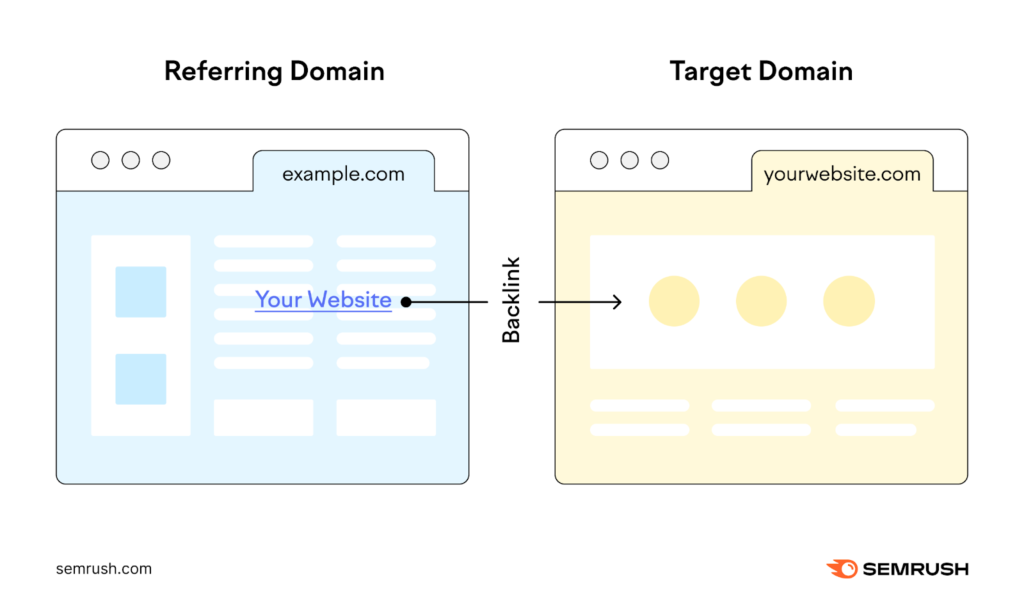
The next step is to take a closer look at referring domains. When analyzing referring domains, it is important to look at factors such as relevance, traffic, authority, language, content type, and freshness.
In general, you want to prioritize backlinks from high-authority and relevant domains. However, it is also important to look at other factors, such as the type of content that is linking to your website.
A backlink from a well-known publication may carry more weight than a backlink from a high-authority but unrelated website.
Step 4. Individual Backlinks
Now, it is time to look at individual backlinks. When analyzing individual backlinks, it is a good idea to ask yourself the following questions:
- Is the backlink coming from a relevant website?
- Is the linking page high-authority?
- Is the linking page trustworthy?
- Does the linking page have organic traffic?
- Is the anchor text natural?
- Does the linking page have other backlinks pointing to it?
- Does the linking page have other content that is similar to mine?
The more high-quality backlinks you have, the better. However, it is also important to analyze the quality of your individual backlinks. In particular, you want to avoid low-quality backlinks, such as those from spammy websites or pages with little or no traffic.
Step 5. New and Lost Backlinks
The final step is to look at new and lost backlinks. This information can be incredibly valuable, especially when it comes to understanding the growth trends of your website.
A sudden drop in new backlinks or a significant increase in lost backlinks may indicate that something is wrong. On the other hand, a steady increase in new backlinks suggests that your SEO efforts are paying off.
Pro Tip: When analyzing backlinks, it is a good idea to combine Ahrefs with content marketing. For example, if one of your blog posts is getting a lot of backlinks, it is a great candidate for continuous improvement and long-term SEO. In particular, you can update it regularly and optimize it for AI search so that it continues to attract traffic and backlinks for years to come.
6. How to Find Competitor Backlink Opportunities with Ahrefs
One of the most powerful features of Ahrefs is uncovering why competitors rank better than you and finding link building opportunities they’ve already earned and validated.
If multiple competitors have backlinks from the same websites, it means those sites are open to linking to similar resources in your niche.
Instead of having to build a list of potential websites to reach out to from scratch, you can leverage the hard work of your competitors
Here’s how:
Step 1. Find your SEO competitors
Many companies make the critical mistake of evaluating direct competitors instead of SEO competitors.
Your SEO competitors are websites that rank for keywords you want to target.
For example, your competitors might be:
- Blogs/Publications – for SaaS companies,
- Educational websites – for agencies,
- Review sites – for ecommerce stores
Within Ahrefs, you’ll want to use Organic Competitors to find websites that compete for the same keywords.
Step 2. Find referring domains your competitors received backlinks from
Open your competitor’s profile in Site Explorer and scroll to the
Backlinks → Referring Domains
section.
Rather than focusing on websites with the highest Domain Rating, look for referring domains with strong topical relevance, high-quality content, consistent publishing, traffic, and audiences.
Said domains will typically have a better chance of accepting your outreach since they’ve already demonstrated an ability to attract natural links from relevant websites.
Step 3. Look for patterns
After analyzing multiple competitors, you should start seeing patterns in terms of what websites, content formats, and page categories they receive backlinks from.
Some of the most common resource categories include:
- Industry blogs
- Research websites
- Podcasts
- SaaS directories
- Local publications
- Universities
- Resource pages
- Statistic pages
- Expert roundups articles
Once you narrow down the resource categories, it’s time to prioritize the most relevant websites in those niches.
Step 4. Use Link Intersect to find link building opportunities
One of the quickest ways to find websites willing to link to your content is by using one of Ahrefs’ oldest and most popular features: Link Intersect.
While most people use it to find websites that link to competitors but not you, you can also use it to find domains linking to multiple competitors at the same time.
A typical use case for finding competitors’ backlink opportunities would be:
- Entering your website,
- Adding 3-5 competitors,
- And prioritizing domains linking to everyone on the list.
You can then use those websites as link building opportunities by creating better content than the ones already published on those domains.
If a website has received backlinks to 5 different articles about the same topic, there’s a solid chance that it would link to the 6th article if it’s significantly better than the existing ones.
7. Using Ahrefs’ New Page Type & Category Filters in Ahrefs Backlink Checker 2026
Speaking of multiple page categories, one of the most exciting recent updates to Ahrefs backlink checker 2026 allowed me to discover why so many of my competitors keep getting backlinks from the same websites. It all came down to an update that enabled me to organize my backlinks by their page type rather than only domain authority.
While sorting backlinks by their referring domains’ Domain Rating is still important in Ahrefs backlink checker 2026, I realized that different page types often featured distinct qualities that I could use to identify the best link building opportunities.
Why Do You Need to Sort Backlinks by Page Type in Ahrefs Backlink Checker 2026?
In short, not all backlinks are equal.
Depending on the page type, you’ll get significantly different benefits when using Ahrefs backlink checker 2026.
For example, blog posts typically offer higher quality anchor texts and more natural SEO opportunities than any other resource, making them one of the best link building assets.
On the other hand, resource pages allow you to gain high-quality backlinks while also featuring your content on a page with dozens/hundreds of other relevant resources.
Meanwhile, news pages can boost your brand’s authority and visibility, especially in AI searches, since they often appear at the top of search engine results.
Product pages, on the other hand, rarely provide much value beyond mentioning your brand or a particular piece of software.
Finally, category pages have become increasingly popular in recent years due to their ability to boost topical authority. If another website has grouped multiple top resources on a particular topic, earning a backlink to that page can significantly improve your chances of being discovered by a wider audience.
Using Ahrefs backlink checker 2026 to identify these page types can help you prioritize the backlinks that are most likely to improve your SEO performance and AI visibility.
How to Sort Your Backlinks by Page Type Within Ahrefs
Rather than simply exporting thousands of backlinks, here’s how you can sort them by page type:
Filter for pages of the following types:
- Blog
- Editorial
- Resource
- Documentation
- Educational
- News
Using categories to sort backlinks can significantly improve your ability to find high-quality link building opportunities.
Step 2. Using Categories to Sort Competitors’ Content
Similarly to how you can analyze your backlinks, you can also sort your competitors’ content by category.
When doing competitor research, it often helps to narrow down the types of resources your competitors rely on for backlinks.
For example, if your competitors receive backlinks from:
- SEO blogs,
- Marketing publications,
- SaaS resources,
- Startup blogs,
- AI publications,
you can use categories to segment all of those resources into distinct groups.
Once you’ve segmented them, you’ll be able to find opportunities to contribute to blogs, publications, and resource pages that your competitors haven’t already tapped into.
Finally, different categories typically require different types of outreach, which will significantly affect your success rate and the quality of your outreach.
Expert Hint
When it comes to measuring link building campaigns, I think many SEO specialists are currently measuring the wrong metrics. Rather than focusing on how many backlinks you’ve been able to build, I’d advise measuring if the backlinks helped you acquire better visibility within your industry.
I think measuring the wrong KPIs has led to many companies developing poor link building strategies.
8. Backlinks + AI Visibility, Why This Matters in 2026
This is where a lot of backlink guides stop. Modern SEO doesn’t.
As search engines become more and more reliant on AI, links are just one part of the equation.
When it comes to large language models, backlinks from high-quality websites will improve your chances of being recommended by AI search engines.
In other words, building relationships with popular publications will help you get discovered by more people.
Think Beyond Google Rankings
High-quality editorial backlinks can help you achieve multiple goals, including:
- Getting discovered by a larger audience,
- Improving your brand’s entity and topical authority,
- Helping search engines better understand your site’s content,
- Increasing your overall domain authority,
- And getting cited by AI search engines.
Backlinks on Their Own Won’t Help You Get Noticed by AI
While backlinks can dramatically improve your visibility within traditional search engines, there are additional steps you’ll need to take to increase your visibility within AI search results.
Specifically, you’ll need to get your content cited by publications that already have a strong reputation within your niche. That way, whenever someone searches for your industry within AI search engines, they’ll see articles from those publications. While those articles might also include your competitors’ content, the inclusion of your website can improve your chances of being seen by a larger audience.
Build Better Link-Worthy Assets
While you should always aim for quality backlinks, it’s essential to understand that quantity still matters, albeit to a lesser extent.
That’s why I recommend focusing on creating content and resources that other people will want to link to.
For example, you can build link-worthy assets and optimize them for SEO while also improving your visibility within AI searches.
The most link-worthy assets include:
- Original research,
- Statistics,
- Templates,
- Checklists,
- Calculators,
- Guides,
- Comparison articles,
- Case studies,
and other similar types of content.
Combine Content Creation & Content Marketing With Increased Visibility
Content creation and increased visibility go hand in hand.
The better content you create, the better backlinks you’ll be able to earn.
In turn, those backlinks will help you increase your visibility in search engines.
Then, that increased visibility will allow you to create even better content.
Companies that utilize those synergies tend to dramatically outperform their competitors.
Notes
If your internal SEO team is struggling to maximize the value of your backlinks, one of the primary reasons might be that you’re approaching backlinks entirely from the technical side.
If you’re looking to turn backlinks into long-term organic growth, you need to think beyond link building and start focusing on how to maximize technical SEO, content, authority and visibility in both traditional search engines and AI searches.
Contact us to discuss our SEO Services, AI Visibility Services, or try our Free SEO Blog Writing Tool and begin publishing content optimized for both humans and search engines.
9. Measure What Actually Matters
One of the most common mistakes I see people making is reporting backlink building efforts with only one metric.
Simply put, it’s almost useless to report how much your Domain Rating has changed, let alone track it.
When it comes to SEO, I think we often forget to tie everything back to actual business goals.
You should always track both SEO-specific and overarching business goals, but I think the most important thing is to track the right SEO metrics.
Here are the metrics I recommend tracking:
Authority & Visibility Scorecard
| Metric | Why It Matters | Target Trend |
|---|---|---|
| Domain Rating (DR) | Overall backlink authority | Increasing |
| URL Rating (UR) | Overall landing page authority | Increasing |
| Referring Domains | Overall backlink volume | Increasing |
| Editorial Backlinks | Quantity of high-quality backlinks | Increasing |
| Organic Traffic | Overall SEO traffic | Increasing |
| Keyword Rankings | Target keyword visibility | Improving |
| Core Web Vitals | User experience | Passing |
| Indexed Pages | Search visibility | Increasing |
| Brand Mentions | Overall brand authority | Increasing |
| AI Share of Voice | Visibility in AI searches | Increasing |
Now, look closely at this list. See how only 3 out of all those metrics are related to backlinks?
I think that’s a great representation of how you should approach building backlinks.
They should be a means to business growth rather than an end.
Monthly Reporting Framework
When it comes to monthly reports, rather than asking how many backlinks you were able to build, you should ask:
- “What content helped you get the most high-quality backlinks?”
- “What referring domains drove the most traffic?”
- “What pages helped you increase your keyword rankings?”
- “What backlinks had the most impact on conversions?”
- “What topics got you the most editorial backlinks?”
- “What pages are starting to appear in AI searches?”
Once you have answers to those questions, you’ll be able to optimize your future link building efforts much more efficiently than you would by simply reviewing some random spreadsheet.
Turn Insights Into Action Items
Every single backlink report you create should be followed by a list of actionable items.
For example, you can structure your action items like this:
High Priority
- Recover lost editorial backlinks,
- Outreach to websites that link to your competitors,
- Update your link worthy assets,
Medium Priority
- Internal linking to pages with a high Domain Rating or URL Rating,
- Updating statistics for better SERP visibility,
- Updating pages that organically attract backlinks,
Low Priority
- Dealing with spammy backlinks if necessary,
- Monitoring domain authority growth,
- Maintaining relationships with website owners that publish content about your niche.
Without turning your insights into specific action items, your reports will remain nothing more than pretty pictures in a PDF file.
10. Common Ahrefs Backlink Checker Mistakes to Avoid
Ahrefs backlink checker is a powerful tool that provides invaluable data, but data alone cannot improve rankings. It is the analysis and application of this data that will ultimately improve rankings.
Below are the most common mistakes I see brands making with Ahrefs backlink checker.
1. Overlooking Domain Rating (DR)
Domain rating is an essential metric, but it is not a direct ranking factor.
A DR 35 website that is relevant to your niche can be much better for your rankings than an irrelevant DR 85 website.
Instead of focusing on the DR, ask yourself,
“is this website a trusted source within my industry?”
Context is much more important than the vanity metric.
2. Focusing on Quantity Over Quality
While it is important to increase the number of referring domains, it is more important to increase the quality of the referring domains.
10 high-quality backlinks from relevant, editorial websites will improve your rankings much more than 100 low-quality backlinks from directories, forums, or other irrelevant websites.
You want to be earning backlinks that
- provide context
- drive traffic
- build topical authority
- and
- boost brand recognition.
3. Ignoring Lost Backlinks
Many brands only focus on the backlinks they are gaining, but it is just as important to focus on the backlinks you are losing.
A single lost backlink from a high-authority publication can be much more detrimental than dozens of low-quality gained backlinks.
Make sure you are regularly reviewing your lost backlink report and trying to regain any lost backlinks that are valuable.
4. Building Links to Low-Quality Pages
Even if you are earning backlinks, it is important to make sure you are not linking to low-quality pages.
When building backlinks, always ask yourself,
- does this page answer the search intent better than my competitors?
- Does it have any unique insights or research?
- Is the information up-to-date?
And,
- would I want to link to this page if I were writing an article about this topic?
If you answer “no” to any of these questions, you may want to improve your page before building backlinks to it.
5. Not Leveraging Internal Links
While external backlinks are important, internal links should not be overlooked.
If your best pages are not linking to your other important pages, you are wasting your link equity.
Make sure you are using internal links to help boost the authority of your other important pages, such as your commercial intent pages.
6. Not Segmenting Your Backlinks
Not all backlinks are created equal, so it is important to segment your backlinks.
Segment your backlinks by
- editorial articles
- resource pages
- news publications
- educational websites
- industry blogs
- and
- government or non-profit websites.
This will help you identify which backlinks are providing the most value to your SEO.
7. Measuring Activities Instead of Outcomes
Many brands make the mistake of measuring activities instead of outcomes.
Instead of measuring how many outreach emails you sent or how many backlinks you built, you should be measuring the impact those activities are having on your business.
Some metrics to track are
- organic traffic
- keyword rankings
- quality backlinks
- mentions
- AI visibility
- and
- revenue from organic search.
Expert Insights from Our SEO Team
I have worked with hundreds of brands over the years, and I can tell you that the brands that are doing the best in terms of backlinks are not necessarily “link building” as much as they are building assets that other people want to link to.
This includes things like original research, data studies, industry reports, free tools, templates, and guides.
These assets often lead to natural backlinks from other websites that want to reference your research or use your tools.
That is one of the reasons why free tools tend to rank so well in organic search.
When building your content strategy, instead of just asking “what keywords should we target?” you should also be asking “what assets would our industry want to reference?”
Future Trends: Backlink Analysis Beyond 2026
Backlinks will continue to be an important ranking factor for years to come, but I do see some changes on the horizon.
Below are some of the trends that I think will shape the future of backlink analysis.
AI Will Reward Trustworthy Brands
AI-powered search engines will continue to reward brands that earn mentions and backlinks from trustworthy, high-quality websites.
Topical Authority Will Be More Important Than Ever
Instead of amassing thousands of backlinks from unrelated websites, brands will begin to focus on building topical authority within their niche.
For example, a cybersecurity SaaS company should be focusing on building backlinks from cybersecurity websites rather than unrelated websites.
Editorial Links Will Continue to be Valuable
Search engines will continue to reward websites that earn backlinks through natural, editorial means.
This means that while artificial backlinks will continue to hurt your rankings, quality backlinks will continue to improve your rankings.
Digital PR Will Replace Traditional Link Building
We are already seeing a shift away from traditional link building and toward digital PR, and this trend will continue.
This means that instead of buying backlinks or using black-hat techniques, brands will begin to focus on creating original research, writing op-eds, and creating other assets that will earn high-quality backlinks and improve brand authority.
AI Visibility Will be a Key Performance Indicator
SEO will continue to evolve, and brands will begin to track a variety of different metrics to improve their visibility in AI search results.
In addition to traditional SEO metrics, brands will begin to track AI mentions, AI traffic, entity recognition, and share of voice.
Backlinks will continue to play an important role in building trust and improving visibility, but they will become just one piece of a larger SEO strategy.
Frequently Asked Questions
No. AI systems increasingly rely on trusted, authoritative sources. Editorial backlinks remain strong trust signals that help establish expertise, improve topical authority, and increase the likelihood of your content being referenced by AI-generated answers.
Prioritize pages that deserve to rank. Editorial backlinks pointing to valuable guides, research, tools, or case studies usually provide stronger long-term SEO benefits than sending every backlink to the homepage.
Track changes after acquiring the link, including keyword rankings, organic traffic, page impressions, crawl frequency, referral traffic, conversions, and AI visibility. A backlink’s value is measured by business impact, not acquisition alone.
They complement each other. High-quality backlinks strengthen authority, brand mentions reinforce entity recognition, and AI citations increase visibility across AI search experiences. The strongest brands invest in all three.
Yes. It reveals proven linking sources. Instead of copying competitors, create a significantly better resource or offer unique data that gives publishers a stronger reason to reference your content.
Each platform crawls and updates the web differently. Ahrefs often discovers links Google Search Console doesn’t display, while Search Console only reports a portion of the backlinks Google knows about.
No. Most spammy backlinks are ignored by Google automatically. Only consider disavowing links when you have strong evidence they’re part of manipulative link schemes or are causing manual action concerns.
They evaluate relevance first, then editorial quality, organic traffic, indexing status, page type, outbound link quality, topical authority, and whether the link can drive qualified visitors, not just improve DR.
Backlink quantity rarely wins on its own. Competitors may have stronger topical authority, higher-quality editorial links, better internal linking, fresher content, stronger user experience, or more relevant referring domains.
No. DR is an Ahrefs metric, not a Google ranking factor. A page with stronger topical relevance, better search intent alignment, superior content quality, and quality backlinks can outperform a much higher DR domain.
Final Thoughts
Ahrefs backlink checker is one of the best SEO tools on the market, but it is only as good as the person using it.
By avoiding these common mistakes and leveraging the power of backlinks, you can improve your rankings, increase your organic traffic, and boost your brand awareness.
SEO is no longer just about getting your website to rank #1 for a specific keyword.
It is about building authority and credibility within your industry.
By combining backlink analysis with content creation, technical SEO, and AI visibility, you can create a powerful growth engine that will propel your business forward for years to come.
