
U.S. Halts UK Tech Trade Deal Negotiations: What It Means for the Global Tech Industry
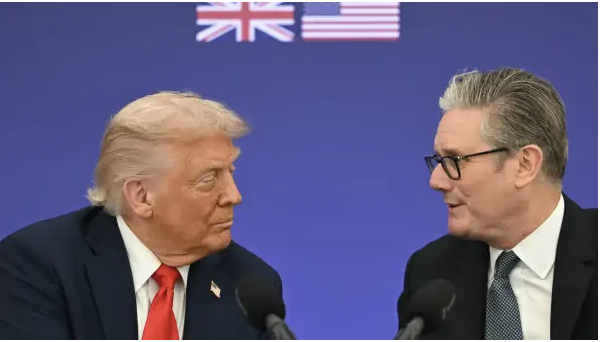
The United States has paused negotiations on a major technology trade agreement with the United Kingdom, U.S. halts UK tech trade deal:putting one of the most ambitious transatlantic tech partnerships on hold. The decision has sent ripples through the global tech industry, raising concerns among governments, investors, startups, and major technology firms that were counting on deeper cooperation between the two countries.
The move does not cancel the agreement outright, but it does freeze progress at a critical stage. For a deal that promised to strengthen collaboration in artificial intelligence, data centers, quantum computing, digital trade, and advanced infrastructure, the pause represents a serious setback.
TLDR
- The U.S. has paused talks on a major UK tech trade deal, creating uncertainty around future technology cooperation
- The move is linked to wider trade disagreements, not technology itself
- Big tech investments and AI collaboration plans may face delays or scaling back
- Negotiations are paused, not cancelled, leaving room for talks to restart
What Has Been Paused
The agreement, known as the Tech Prosperity Deal, was designed to deepen U.S. UK technology cooperation across several future-focused sectors. It aimed to position the UK as a leading destination for American tech investment, while giving U.S. companies a stable and innovation-friendly partner outside the European Union.
The pause affects implementation, funding commitments, and government-level coordination. While private companies have not withdrawn existing investments, the absence of political backing creates uncertainty around timelines, regulatory alignment, and long-term planning.
In practical terms, joint initiatives tied to the agreement are now in limbo. This includes collaboration on AI infrastructure, advanced computing research, and digital policy frameworks meant to support cross-border innovation.
Why the U.S. Put the Deal on Hold
The halt is not primarily about technology itself. Instead, it stems from wider trade disagreements that have spilled into the tech space.
One major issue is the UK Digital Services Tax, which applies to large online platforms that earn revenue from UK users. The United States has long argued that such taxes unfairly target American technology companies. While the UK maintains that the tax is temporary and aligned with global tax reform efforts, U.S. officials see it as a barrier to fair digital trade.
Another sticking point involves agricultural and food standards. The U.S. has been pushing for greater access to the UK market for certain food products that do not meet current British regulations. The UK government has repeatedly stated that it will not compromise on food safety or animal welfare standards, even in trade negotiations.
From the U.S. perspective, the tech deal was linked to broader trade commitments. When progress stalled in non-technology areas, Washington chose to pause the technology agreement as leverage.
The UK Government’s Position
The UK has taken a cautious but firm stance. Officials have emphasized that the U.S. UK relationship remains strong and that discussions are ongoing. At the same time, the government has signaled that certain policies, including food standards and domestic tax rules, are not easily negotiable.
British leaders continue to frame the tech deal as mutually beneficial and insist that cooperation on innovation should not be derailed by unrelated trade disputes. However, the pause highlights the limits of that argument when negotiations are treated as a single package rather than separate tracks.
Technology Sectors Most Affected
The freeze impacts several high-growth technology sectors that were central to the agreement.
Artificial intelligence and data centers were at the heart of the deal. Plans included expanding computing capacity, building large-scale AI infrastructure, and supporting research into next-generation models. Without the deal’s framework, these projects face delays and potential relocation.
Quantum computing collaboration is also affected. The agreement aimed to accelerate joint research and help commercialize breakthroughs. A pause risks slowing progress in a field where speed and scale matter.
Semiconductors and advanced hardware were another focus. The deal supported efforts to strengthen supply chains and reinforce the UK’s role in chip design and AI hardware development.
Digital trade and data flows are now less certain as well. The agreement was expected to reinforce data-sharing mechanisms and regulatory cooperation. Uncertainty in this area complicates cross-border operations for cloud providers, software firms, and digital services companies.
Impact on Companies and Startups
For large technology companies, the pause introduces risk rather than immediate losses. Many firms had announced long-term plans tied to the broader vision of the deal. Without clear government backing, those plans may be slowed, scaled back, or redirected to other countries.
Startups and smaller tech firms face greater challenges. Many rely on access to shared infrastructure, research partnerships, and investor confidence that comes from strong government-level cooperation. A prolonged pause could reduce funding opportunities and slow innovation cycles, particularly for AI-focused startups.
From an investment perspective, policy uncertainty is a red flag. Venture capital and private equity investors tend to favor markets with predictable regulatory environments. The halt may make some investors cautious about committing fresh capital to UK-based tech ventures.
Economic and Geopolitical Consequences
Economically, the biggest risk is investment diversion. Companies choosing where to build data centers or research hubs may favor locations with clearer policy support. This could weaken the UK’s ambition to become a global AI and advanced technology leader.
Geopolitically, the pause sends a message about how technology partnerships are being used as trade negotiation tools rather than treated as strategic alliances. This approach may make other U.S. allies more cautious about relying on American commitments in sensitive technology areas.
The situation also reflects a broader trend of technology fragmentation, where trade disputes, tariffs, and regulatory differences make global collaboration harder at a time when innovation depends on cross-border cooperation.
Short-Term Outlook
In the near term, negotiations are expected to continue behind closed doors. Neither side has formally abandoned the agreement, and both governments have incentives to avoid a full collapse.
However, progress depends on whether compromises can be reached on issues that are politically sensitive in both countries. Without movement on those fronts, the pause may drag on.
Long-Term Implications
If the suspension lasts, the UK risks losing momentum in key technology sectors as investment flows elsewhere. At the same time, the U.S. risks undermining trust among allies by tying technology cooperation too closely to unrelated trade demands.
A successful resolution would likely require separating technology collaboration from broader trade disputes, allowing innovation partnerships to move forward independently. Whether that happens remains uncertain.
Read How People Really Use AI: The Surprising Truth From Billions of Real Interactions
Conclusion
The decision to halt U.S. UK tech trade deal negotiations is more than a temporary pause. It highlights how deeply technology, trade, and geopolitics are now intertwined.
For businesses, investors, and innovators, the message is clear. Political uncertainty can slow even the most promising technology partnerships. How both governments handle the next phase will determine whether this pause becomes a brief delay or a lasting shift in the transatlantic tech relationship.
Frequently Asked Questions
Why did the U.S. halt negotiations on the UK tech trade deal?
The pause is mainly due to broader trade disagreements between the two countries, including differences over digital taxes and market access rules. The tech deal became entangled in these wider negotiations.
Is the tech trade deal completely cancelled?
No. The deal has been paused, not scrapped. Both sides have left the door open for negotiations to resume if outstanding trade issues are addressed.
What was the goal of the UK-U.S. tech trade deal?
The deal aimed to strengthen cooperation in technology sectors such as artificial intelligence, data infrastructure, digital trade, and advanced research, while encouraging large tech investments in the UK.
How does this affect AI and tech investment in the UK?
The pause creates uncertainty for investors. While existing projects continue, some planned AI and data centre investments may be delayed until the policy outlook becomes clearer.
Will major tech companies pull out of the UK?
At this stage, there is no indication of companies leaving the UK. However, prolonged uncertainty could influence where future investments are directed.
Does this impact everyday tech users in the UK or U.S.?
For now, there is no immediate impact on consumers. The effects are more likely to be felt at the business, investment, and policy level.
What role do digital taxes play in this dispute?
Digital taxes have been a long-standing point of friction, particularly for U.S.-based tech firms. The disagreement over these policies has spilled into broader trade talks.
Could the deal still be revived?
Yes. If both governments reach common ground on trade concerns, the tech deal could move forward quickly, as much of the framework is already in place.
Why is this deal important for global tech relations?
The agreement was seen as a symbol of close transatlantic tech cooperation. Its pause highlights how technology partnerships are increasingly tied to global trade politics.
What should businesses and startups watch next?
Companies should monitor future trade negotiations, policy announcements, and regulatory changes, as these will signal whether the partnership is likely to resume or remain stalled.