Tim Cook as Apple CEO: How Long Will He Stay and Who Will Replace Him?
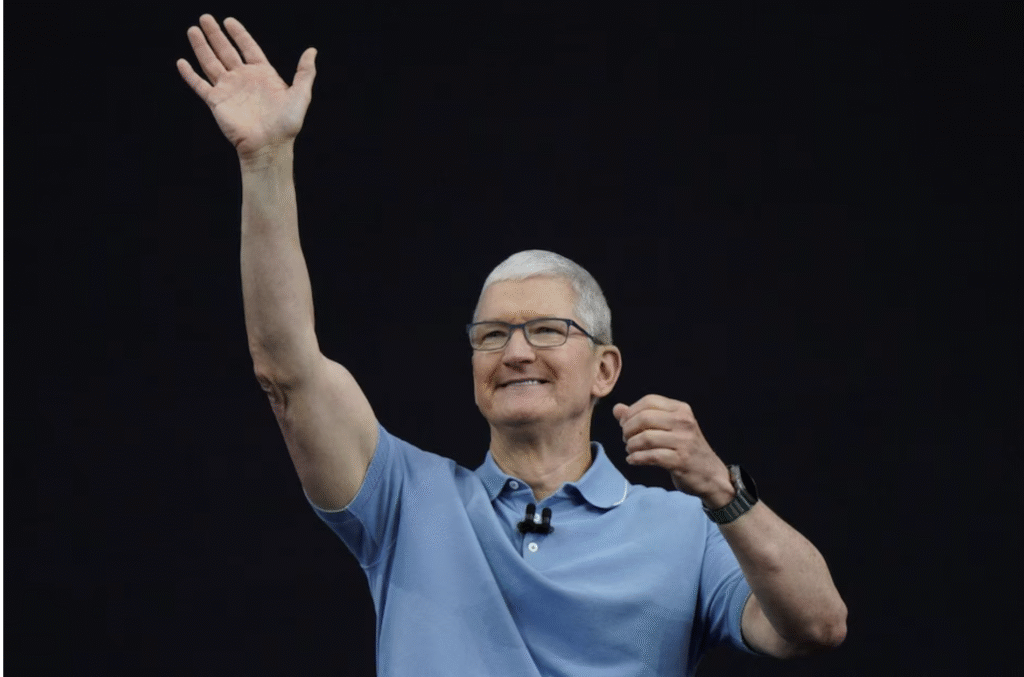
Image credit to Reuters
Apple‘s CEO Tim Cook stands on the edge of one of its most consequential leadership transitions in decades. Tim Cook has guided the company through over a decade of explosive growth, turning Apple from a hardware focused icon into a services powerhouse with a global supply chain unmatched in scale. As succession discussions intensify, the central questions remain: how long will Cook continue as CEO, and who will lead Apple into its third era of leadership?
TL;DR — Key Takeaways
- Tim Cook has led Apple for over a decade, turning it into a $3–4 trillion tech powerhouse.
- Internal succession planning is underway, with John Ternus widely viewed as the strongest candidate.
- Other potential successors include Craig Federighi, Greg Joswiak, and Sabih Khan, but each has specific limitations.
- Apple strongly prefers internal leadership transitions, not external hires.
- The timing is uncertain—Cook may step down within a few years or remain longer depending on strategic needs and personal choice.
The Tim Cook Era: Quiet Mastery and Predictable Excellence
Tim Cook assumed the CEO role in 2011 after Steve Jobs stepped down. Skeptics doubted an operations focused executive could preserve Apple’s product magic. Cook proved them wrong. Instead of trying to be Jobs, he applied his own strengths: operational discipline, calm leadership, and strategic scaling.
Under Cook, Apple’s valuation multiplied many times over, becoming the world’s most valuable public company. Revenue expanded steadily, driven not only by iPhone updates but also by the creation of entirely new pillars of business.
Services and Recurring Revenue
Cook shifted Apple from a single product dependency to an ecosystem strategy. Apple Music, Apple TV+, Apple Arcade, Apple Pay, iCloud, and an aggressive push into subscription services transformed Apple into a recurring revenue machine. Services today represent one of the most profitable and defensible segments of Apple’s business.
Apple Silicon
The transition from Intel to Apple’s M series chips reshaped the industry. Apple regained control of performance, efficiency, and product differentiation. Custom silicon now powers Macs, iPads, iPhones, and wearables. It has become Cook’s most successful engineering bet, one that solidified Apple’s independence from commodity suppliers.
Culture Shift
Where Jobs was demanding and unpredictable, Cook is methodical and collaborative. He promoted a calmer executive culture based on deliberation and cross functional decision making. That culture produced steady results and fewer internal crises at a scale that Jobs would never have tolerated.
Challenges Defining Cook’s Final Years
Even Tim Cook’s tenure is not without turbulence. The last few years have exposed what will likely be the next CEO’s greatest obstacles.
China Slowdown
China, once Apple’s growth engine, has cooled. Domestic rivals have overtaken Apple in premium market share. Regulatory barriers, changing consumer trends, and national competition have dampened Apple’s momentum.
AI Competition
Apple’s conservative, on device approach to artificial intelligence is appealing for privacy, but it has slowed visible innovation. Competitors like Microsoft and Google have pushed cloud AI aggressively. Apple Intelligence remains a long term strategy, but its rollout and market adoption have generated mixed reactions.
Vision Pro and Spatial Computing
Vision Pro launched as a technological marvel, but its price and use case limited its real world impact. Hardware refinements and a shift toward lightweight glasses suggest Apple is pivoting. Vision Pro is a bet on the future that hasn’t fully landed in the present.
Regulation and Antitrust
Apple is under constant scrutiny in the EU and the US over App Store policies, anticompetitive practices, and digital market regulations. The company faces increasing pressure to open its platforms and allow competing payment methods and stores.
Diversifying Supply Chains
Geopolitics forced Apple to rethink manufacturing. India and Vietnam are becoming vital assembly hubs as Apple hedges against risks tied to China. The shift is costly and slow, but necessary.
How Long Will Tim Cook Stay?
Tim Cook is now in his mid 60s and has repeatedly said he will not run Apple forever. However, he does not describe retirement in traditional terms. He has expressed that as long as he is mentally stimulated and contributing meaningfully, he will remain active.
Reports suggest two competing timelines:
- Short term transition: Cook could pass the CEO role within a year or two, moving into a chairman or senior advisory position.
- Extended runway: Cook could easily continue into his late sixties or early seventies, similar to other long tenured CEOs like Jamie Dimon or Bob Iger.
Apple does not choose CEOs casually. Cook was groomed for more than a decade before he took over from Jobs. The company appears to be preparing a similar stage for the next successor.
Who Is Next? Internal Succession Candidates
Apple almost always promotes from within. It values confidentiality, cultural integrity, and long term grooming over hiring an outsider. Based on executive responsibilities, company culture, and leadership trajectories, three candidates stand above the rest.
John Ternus – The Likely Future CEO
John Ternus, Senior Vice President of Hardware Engineering, has become the most talked bout successor. He joined Apple more than twenty years ago and shaped the most important hardware launches in Apple’s modern history.
He was central to:
- The Apple Silicon transition across the Mac lineup
- The evolution of iPad and iPhone hardware
- AirPods becoming a new category success
Ternus’s style mirrors Cook’s reliability but blends it with deep engineering intuition. He already appears in launch events as the public face of Apple’s hardware innovations. Internally, he is respected, calm, technical, and decisive. He is also young enough to lead Apple for a decade or more.
If Apple wants the next CEO to be a product first engineer—someone who understands supply chain, silicon, robotics, and next generation devices—Ternus fits perfectly.
Craig Federighi — The Software Visionary
Craig Federighi, Senior Vice President of Software Engineering, is Apple’s most charismatic communicator after Cook. He runs the teams behind iOS, macOS, and Apple’s overall platform experience.
Federighi embodies Apple’s culture better than anyone except Cook. He understands integration, security, privacy, and platform lockdown in a way that resonates with Apple’s philosophy.
His strengths:
- Visionary software direction
- Stage presence and leadership clarity
- Deep institutional experience across decades
His limitation is that Apple’s board often favors supply chain or hardware backgrounds for CEO roles. Federighi may remain the software architect behind Apple’s next era, but not necessarily its CEO.
Why External Candidates Are Unlikely
Apple is designed internally like a vault. Culture, secrecy, and product development pipelines are not compatible with external hires. The entire organization has been created to insulate ideas until they are ready. An outsider would spend years learning how Apple thinks before they could lead it.
Steve Jobs built Apple University specifically to maintain Apple’s decision making DNA. Tim Cook expanded it. This system exists to train successors quietly and consistently—not to search the outside world for one.
What Will Determine the Next CEO?
A future Apple CEO must excel in five core areas:
1. Product Discipline
Not merely launching new categories, but deciding which ideas deserve resources and which should be killed.
2. Operational Scaling
Apple produces over a billion devices annually. Supply chain mastery is not optional.
3. Ecosystem Stewardship
Hardware, silicon, software, services, privacy, retail—nothing works without seamless integration.
4. Regulatory Navigation
Apple’s next decade will involve constant legal battles and market limitations. Leaders must manage tradeoffs between business, law, and public trust.
5. Cultural Continuity
Apple’s brand relies on restraint, secrecy, and long-term planning. The next CEO cannot disrupt that foundation.
Based on these criteria, Ternus fits Apple’s historical patterns the best.
What to Expect Moving Forward
If Cook transitions soon:
- Expect a hardware centric CEO.
- Expect Cook to remain involved as chairman or senior advisor.
- Expect a smooth, carefully staged announcement with no surprises.
If Cook delays transition:
- Expect more grooming of top executives.
- Expect deeper involvement from AI, robotics, silicon, and manufacturing teams.
- Expect all candidates to be tested on stage and in crisis situations.
Apple makes leadership changes only when it is fully prepared—not before.
Final Thoughts
Tim Cook’s legacy is not flashy. It is disciplined, durable, and strategically quiet. He took Apple from an exceptional product company to a globally dominant modern technology institution. Once Cook leaves, Apple will not need a showman or philosopher. It will need someone who can maintain systems that work at an unimaginable scale—and shape the company’s role in AI, spatial computing, and emerging global markets.
John Ternus is that profile today.
Other leaders are strong in their domains, but Ternus combines engineering depth, supply chain understanding, trust, and longevity.
Apple’s next era won’t be determined by how loud a leader speaks, but by how well they protect the most complex technology brand in the world while pushing it into new frontiers.
Read- Google Gemini 3 – Full Guide to Features, Benchmarks, Pricing & Comparison
FAQ
1. When is Tim Cook expected to step down as Apple CEO?
Tim Cook has not announced an exact date. Reports suggest Apple is preparing for a leadership transition within the next few years, but Cook may continue longer if he believes he is still contributing meaningfully.
2. Will Tim Cook retire completely from Apple?
Unlikely. Cook has repeatedly said he does not see himself retiring in the traditional way. The most realistic scenario is him shifting to a chairman or advisory role rather than fully exiting the company.
3. Who is the leading candidate to replace Tim Cook?
John Ternus, Apple’s Senior Vice President of Hardware Engineering, is widely viewed as the top contender because of his leadership over core products and the Apple Silicon transition.
4. Why is John Ternus considered the strongest successor?
Ternus has deep hardware engineering experience, strong internal respect, and a proven track record of delivering major product transitions. He also has the age and leadership style for a long term CEO tenure.
5. Could Craig Federighi become the next CEO?
Craig Federighi is one of Apple’s most respected executives and excels at software vision. However, he may be better suited to remain a product leader rather than overseeing Apple’s global operations.
6. Will Apple choose an external CEO?
Very unlikely. Apple historically grooms internal talent and promotes from within to preserve culture, secrecy, and long term product philosophy. Outsiders rarely understand Apple’s decision making framework.
7. What role could Tim Cook play after leaving the CEO position?
He could transition to chairman or senior advisor, similar to what former CEOs at Disney or Microsoft did. This would allow him to guide strategy without day-to-day operational responsibilities.
8. How does Apple prepare successors internally?
Apple trains potential leaders over many years. They gradually expand responsibilities, increase their exposure in product launches, and test them during strategic projects and crisis periods.
9. What challenges will the next Apple CEO face?
The successor will navigate AI competition, regulatory pressure, China market slowdown, supply chain diversification, Vision Pro adoption, and evolving consumer expectations across hardware and services.
10. Could succession affect Apple’s stock?
Major CEO transitions always impact investor sentiment. If the process appears coordinated and deliberate—as Apple typically does—it is more likely to stabilize markets rather than trigger panic.