
Tech Neck (Text Neck) Guide: Causes, Symptoms, Treatment & Prevention

In today’s hyperconnected world, tech neck causes symptoms treatment prevention, most people spend many hours daily hunched over smartphones, laptops, and tablets. This widespread behavior has spawned a modern epidemic: tech neck, also known as text neck or forward head posture. Tech neck is not merely an inconvenient ache. it is a progressive musculoskeletal disorder that, when left untreated, can lead to chronic pain, cervical spine degeneration, herniated discs, and neurological complications.
The human head weighs significantly in a neutral position. However, when you tilt your head forward a common angle when viewing a smartphone the effective weight pressing on your neck increases dramatically. At deeper forward angles, that burden skyrockets further. This constant excessive load on the cervical spine triggers a cascade of biomechanical changes, muscular imbalances, and tissue damage that compound over time.
This comprehensive guide provides medically verified information on tech neck, including its anatomical causes, clinical symptoms, diagnostic methods, treatment protocols, preventive strategies, and when you should seek medical attention.
What Is Tech Neck?
Tech neck is defined as any form of chronic neck or shoulder pain, soreness, stiffness, and posture dysfunction caused by prolonged poor posture while using technology. The condition is characterized by forward head posture — a postural deviation where the head shifts forward relative to its neutral position.
Alternative names include:
- Text neck syndrome
- Smartphone neck syndrome
- Forward head posture
- Turtle neck posture
- SMS neck
- iNeck
Tech neck is a repetitive stress injury that develops gradually due to cumulative microtrauma to cervical structures.
Causes of Tech Neck
Primary Tech Neck Mechanical Causes
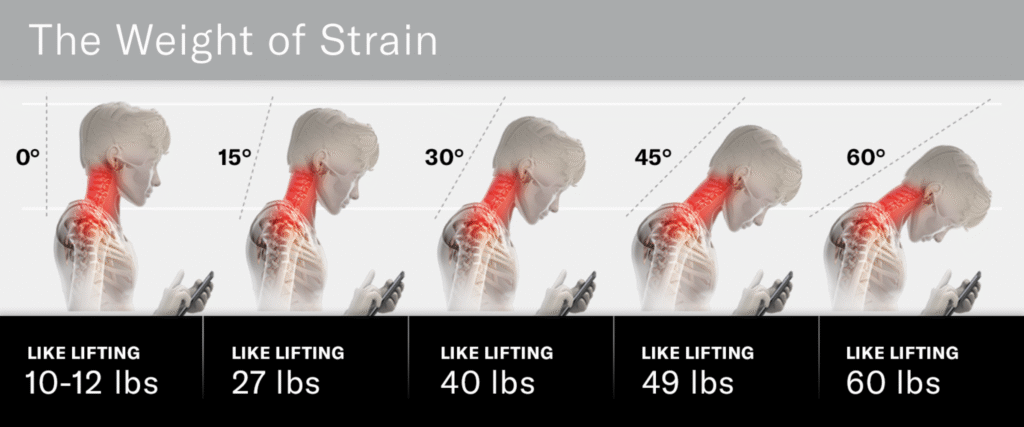
Forward Head Posture During Screen Use
Habitual forward head flexion while using mobile devices increases cervical muscle strain.
Prolonged Device Usage
Long daily smartphone or laptop usage without breaks increases the risk of cervical strain.
Poor Ergonomics
Incorrect monitor height, low desks, and laptop usage force forward posture.
Lack of Movement Breaks
Prolonged static positions fatigue muscles and increase strain.
Stech neck secondary Contributing Factors
- Lack of arm support
- Weak postural muscles
- Poor posture awareness
- Visual strain
- Habitual reinforcement of poor movement
- Age related spine changes
Tech neck prevalence and Risk Factors
Tech neck is widespread globally among students, office workers, smartphone users, and older adults. Women often report longer smartphone use and higher symptom prevalence.
High risk groups include:
- Office workers
- Students
- Healthcare professionals
- Heavy smartphone users
- Individuals with poor posture
- Older adults
- Those under stress
Modifiable risk factors include device usage habits, ergonomics, strength level, and physical activity.
Symptoms of Tech Neck
Primary Symptoms
Neck Pain
Pain may feel dull, sharp, localized, or radiating.
Headaches
Tension and referred pain produce headaches.
Shoulder Pain
Forward posture overloads shoulder muscles and joints.
Secondary Symptoms
- Neck stiffness
- Limited range of motion
- Trigger points
- Upper and mid back pain
- Arm and hand symptoms
- Tingling or numbness
Red Flag Symptoms
Seek urgent care if you experience severe radiating pain, numbness, weakness, balance issues, or bowel/bladder issues.
How Tech Neck Affects the Spine and Posture
Cervical Spine Effects
Forward posture leads to:
- Flattened cervical curve
- Disc degeneration
- Facet joint stress
- Ligament laxity
Nerve Effects
Forward head posture increases the risk of nerve compression and radiculopathy.
Muscular Imbalances
Tight muscles commonly include upper trapezius, levator scapulae, scalenes, and suboccipitals.
Weak muscles include deep cervical flexors, scapular stabilizers, and thoracic extensors.
Shoulder Effects
Forward posture causes:
- Scapular dyskinesis
- Rounded shoulders
- Shoulder pain and stiffness
Postural Cascade
Tech neck can lead to whole body postural changes including thoracic kyphosis, lumbar arching, pelvic tilt, and balance issues.
Diagnosis and Assessment
Clinical Assessment
Physiotherapists evaluate posture, mobility, strength, neurological function, and specific tests.
Craniovertebral Angle (CVA)
A side view photograph measures forward head posture severity.
Imaging
X ray, MRI, or CT may be recommended if neurological symptoms or structural issues are suspected.
Pain and Disability Scales
Tools like the Neck Disability Index help track severity and improvements.
Use assistive aids to help cure tech neck
Long Term Effects and Complications
Untreated tech neck may lead to:
- Chronic neck pain
- Disc degeneration
- Herniated discs
- Early cervical arthritis
- Nerve compression
- TMJ problems
- Dizziness
- Poor sleep
- Reduced lung capacity
- Psychological stress
- Reduced quality of life
Exercises can help this condition, Check out: Best Indoor Cycling Trainers 2025: Honest Buyer’s Guide for Every Rider
Exercises and Stretches for Tech Neck
(Medical Disclaimer: Exercises are educational only. Seek professional advice if you have pain or neurological symptoms.)
Phase One: Stretching and Mobility
Includes chin tucks, neck stretches, lateral neck stretches, and shoulder rolls.
Phase Two: Strengthening
Includes scapular squeezes, wall angels, isometric neck strengthening, and resistance band rows.
Phase Three: Postural Integration
Includes posture resets and device positioning training.
Physiotherapy Treatments
Manual Therapy
- Soft tissue mobilization
- Myofascial release
- Trigger point work
- Joint mobilization
Electrotherapy
- TENS
- Ultrasound
- Laser therapy
Heat and Cold Therapy
- Heat for stiffness
- Cold for inflammation
- Contrast therapy for circulation
Progressive Rehab Program
Recovery usually includes pain reduction, strength building, and functional reintegration.
Postural Taping
Improves posture awareness and support.
Chiropractic and Osteopathic Care
Includes manual manipulation, soft tissue work, and adjunctive modalities.
Used cautiously, especially when underlying conditions are present.
Ergonomic Corrections
Smartphone Ergonomics
- Keep device at eye level
- Use stands
- Take frequent breaks
Computer Ergonomics
Monitor height, keyboard placement, chair adjustments, and workspace layout should support neutral posture.
Laptop Solutions
Use stands or external monitors to avoid looking downward.
Lifestyle Habits and Prevention
- Screen Time Management: Reduce prolonged screen usage
- Posture Awareness
- Sleep Position and Pillow Support
- Fitness and Physical Activity
- Stress Management
- Workstation Audits
When to Seek Medical Attention
Seek urgent care for severe neurological symptoms.
Consult a physiotherapist if symptoms persist, worsen, or limit function.
Conclusion
Tech neck is a modern, preventable condition driven by prolonged forward head posture and device overuse. With early intervention, proper ergonomics, physiotherapy, strengthening exercises, and lifestyle modifications, most cases improve significantly within weeks to months.
Consistent habits, posture awareness, and regular movement are essential for both recovery and long term prevention.
Frequently Asked Questions
1. Can tech neck cause permanent damage?
Yes, long term neglect can cause irreversible degeneration.
2. Is tech neck the same as cervical radiculopathy?
No, but tech neck can lead to radiculopathy.
3. How long does recovery take?
Anywhere from weeks to months depending on severity.
4. Can you get tech neck without using a smartphone?
Yes, any sustained forward posture can cause it.
5. Are some exercises unsafe?
Yes — avoid jerky movements, forced stretching, and heavy neck loading.
6.Do children get tech neck?
Yes, and rates are rising.
7. Does a neck brace help?
Only for short term relief; not long term.
8. Is surgery needed?
Rarely; only in severe compression or unresolved cases.
9. Is physical therapy enough?
Usually yes, unless severe pain or nerve involvement is present.
10. How do I prevent recurrence?
Maintain ergonomics, exercise regularly, and monitor posture.