
Signs Your Skin Is Aging Faster Than It Should Be
Your skin naturally changes over time, but sometimes those changes show up earlier than expected. Fine lines, dullness, sagging, or sensitivity appearing too soon are not just bad luck. In most cases, they are signs that your skin is aging faster than it should.
The good news is that most visible skin aging is influenced by daily habits and environment, not just genetics. When you understand the warning signs early, you can slow the process and protect your skin long before damage becomes permanent.
TLDR
- Premature skin aging is mostly caused by lifestyle and environmental factors, not just age.
- Sun exposure, stress, poor sleep, dehydration, and diet play a huge role in how fast your skin ages.
- Early signs like fine lines, dullness, and dryness are often reversible with the right habits.
- Consistent sun protection and simple skincare matter more than expensive treatments.
What Premature Skin Aging Really Means
Natural aging happens gradually and evenly. Premature aging, on the other hand, occurs when lifestyle and environmental stressors overwhelm the skin’s ability to repair itself. Sun exposure, stress, lack of sleep, pollution, dehydration, and poor nutrition all accelerate breakdown of collagen, elastin, and the skin barrier.
Instead of smooth, resilient skin, you begin to see uneven texture, loss of firmness, and early wrinkles. These are not just cosmetic changes. They reflect what is happening at a cellular level.
Early Visible Signs You Should Not Ignore
Fine Lines Appearing Too Soon
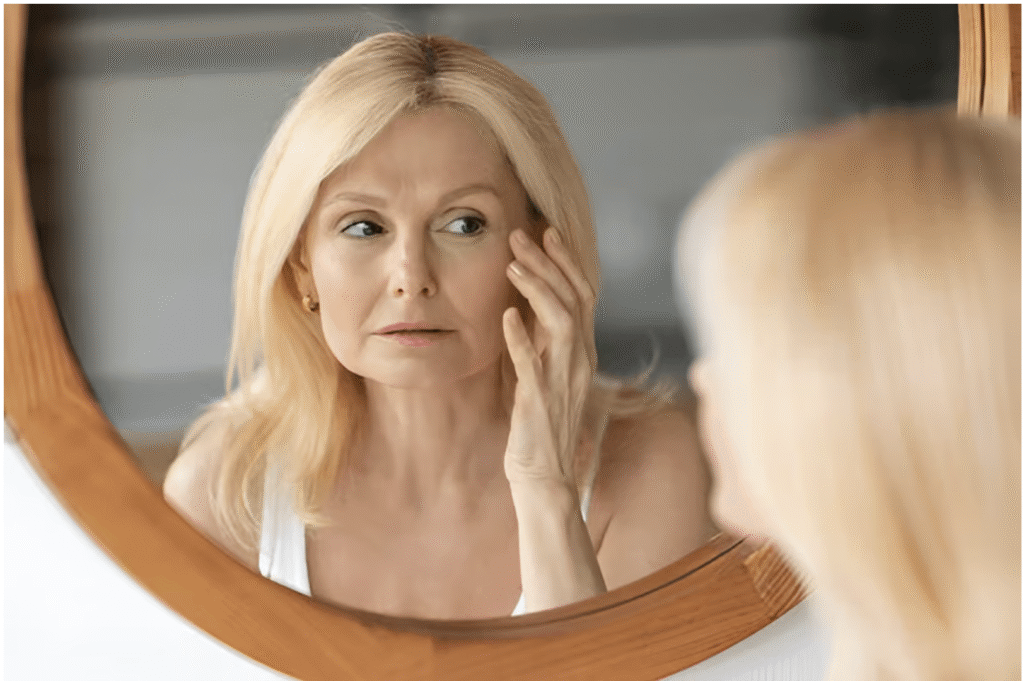
The earliest signs often show up around the eyes, forehead, and mouth. When fine lines appear consistently rather than only when you smile or squint, it suggests declining hydration and early collagen loss. If makeup settles into these lines, it is often a sign of dehydration rather than age alone.
Loss of Firmness and Sagging
Skin that once bounced back easily may start to feel loose. Loss of elasticity happens when elastin fibers weaken and collagen production slows. Early sagging along the jawline, cheeks, or around the mouth indicates accelerated structural breakdown.
Dullness and Uneven Skin Tone
A persistent dull look usually means slower cell turnover. When dead skin cells linger on the surface, skin loses its natural glow. Uneven pigmentation, dark spots, or patchy tone often develop from cumulative sun exposure and inflammation.
Enlarged Pores
Pores appear larger when surrounding skin loses firmness. As collagen weakens, pores stretch and become more visible, especially around the nose and cheeks.
Dryness That Does Not Improve
True skin dehydration feels tight and uncomfortable even after moisturizing. It signals a weakened skin barrier that cannot hold water properly, making fine lines more noticeable.
Subtle Signs That Often Go Overlooked
Makeup Creasing Quickly
When foundation settles into lines within hours, it often reflects barrier damage and low moisture retention rather than poor makeup technique.
Slower Healing and Persistent Marks
Skin that takes longer to recover from breakouts, cuts, or irritation is showing signs of reduced regenerative capacity.
Increased Sensitivity
Products that once worked well may suddenly cause stinging or redness. This usually means your skin barrier is compromised, allowing irritants to penetrate more easily.
Constantly Tired Appearance
Dark circles, puffiness, and a drawn look often point to poor sleep quality and elevated stress hormones, both of which accelerate aging.
Lifestyle Factors That Speed Up Skin Aging
Sun Exposure
Sun damage is the single biggest cause of premature aging. Ultraviolet rays break down collagen, trigger pigmentation, and weaken skin structure even on cloudy days or through windows.
Chronic Stress
Ongoing stress raises cortisol levels, which directly reduces collagen production and slows skin repair. Over time, stress leaves skin thinner, duller, and more prone to wrinkles.
Poor Sleep
Skin repairs itself while you sleep. Inadequate or irregular sleep disrupts collagen synthesis, weakens the barrier, and increases inflammation, making aging more visible.
Pollution
Air pollution creates oxidative stress, leading to pigmentation, rough texture, and loss of elasticity. Urban environments place constant pressure on skin defenses.
Dehydration
Insufficient water intake reduces skin plumpness and resilience. Dehydrated skin looks older because it lacks volume and reflects light poorly.
High Sugar Intake
Excess sugar causes glycation, a process where sugar molecules stiffen collagen fibers. This makes skin less flexible and more prone to wrinkles and sagging.
Alcohol and Smoking
Alcohol dehydrates skin and disrupts sleep, while smoking dramatically increases free radical damage and reduces blood flow to the skin. Both visibly accelerate aging.
Hormonal Imbalances
Changes in estrogen, thyroid hormones, or insulin levels can affect collagen production, hydration, and pigmentation, speeding up aging from within.
Why Skin Ages Faster at a Cellular Level
Premature aging happens when collagen breakdown outpaces collagen production. Environmental stress creates free radicals that activate enzymes responsible for degrading collagen and elastin. At the same time, the skin’s ability to rebuild weakens.
Oxidative stress, inflammation, and glycation work together, gradually altering the skin’s structure. Over time, this leads to thinner skin, deeper wrinkles, and uneven tone.
Normal Aging vs Premature Aging
Natural aging happens evenly and slowly. Skin becomes thinner, drier, and less elastic with time, but tone generally remains balanced.
Premature aging looks different. It includes deep wrinkles, uneven pigmentation, rough texture, enlarged pores, and sagging that appears earlier than expected. The key difference is that premature aging is largely preventable.
How to Slow Premature Skin Aging
Daily Sun Protection
Consistent use of broad-spectrum sunscreen is the most effective anti-aging habit. It protects collagen, prevents pigmentation, and preserves elasticity.
Retinoids for Repair
Retinoids encourage collagen production, speed up cell turnover, and smooth fine lines. Used consistently, they remain one of the most proven anti-aging tools.
Antioxidants
Ingredients like vitamin C, green tea, and resveratrol neutralize free radicals and strengthen the skin against environmental damage.
Hydration and Barrier Repair
Ingredients such as hyaluronic acid, ceramides, and niacinamide help skin retain moisture and rebuild its protective barrier.
Nutrient-Rich Diet
Fruits, vegetables, healthy fats, and protein support collagen synthesis and reduce inflammation. Limiting sugar and alcohol protects skin structure over time.
Quality Sleep and Stress Control
Prioritizing rest and managing stress allows skin to repair itself properly and reduces hormone-driven aging.
When to See a Dermatologist
If you notice rapid changes in texture, tone, or firmness despite good skincare habits, a dermatologist can identify underlying causes such as hormonal imbalance, chronic inflammation, or sun damage and guide targeted treatment.
Final Thoughts
Your skin aging faster than expected is not a failure or a flaw. It is feedback. Skin reflects lifestyle choices, environment, and self-care habits over time.
The most important takeaway is this: it is never too early or too late to slow the process. With sun protection, proper skincare, balanced nutrition, good sleep, and stress management, your skin can recover, strengthen, and age at a healthier pace.
Aging is inevitable, but premature aging is not.
Read How People Really Use AI: The Surprising Truth From Billions of Real Interactions
Frequently Asked Questions
1. At what age does skin usually start aging?
Skin aging naturally begins in your mid to late twenties when collagen production slowly declines. However, visible signs like fine lines or dullness can appear earlier if your skin is exposed to excessive sun, stress, or dehydration
2. How can I tell if my skin is aging faster than normal?
If you notice fine lines in your early twenties, constant dullness, uneven skin tone, or makeup settling into lines, your skin may be aging faster than expected. These signs usually point to lifestyle or environmental damage rather than genetics alone.
3. Is premature skin aging reversible?
While you cannot reverse time, many early aging signs can be improved. With proper sun protection, hydration, skincare, and lifestyle changes, skin texture, brightness, and firmness can noticeably improve over time.
4. Does sunscreen really make that much difference?
Yes. Daily sunscreen is the most effective anti-aging step you can take. Sun damage is responsible for the majority of visible aging, including wrinkles, sagging, and dark spots.
5. Can stress really affect how my skin looks?
Absolutely. Chronic stress increases cortisol, which breaks down collagen and weakens the skin barrier. This leads to dullness, fine lines, sensitivity, and slower healing.
6. Why does my skin look older even when I moisturise daily?
This often means your skin is dehydrated, not dry. Dehydrated skin lacks water, not oil, and needs ingredients like hyaluronic acid, ceramides, and better barrier repair rather than just a heavier cream.
7. Does diet actually impact skin aging?
Yes. Diets high in refined sugar and processed foods accelerate collagen damage, while foods rich in antioxidants, healthy fats, and vitamins help protect and repair the skin.
8. Can lack of sleep make me look older?
Poor sleep directly affects skin repair. During sleep, the skin produces collagen and heals damage. Chronic sleep deprivation leads to dark circles, dullness, and deeper wrinkles.
9. Is blue light from phones and laptops aging my skin?
Prolonged screen exposure can contribute to oxidative stress and pigmentation, especially when combined with poor sleep and eye strain. While it is not as damaging as UV rays, it can still add to premature aging.
10. When should I see a dermatologist about early aging?
If you notice rapid changes, persistent sensitivity, worsening pigmentation, or aging signs that seem excessive for your age, a dermatologist can help identify causes and suggest targeted solutions.