Maruti Suzuki Celerio Safety Rating Explained: What 3 Stars Really Mean
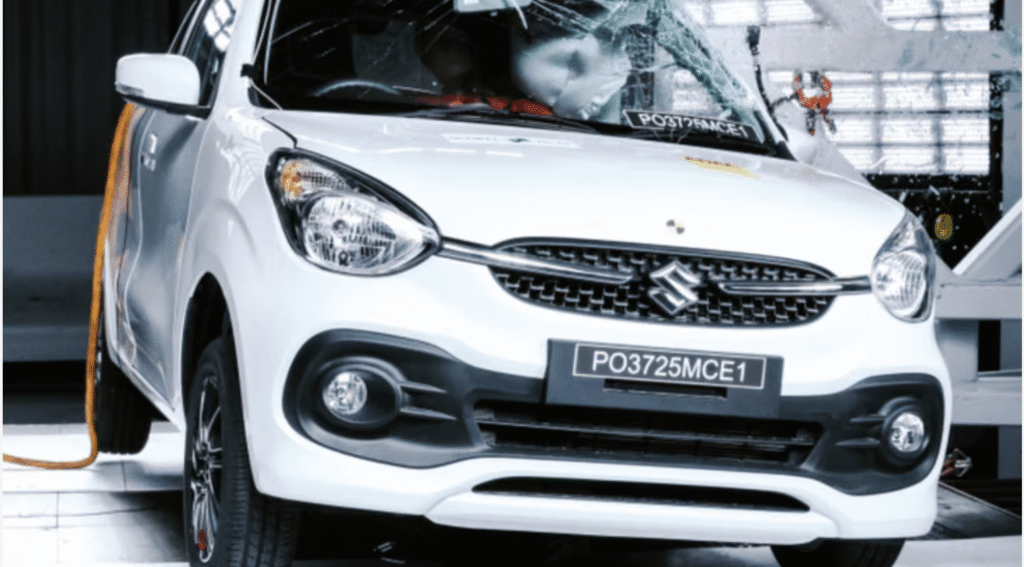
The Maruti Suzuki Celerio has received a 3 star Global NCAP safety rating, sparking fresh conversations around safety in India’s budget hatchback segment. The result places the Celerio somewhere in the middle of the safety spectrum. It shows progress compared to older versions, but it also highlights clear limitations that buyers should understand before making a decision.
The crash test outcome paints a picture of a car that has modern safety features on paper, yet struggles with deeper structural challenges. For everyday city use, the Celerio offers acceptable protection, but for buyers prioritising maximum safety, the rating leaves important questions unanswered.
TLDR
- The Maruti Suzuki Celerio scored 3 stars for adult safety and 2 stars for child safety in Global NCAP tests
- Six airbags and stability control help, but the bodyshell and footwell are structurally weak
- It is acceptable for city driving, but not ideal for high-speed highway use or families with young children
- Safer alternatives like the Tata Punch offer much better protection for a slightly higher price
- Maruti Suzuki Celerio Safety Rating Explained: What 3 Stars Really Mean
- What Global NCAP Safety Ratings Actually Measure
- How the Tests Work
- Two Main Safety Scores
- Maruti Celerio Crash Test Performance Explained
- Child Occupant Protection Remains a Weak Area
- Safety Features Offered by the Celerio
- How the Celerio Compares to Safer Alternatives
- Why an Unstable Bodyshell Matters
- What This Rating Means for Buyers
- Maruti Suzuki’s Broader Safety Direction
- What Would Make the Celerio Safer in the Future
- Expert Verdict: Should You Buy the Celerio
- The Bigger Picture for Indian Car Buyers
- Final Takeaway
- Frequently Asked Questions
- What Global NCAP Safety Ratings Actually Measure
What Global NCAP Safety Ratings Actually Measure
Before judging the result, it helps to understand what Global NCAP tests and why the ratings matter.
Global NCAP is an independent organisation that evaluates how well cars protect occupants during serious crashes. The tests simulate real-world accidents rather than laboratory-only conditions.
How the Tests Work
The most important test is a frontal offset crash at highway speed, designed to replicate a head-on collision. Vehicles are also assessed for side impact protection, electronic stability systems, and child seat compatibility.
Two Main Safety Scores
- Adult Occupant Protection evaluates how well the driver and front passenger are protected, especially the head, chest, legs, and pelvis
- Child Occupant Protection measures how safely child seats perform using infant crash dummies
A 3 star rating indicates average protection. It is not unsafe, but it is far from best-in-class.
Maruti Celerio Crash Test Performance Explained
The tested version of the Maruti Celerio comes with six airbags and electronic stability control, both now standard across the range.
Adult Occupant Protection
The adult safety score landed in the 3 star range, with mixed results across different body areas.
- Head and neck protection was rated adequate to good, which is encouraging
- Chest protection for the driver was rated weak, raising concerns in higher-speed crashes
- Knee protection was marginal due to possible contact with hard dashboard structures
The most critical finding was that the bodyshell and footwell were rated unstable. This means the structure can manage the test impact, but may not cope well with more severe crashes.
Side Impact Performance
In side impact tests, protection was acceptable but not exceptional. The presence of side and curtain airbags helped, yet structural limitations remained visible.
Child Occupant Protection Remains a Weak Area
The child safety rating stood at 2 stars, which is below average by modern standards.
What Went Wrong
- Both forward-facing and rear-facing child seats showed poor chest protection
- Excessive head movement was recorded in frontal crashes
- Front passenger airbag cannot be switched off, limiting safe child seat placement
While ISOFIX mounts are provided on the rear seats, the overall child protection performance indicates that families with young children should be cautious.
Safety Features Offered by the Celerio
Despite its structural issues, the Celerio is well equipped for its price segment.
Key safety features include:
- Six airbags
- Electronic Stability Control
- ABS with EBD
- Seatbelt pretensioners and reminders
- ISOFIX child seat mounts
- Rear parking sensors
- Autonomous Emergency Braking
- Pedestrian protection compliance
These features improve everyday safety, but features alone cannot fully compensate for structural weakness.
How the Celerio Compares to Safer Alternatives
When compared to similarly priced cars, the Celerio’s safety performance looks average.
Cars like the Tata Punch offer significantly higher safety ratings for a modest price increase. This comparison is especially important for buyers who drive frequently on highways or carry family members regularly.
The gap between budget cars and safer platforms has narrowed, making safety-focused alternatives more accessible than before.
Why an Unstable Bodyshell Matters
One of the most misunderstood aspects of crash ratings is the unstable bodyshell comment.
An unstable structure means that during stronger impacts, the cabin may deform more than desired. This can reduce the effectiveness of airbags and increase the risk of serious injuries.
In simple terms, airbags protect only if the passenger compartment remains intact. If the structure collapses, safety equipment loses effectiveness.
What This Rating Means for Buyers
For City Drivers
If most of your driving is within city limits at moderate speeds, the Celerio offers reasonable protection. Its compact size, fuel efficiency, and ease of use still make it appealing for urban environments.
For Highway Users
For frequent highway driving, the 3 star rating and unstable structure are important concerns. At higher speeds, stronger structural integrity becomes critical.
For Families with Children
The low child safety score and limited child seat flexibility mean families should strongly consider safer alternatives.
Budget Consideration
The Celerio remains affordable, but buyers must decide whether saving money outweighs the benefits of stronger safety offered by slightly more expensive cars.
Maruti Suzuki’s Broader Safety Direction
Maruti Suzuki has improved safety across its lineup by standardising airbags and stability control. Newer platforms from the brand have achieved much better safety ratings, proving that the company has the capability to build safer cars.
The Celerio, however, continues to rely on an older platform that was not originally engineered for modern crash standards. This limits how much improvement is possible without a full redesign.
Read Breaking Barriers: Maruti Wagon R Gets Swivel Seat Option for Elderly and Persons with Disabilities
What Would Make the Celerio Safer in the Future
For meaningful improvement, the Celerio would need more than additional features.
Key areas include:
- Stronger body structure
- Better footwell reinforcement
- Improved child seat compatibility
- Passenger airbag cut-off switch
- Enhanced chest protection design
These changes would require a new platform rather than minor updates.
Expert Verdict: Should You Buy the Celerio
The Maruti Suzuki Celerio makes sense if you are:
- On a strict budget
- Primarily driving in city conditions
- Comfortable with average safety
- Focused on fuel efficiency and low maintenance
You should look elsewhere if you:
- Drive frequently on highways
- Have young children
- Can stretch your budget slightly
- Prioritise maximum crash protection
The Bigger Picture for Indian Car Buyers
The Celerio’s rating reflects a larger shift in the Indian market. Buyers now have real safety choices even in lower price brackets. As awareness increases, crash test ratings are becoming a deciding factor, not an afterthought.
The gap between affordability and safety is shrinking. Cars with higher safety ratings are no longer luxury options but practical alternatives.
Final Takeaway
The 3 star Global NCAP rating for the Maruti Suzuki Celerio represents progress, but not leadership. It confirms that the car offers basic protection suitable for city use, yet falls short of newer, safer competitors.
If safety is your top priority, better options exist at slightly higher prices. If budget and urban convenience matter most, the Celerio remains a viable choice, as long as buyers clearly understand its limitations.
In today’s market, being informed is the most important safety feature of all.
Read Honda City to Get Second Facelift in 2026: Design, Features and What to Expect
Frequently Asked Questions
Is a 3 star Global NCAP rating safe enough for daily use?
A 3 star rating means the car offers average protection in serious crashes. It is not unsafe, especially for city driving, but it does not provide the same level of protection as 4 or 5 star cars, particularly at higher speeds.
Does the Maruti Suzuki Celerio have enough airbags?
Yes, the current Celerio comes with six airbags as standard, which is good for its segment. However, airbags alone cannot compensate for a weaker body structure in severe crashes.
What does an unstable bodyshell actually mean?
An unstable bodyshell means the car’s structure may not hold its shape well in a more severe accident. This increases the risk of cabin intrusion, which can reduce the effectiveness of airbags and seatbelts.
Is the Celerio safe for families with small children?
The Celerio scored 2 stars for child occupant protection, which is below average. While ISOFIX mounts are provided, overall child safety performance is not ideal for families with infants or toddlers.
Can a child seat be installed in the front passenger seat?
No. The front passenger airbag cannot be switched off, which makes it unsafe to place a rear-facing child seat in the front.
Is the Celerio better than older Maruti models in terms of safety?
Yes. Compared to earlier versions, the Celerio has improved safety due to standard airbags and stability control. However, it still uses an older platform that limits overall crash protection.
How does the Celerio compare to the Tata Punch in safety?
The Tata Punch offers significantly better safety ratings with a stronger structure. If safety is your top priority and budget allows, the Punch is a safer alternative.
Is the Celerio suitable for highway driving?
It can be driven on highways, but it is better suited for city use. The structural limitations mean it may not offer the same protection as safer cars during high-speed crashes.
Will this safety rating affect insurance or resale value?
As safety awareness grows, NCAP ratings can influence both insurance premiums and resale value. A 3 star rating may be seen as acceptable but not desirable compared to higher-rated cars.
Should I avoid buying the Celerio because of this rating?
Not necessarily. If your usage is mostly urban and budget is a key factor, the Celerio can still make sense. Buyers who prioritise safety above all else should consider safer alternatives.