Kotak Mahindra Bank Announces First Stock Split 2025: What Investors Should Know
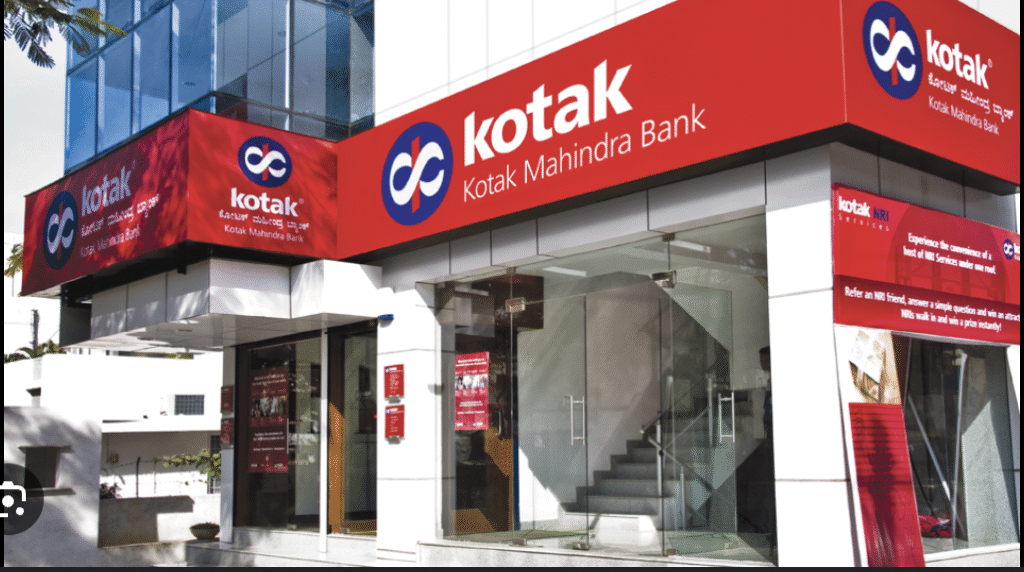
Kotak Mahindra Bank has announced its first ever stock split in many years, marking a major shift in its shareholding structure. On the occasion of its Foundation Day, the bank’s Board approved a 1:5 stock split, reducing the face value of each share from ₹5 to ₹1 and increasing the total number of shares fivefold.
The move is designed to make Kotak Mahindra Bank’s stock more accessible to retail investors, improve liquidity, and broaden participation. As part of the Kotak Mahindra stock split 2025, the split is aimed at lowering the per-share price so more individual investors can enter the market without a high cost barrier. The split is still subject to approvals from shareholders, regulators like the Reserve Bank of India, and other statutory bodies.
While the stock initially reacted mildly to the announcement, analysts and market observers view the split as a strategic step aimed at improving affordability and creating long-term investor engagement.
Details of the Kotak Stock Split: Ratio, Face Value, and Capital Structure
Kotak Mahindra stock split 2025 strategy: The Split Mechanics
Under the 1:5 stock split, every existing share will be divided into five new shares. An investor holding a certain number of shares before the split will simply hold five times that amount afterward, with the total investment value remaining unchanged.
This subdivision reduces the face value per share from ₹5 to ₹1. Despite the increased number of shares, the bank’s total paid up capital and ownership proportions remain exactly the same.
Capital Structure Changes
After the subdivision:
- The number of authorized and paid up shares increases fivefold.
- Total authorized and paid up capital remains the same.
- The ownership percentage of each shareholder remains unchanged.
In short: no dilution occurs. Only the number of shares changes, not the value of the company or your ownership stake.
Impact of the Face Value Reduction
Lowering the face value significantly increases accessibility because it reduces the market price per share after the split. As part of the Kotak Mahindra stock split 2025, the lower entry price helps new investors overcome the psychological barrier of buying high-value shares. For existing investors, tax implications remain neutral, and only the cost basis per share adjusts proportionally.
Dividends will also adjust in line with the split. Total dividend income stays the same, but the dividend per share will reduce after the Kotak Mahindra stock split 2025, ensuring that overall payouts remain unchanged while aligning with the new share structure.
Approvals and Timeline
The stock split will only take effect after approvals from:
- Shareholders
- RBI
- Relevant market regulators
Once approvals are received, the bank will announce the record date. Only those holding shares on the record date will receive the split shares. The full process is expected to take a few months.
Why Kotak Mahindra Bank Is Doing It: Strategic Rationale Behind the Kotak Mahindra Stock Split 2025
Celebrating a Milestone and Expanding Accessibility
The bank’s leadership has highlighted that the stock split aligns with its legacy of inclusiveness and growth. Introducing a lower face value and more affordable share price allows wider participation from young investors, first time buyers, and smaller retail investors.
The timing—on the bank’s Foundation Day—underscores its symbolic and strategic significance.
Improving Liquidity
A lower share price tends to attract more volume and new investors. Increased trading activity helps:
- Tighten bid ask spreads
- Improve price discovery
- Make the stock more resilient to short term volatility
- Encourage more stable long term holdings
Historically, companies that split their shares often see a surge in retail activity and broader participation.
Attracting Retail Investors
Retail participation in Indian markets has surged in recent years. Through the Kotak Mahindra stock split 2025, the bank’s management aims to tap into this growing trend by lowering the entry cost for new investors. A more diversified shareholder base strengthens long-term stability and promotes healthier trading dynamics, making the stock more attractive and accessible across all segments of the market.
Supporting Broader Capital Strategy
Stock splits often make employee stock options more attractive, especially for mid level and junior level employees. A lower face value increases the probability of stock options staying in the money, which helps talent retention.
Market Reaction and Investor Implications
Initial Market Response
The immediate market reaction was muted. This is common in today’s mature market environment, where investors realize that stock splits don’t inherently create value. Additionally, because approval processes remain pending, many traders prefer to wait for clarity.
Historical Reactions to Similar Splits
Other major private banks have executed stock splits in previous years, and markets typically respond positively in the months following implementation. With the Kotak Mahindra stock split 2025, a similar trend may emerge, especially since this is Kotak’s first split after a long gap. Once regulatory approvals are finalized and the record date is announced, investor sentiment and trading activity are likely to strengthen in line with historical patterns seen across the banking sector.
What It Means for Current Shareholders
For existing shareholders, the impact is straightforward:
- No dilution
- No change in total investment value
- Share count increases, share price adjusts
- Dividends and EPS adjust proportionally
The only differences will be administrative, such as adjusted cost basis and updated demat account entries.
Tax Implications
A stock split does not trigger capital gains tax. The cost of acquisition is simply divided across the new number of shares. Your holding period stays the same as before the split.
Selling after the split will involve capital gains calculations based on the revised cost basis.
What It Means for New Investors
New investors often find lower priced shares more approachable. After the split, more retail interest is expected, and that may impact liquidity and momentum.
However, valuation metrics remain unchanged. A lower share price does not mean the stock becomes cheaper in terms of valuation ratios—it only becomes more accessible in terms of affordability.
Comparison with Peer Banks
Several major private banks have used stock splits in the past to boost liquidity and expand shareholder participation. While some prefer maintaining higher share prices to signal exclusivity, others split shares regularly for retail accessibility.
Kotak’s long gap since its previous split suggests this decision is a strategic pivot aimed at expanding its base of long term retail investors. The bank’s consistent performance in recent years supports this move.
Risks and Considerations for Investors
Regulatory Approvals
The split depends on timely approvals from regulators and shareholders. Any delay could push the implementation timeline further.
Liquidity vs. Volatility
While liquidity generally improves after splits, it can also introduce more retail driven volatility. Newer investors sometimes react emotionally during price swings, so sharp intraday moves may be more frequent in early months.
EPS and Dividends Adjusting
Post split, especially after the Kotak Mahindra stock split 2025, EPS and dividends per share will look lower. This is purely a mathematical adjustment and does not indicate weaker business performance. Investors simply need to recalibrate their expectations to the new share structure, as the underlying fundamentals and total income remain unchanged.
Market Expectations
Though the split improves accessibility, it doesn’t automatically raise the stock price. Long term fundamentals continue to drive performance.
What Investors Should Do
If You Already Hold Kotak Shares
- No action required
- Hold your shares and wait for the record date
- Ensure your demat details are correct
- Track announcements from the bank
If You Are Thinking of Buying
- You can buy before or after the split
- Buying after the split might feel more comfortable due to the lower price
- Wait for clarity on regulatory approvals for reduced uncertainty
Dividend Investors
Dividend income will remain the same, but per share dividends will adjust proportionally. Investors should track the bank’s dividend guidance after the split.
Tax Planning
Keep records of your adjusted cost basis after the split goes into effect. This will matter when calculating future capital gains.
Conclusion
Kotak Mahindra Bank’s 1:5 stock split signals an important strategic shift aimed at making the stock more affordable, democratizing ownership, and improving liquidity. The split does not change the bank’s fundamental value or your ownership stake—it simply breaks shares into smaller units that are easier to buy and trade.
The move aligns with the bank’s long term vision of inclusive growth and broader investor participation. As India’s retail investor base expands, Kotak is positioning itself to welcome a larger and more diverse shareholder community.
For investors, the message is clear: stay informed, monitor upcoming announcements, and approach the split as a structural adjustment rather than a catalyst for immediate price movement. With strong long term fundamentals and growing retail interest in the banking sector, the stock split could be a meaningful step in the bank’s next phase of growth.
FAQs
1. Will the stock split change the value of my investment?
No. A stock split increases the number of shares you hold but reduces the price per share proportionately. Your total investment value remains the same immediately after the split.
2. Do I need to take any action to receive the split shares?
No action is required. The split shares will be credited automatically to your demat account once the record date is reached and the split is implemented.
3. What is the record date for the stock split?
The bank has not yet announced the record date. It will be communicated after all required regulatory and shareholder approvals are secured.
4. Will my dividends change after the split?
Your overall dividend income does not change. The dividend per share will be adjusted proportionally, but the total amount you receive remains the same.
5. Does a stock split trigger any tax liability?
A stock split is not a taxable event. You do not owe taxes at the time of the split. Only your cost basis per share is adjusted for future capital gains calculations.
6. Will the share price increase because of the stock split?
A stock split does not inherently increase a company’s value. Market forces determine whether the stock rises or falls. The main impact is improved liquidity and accessibility.
7. Is the stock split a sign of financial weakness?
No. Stock splits are typically used to make shares more affordable and increase participation. They do not indicate financial stress or performance issues.
8. How will my EPS and financial ratios appear after the split?
Metrics like earnings per share and dividend per share will automatically adjust to reflect the increased number of shares. This is a mathematical change and not a decline in performance.
9. Should I buy Kotak shares before or after the split?
Both options are valid. Many investors prefer waiting until after the split to buy at the lower per-share price, but this depends on your comfort level and investment strategy.
10. Does the stock split dilute my ownership?
No. A stock split does not dilute ownership because the company is not issuing new shares. Your percentage ownership remains exactly the same.