
How Siri, Alexa, and Google Gemini Are Redefining Smart Living in 2026
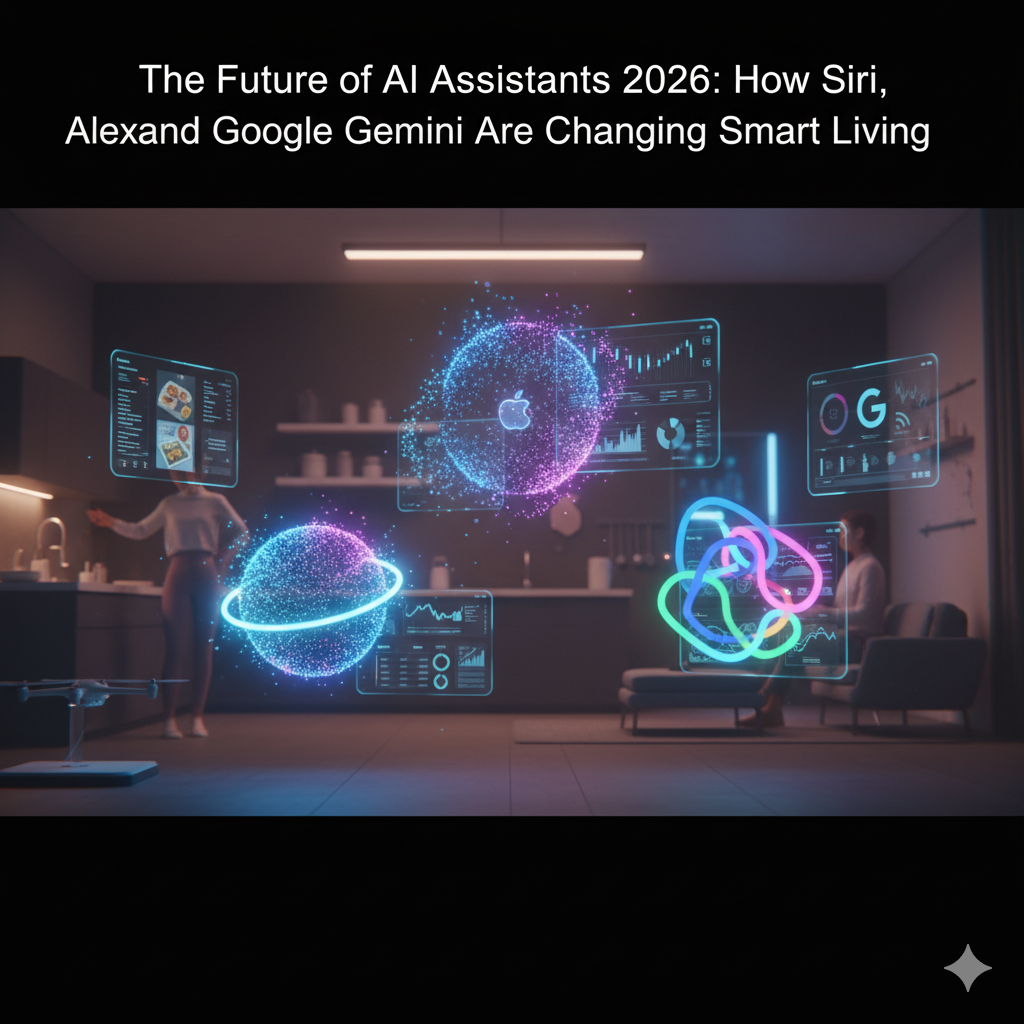
Remember when Siri could barely answer what’s the weather? Well, those times feels like ancient now. Today’s AI assistants are not just voice bots — they are more like personal partners that understand, predict, and sometimes even feel your emotions.
In 2026, the world of AI assistants has changed big time. Tools like Apple’s Siri, Google Gemini, and Amazon Alexa are leading a smarter revolution that mixes voice AI, chatbot technology, and context-aware systems. Whether you’re checking mails, adjusting your smart lights, or planning a trip — AI assistants are now doing it smoother than ever.
Let’s explore how they evolved, what’s new, and where this future is heading next.
The Journey: From Basic Bots to Conversational Geniuses
When Siri first came out back in 2011, it was more of a fancy voice command system. But with every year, things started changing. Google Assistant and Alexa pushed the competition higher, forcing everyone to level up.
Now, these assistants do a lot more than just answer queries — they understand context, tone, and even your habits. With machine learning and NLP (Natural Language Processing), they’ve evolved into true digital companions.
Evolution Stages of AI Assistants
- Command Era (2011–2016): Simple voice responses and limited learning.
- Context Era (2017–2021): Assistants started understanding users better.
- Conversational Era (2022–2024): Natural speech and humor became part of AI.
- Predictive Era (2025–2026): Now they anticipate your next move.
Siri’s 2026 Makeover: Apple’s Most Human-Like Update Yet
Apple didn’t just update Siri; they basically rebuilt it. The 2026 Siri runs on Apple’s on-device AI chip, meaning it’s faster, smarter, and more private. It now works smoothly with Vision Pro, Apple Watch, and even CarPlay.
Highlights of Siri 2026:
- Understands emotional tone in your voice.
- Can work completely offline for faster replies.
- Handles multiple Apple devices at once.
- Smarter with HomeKit automation routines.
Pros:
✅ Super fast and private.
✅ Natural conversation tone.
✅ Deep integration with Apple’s system.
Cons:
❌ Limited to Apple ecosystem.
❌ Few customization features.
(You can check Siri’s full roadmap at Apple.com)
Google Gemini: The Smartest AI Mind Yet
Google took things next level with Gemini, their futuristic AI model that combines the power of Google Bard and DeepMind. Gemini is not just answering — it’s reasoning, summarizing, coding, and even creating visuals.
It feels more like a “thinking assistant” than a voice bot.
Top Features of Google Gemini 2026:
- Handles text, image, and video all at once (multi-modal).
- Works across Gmail, Docs, YouTube, and Chrome seamlessly.
- Adapts to your speaking tone.
- Gives offline responses for faster help.
Why it stands out: Gemini learns from your day-to-day activity while respecting privacy. It makes Android and Chrome experiences incredibly personal.
(For more info, visit blog.google)
Alexa’s Future: From Smart Home Tool to Emotional Partner
Amazon’s Alexa has grown from a voice speaker helper to a true AI companion. It now detects your mood, learns your lifestyle, and even speaks in a tone that matches your vibe.
New Features in Alexa 2026:
- Mood detection through voice tone.
- Improved smart home integration.
- Adaptive learning from routines.
- Memory that continues conversation context.
Pros:
✅ Perfect for home automation.
✅ More personal and responsive.
✅ Easy to customize.
Cons:
❌ Still relies heavily on cloud.
❌ Privacy concerns exist.
(Know more at aboutamazon.com)
Quick Comparison: Siri vs Gemini vs Alexa (2026 Edition)
| Feature | Siri | Google Gemini | Alexa |
|---|---|---|---|
| Offline Capability | ✅ Yes | ⚡ Partial | ❌ No |
| Context Memory | Moderate | Strong | Medium |
| Ecosystem | Apple | Android / Google | Smart Home |
| Emotion Detection | High | Medium | Very High |
| Privacy Level | Excellent | Good | Average |
What’s Coming Next for AI Assistants
Here’s where things are headed in 2026 and beyond:
- Predictive Help: They’ll suggest before you even ask.
- Emotional Awareness: Recognizing stress or excitement from your tone.
- Visual Context: Using AR/VR for interactive help.
- Cross-App Sync: Switching between apps smoothly.
- Eco-Friendly AI: Smarter, greener data processing.
Soon, AI assistants will feel less like a tool and more like a companion who gets you.
The Human Touch in Conversational AI
The magic of modern assistants isn’t just speed — it’s empathy. They can now reply with humor, emotion, and context that feels real. Whether it’s Siri understanding frustration or Alexa cheering you up after a long day, the human touch is now the key factor.
Still, the challenge remains — balancing personalization with privacy. Companies like Apple and Google are focusing on on-device AI to ensure our data doesn’t leave our devices unnecessarily.
FAQs About Future AI Assistants
1. Which is the best AI assistant in 2026?
Google Gemini takes the crown for versatility, while Siri and Alexa shine in integration and emotional tone.
2. Will AI assistants ever fully replace humans?
No, but they’ll take care of routine and boring stuff, freeing humans to do more creative tasks.
3. Are AI assistants safe to use?
Mostly yes. Just check your privacy settings regularly and stick to trusted ecosystems.
4. How is Gemini better than old Google Assistant?
Gemini is multi-modal and way smarter — it can handle text, visuals, and even emotions at once.
5. What’s next after AI assistants?
Expect assistants that understand your face, gestures, and emotional signals using AR and spatial computing.