
Electric Vehicles vs Petrol Cars: Tech Behind the Shift Towards Sustainable Driving
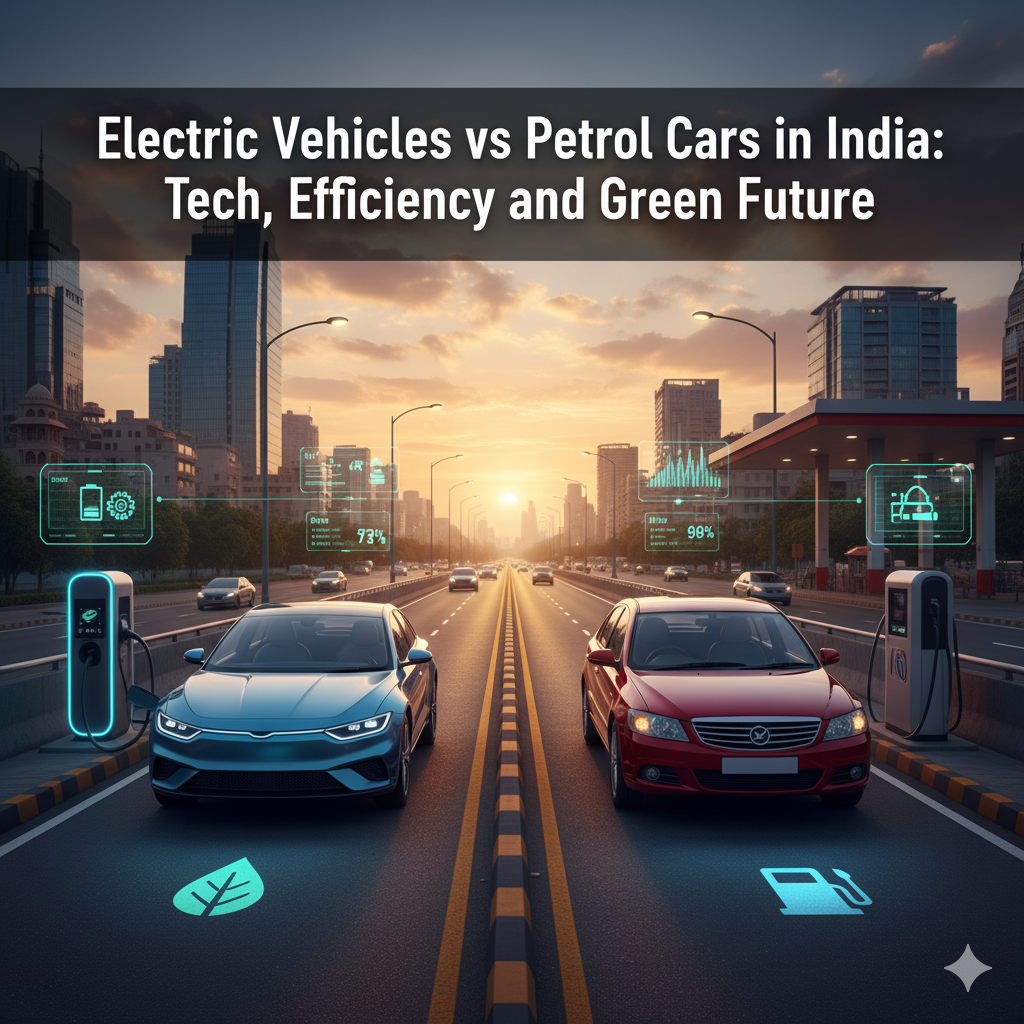
The automotive world is changing fast. Electric vehicles, or EVs, are becoming a real alternative to petrol cars. This shift is not just about cleaner air, but also about new tech, efficiency, and sustainability. In India, with rising pollution and traffic concerns, understanding the differences between EVs and petrol cars has never been more important.
EV vs Petrol Cars: How They Compare
1. Technology and Efficiency
- Electric Vehicles (EVs):
EVs use electric motors powered by rechargeable batteries. They are very energy efficient, converting over 77% of electricity into movement (en.wikipedia.org). - Petrol Cars:
Petrol cars run on internal combustion engines, converting only 15–25% of fuel energy into motion (en.wikipedia.org). That’s a lot of wasted energy.
2. Environmental Impact
- EVs:
They produce no tailpipe emissions. This helps reduce air pollution and greenhouse gases. According to the International Council on Clean Transportation, battery electric cars produce 73% fewer life-cycle emissions than petrol vehicles (reuters.com). - Petrol Cars:
They release CO2 and other pollutants, making them worse for both the environment and health.
3. Maintenance and Longevity
- EVs:
With fewer moving parts, EVs usually cost less to maintain. Battery technology improvements also make them last longer (theguardian.com). - Petrol Cars:
Need regular oil changes, exhaust repairs, and other services which add up over time.
Charging and Range: What You Should Know
EV Charging Stations in India
Cities like Delhi, Bengaluru, and Chennai are adding more EV charging stations. This makes owning an electric vehicle much easier.
Range Considerations
- EVs:
Modern EVs can handle most daily commutes easily. But for long trips, you need to plan charging stops. - Petrol Cars:
They refuel quickly and travel long distances without worrying about charging.
Pros and Cons of EVs and Petrol Cars
Electric Vehicles
Pros:
- Lower running costs since electricity is cheaper than petrol
- Reduced carbon footprint, cleaner air
- Quiet operation with instant torque
Cons:
- Higher upfront cost, though prices are dropping
- Charging network still expanding in some areas
- Takes longer to refuel compared to petrol cars
Petrol Cars
Pros:
- Lower initial purchase price
- Widespread refueling infrastructure
- Quick refueling, longer range
Cons:
- Higher fuel and maintenance costs
- Pollutes more and emits greenhouse gases
- Relies on fossil fuels
Future of Mobility: EVs, Autonomous Cars, and Green Tech
The future of transportation is leaning towards sustainability. EVs are leading the way with better batteries, autonomous driving features, and integration with renewable energy.
In India, government incentives and subsidies are making EV adoption faster. Smart cities and improved charging infrastructure will only make electric driving more practical.
FAQs About EVs vs Petrol Cars
1. Are EVs good for long-distance travel in India?
Yes. With more charging stations and longer-range models, long trips are possible, but planning charging stops is important.
2. How long do EV batteries last?
Most EV batteries last 8–10 years. Costs are coming down, and warranties usually cover replacements.
3. Do EVs need special maintenance?
Not much. They have fewer moving parts, but battery checks and software updates are needed.
4. Can EVs be charged at home?
Yes, most EVs can be charged with a standard outlet or home charger, which is very convenient.
5. Are there government incentives for buying EVs in India?
Yes, there are subsidies, tax benefits, and other incentives to encourage EV adoption.