
Dyson Purifier Cool PC1 (TP11) Launched in India – Is It Worth the Hype?
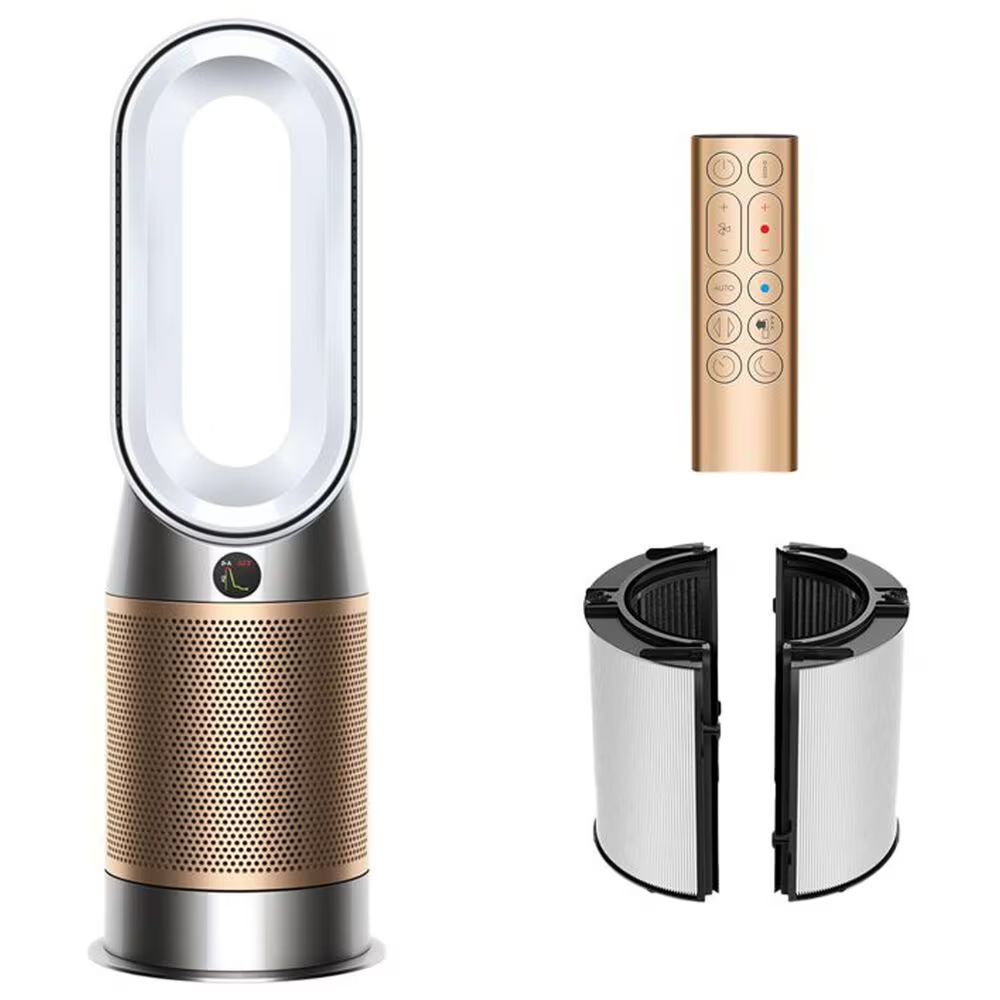
A Smart Air Purifier That Also Keeps You Cool
Air quality in our homes isn’t as “clean” as most people think. From invisible dust and smoke to pet dander and VOCs, there’s a lot floating around that our eyes don’t see. And that’s exactly where Dyson Purifier Cool PC1 (TP11) steps in.
Just ahead of the festive season, Dyson has dropped this sleek new air purifier in India, promising to make your indoor air as fresh as the Himalayas (okay, maybe not that fresh, but close enough). The company says it can capture 99.95% of ultrafine particles and even detect pollutants in real-time. But the big question — is it really worth ₹39,900? Let’s find out.
Dyson Purifier Cool PC1 (TP11): Price and Availability
The Dyson Purifier Cool PC1 TP11 is priced at ₹39,900 in India. It’s available in two color options — Black/Nickel and White/Silver. You can buy it through Dyson’s official stores, both online and offline, or via major e-commerce retailers.
For a premium purifier, it sits in a competitive zone where brands like Philips, Coway, and Blueair already have strong offerings. But Dyson’s edge is its futuristic design and smart features that tie into its “connected home” ecosystem.
Key Highlights of Dyson Purifier Cool PC1 (TP11)
- Captures 99.95% of particles as small as 0.1 microns
- Uses a sealed HEPA + activated carbon filtration system
- Built-in sensors to detect PM2.5, PM10, VOCs, and gases
- Delivers up to 290 liters of purified airflow per second
- Smart control via MyDyson app + voice commands (Alexa, Google Assistant, Siri)
- Has Night Mode, Sleep Timer, and Auto Mode for convenience
Design and Build – Dyson’s Signature Minimal Look
If you’ve seen any Dyson product before, the TP11 looks exactly how you’d expect — clean, tall, modern, and kinda futuristic. It’s not bulky like many purifiers; in fact, it looks like something out of a sci-fi movie rather than an appliance.
The air outlet loop gives it a 350° oscillation range, so air circulates evenly across the room. Weighing just about 4.7kg, it’s also easy to move around. The matte and metallic finish (especially the Black/Nickel one) looks premium, though fingerprints might be visible after some use.
The control system is minimal — just one button on the body. Everything else happens through the app or remote, which feels high-tech but could be slightly annoying if you misplace the remote (we’ve all been there).
Performance: What It Feels Like in Real Use
Dyson claims the TP11 can deliver 290 liters of clean air per second, and in our usage, it definitely circulates air faster than average purifiers. The Air Multiplier tech creates a strong but smooth breeze, and unlike old fan-type purifiers, you don’t get that noisy whoosh.
It’s not whisper silent, but it’s fairly quiet. Even at full blast, it tops around 61 dB, while Night Mode drops it to near-silent operation — perfect for bedrooms.
The built-in sensors detect dust, smoke, and pollen pretty fast. When we lit incense in a closed room, the purifier automatically ramped up the fan within seconds. The display and app clearly show PM2.5 and PM10 levels, so you can actually see the difference after a few minutes.
Smart Features: MyDyson App and Voice Control
Dyson’s MyDyson app deserves credit. It lets you:
- Monitor real-time air quality
- Adjust fan speed and oscillation
- Set a sleep timer
- Schedule purification sessions
- Track filter life
It also connects to Alexa, Google Assistant, and Siri. So you can literally say, “Alexa, turn on the Dyson purifier,” and it just works.
However, during setup, some users noticed the model name showing as PC1 instead of TP11 in the app — nothing major, just a naming overlap.
Filtration System Explained
The HEPA H13 filter is fully sealed to ensure pollutants don’t leak back into the air. It traps ultrafine dust, bacteria, allergens, and even some viruses. The activated carbon filter absorbs odors and gases like formaldehyde, nitrogen dioxide, and VOCs.
According to Dyson, you should replace filters about once a year, depending on your local air quality. The app even notifies you when it’s time for a change — pretty handy for busy folks.
Dyson TP11 vs Philips and Coway – Real Comparison
| Model | Filter Type | Smart Controls | Price | Coverage Area |
|---|---|---|---|---|
| Dyson Purifier Cool PC1 (TP11) | HEPA + Carbon | App + Voice | ₹39,900 | Medium to Large Rooms |
| Philips AC2958/63 | HEPA NanoProtect | App | ₹32,999 | Large Rooms |
| Coway AP-1512HH | HEPA + Pre-Filter | No App | ₹29,999 | Medium Rooms |
While Philips and Coway models may clean faster in certain tests, Dyson wins big in design, app control, and quiet operation. Plus, you get the cooling airflow, which other purifiers don’t offer.
Pros and Cons
Pros:
✅ Premium, minimal design
✅ Very quiet night mode
✅ App & voice control works great
✅ Filters even ultra-fine dust effectively
✅ Dual purpose: purifier + fan
Cons:
❌ On the expensive side
❌ Cooling is mild, not like an AC
❌ Filter replacements are pricey
❌ Physical controls are limited
Unique Take: Real-World Verdict
Honestly, if you just want clean air, cheaper purifiers can also do the job. But if you’re looking for a long-term, stylish, smart purifier that blends design, comfort, and functionality — Dyson TP11 delivers that “premium lifestyle” feel.
Its performance is reliable, app is intuitive, and build feels solid. For most urban homes where pollution spikes often, this one’s an investment worth considering.
Internal Links
Check out similar gadget reviews and buying guides on PreviewKart.com like:
- Best Air Purifiers in India 2025
- Dyson vs Philips: Which Air Purifier Should You Buy?
- Top Smart Home Devices You Must Try in 2025
External References
FAQs
Q1. What is the price of Dyson Purifier Cool PC1 in India?
It’s priced at ₹39,900 and available both online and in Dyson stores across the country.
Q2. Can the Dyson TP11 really cool a room?
Not like an AC, no. It circulates air efficiently which makes it feel cooler, but it doesn’t lower the temperature.
Q3. How often do I replace the filter?
Usually once every 12 months. But if you live in a high-pollution area, you may need to replace it sooner.
Q4. Does it work with Alexa or Google Assistant?
Yes, you can use voice commands to control modes, fan speed, and even get air quality reports.
Q5. Is it worth buying over cheaper air purifiers?
If you value design, quiet operation, and smart control — yes. If you only care about fast purification, you can save money with other brands.