
The Truth About Posture: Why the “Correct Posture” Idea Is a Myth
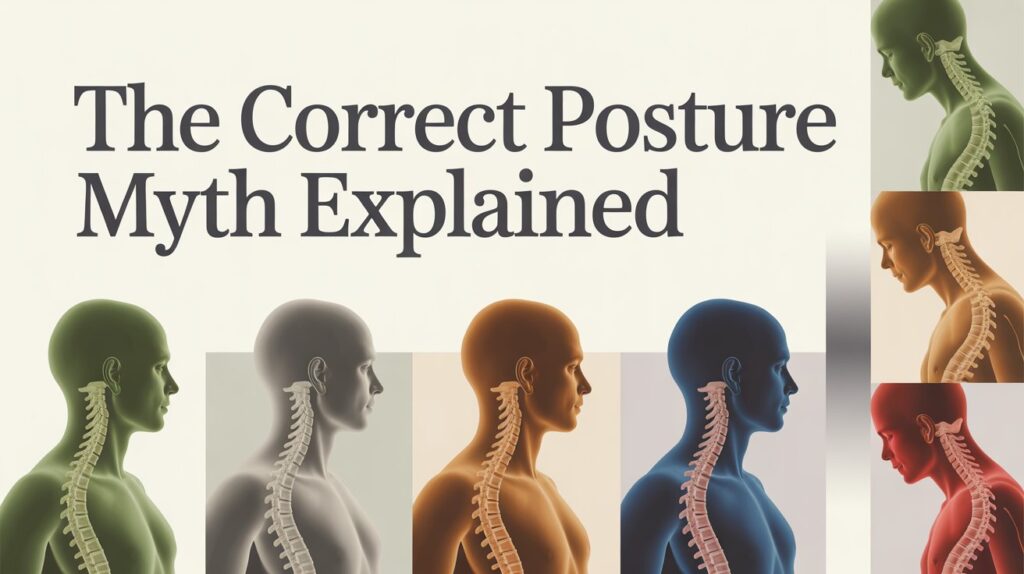
For decades, we have been told to sit up straight, stand tall, avoid slouching, and maintain the one true “correct posture” if we want to stay pain free. Parents repeat it. Teachers enforce it. Ergonomic companies market it constantly. But modern research paints a very different picture.
The belief that one perfect posture prevents pain is outdated, oversimplified, and not supported by high quality evidence. Human bodies simply do not work that way.
TLDR (3–4 Bullet Points)
- There is no single correct posture for everyone. Human bodies naturally come in different shapes, curves, and movement patterns.
- Posture alone does not cause or prevent pain. Research shows people with “bad” posture often have zero pain, and people with “perfect” posture can still experience pain.
- What really matters is moving regularly, avoiding long static positions, improving strength, and managing stress and sleep.
- Pain is influenced far more by lifestyle, conditioning, stress, sleep, and fear of movement than by posture alignment.
- The Truth About Posture: Why the “Correct Posture” Idea Is a Myth
- Where the Posture Myth Even Came From
- Does Bad Posture Cause Pain? The Evidence Says No
- Movement Variety Matters More Than Perfect Alignment
- If Posture Isn’t the Problem, Why Does Pain Happen?
- Why Posture Correctors, Chairs, and Gadgets Don’t Solve Pain
- What About People With Back or Neck Pain?
- What Modern Physiotherapists Actually Teach Now
- So Is There No Such Thing as Good or Bad Posture?
- What Actually Keeps You Pain Free
- The Simple Truth
- FAQs
- Where the Posture Myth Even Came From
Where the Posture Myth Even Came From
The idea of a single ideal posture is based on old anatomical theories from the 1800s. Early models assumed the body could remain upright without muscular effort and that the spine should align in specific straight segments.
Modern biomechanics has shown all of that to be inaccurate.
Your spine is naturally curved, and those curves vary widely between individuals. There is no universal spinal shape that everyone should aim for. Even the original creators of the so called ideal posture admitted they never found a real person who fit all the criteria.
In other words, the model so many people obsess over wasn’t realistic to begin with.
Does Bad Posture Cause Pain? The Evidence Says No
Large studies across different countries, ages, and body types keep showing the same thing: posture alone is not a reliable predictor of pain.
Here is what modern pain research consistently finds:
- People with so called bad posture often have no pain at all
- People with pain often have perfectly normal posture
- Clinicians tend to see posture problems where none exist simply because a patient reports pain
- Teenagers who slouch do not have a higher risk of future back pain
- People without pain naturally shift into slouched positions and stay there for long periods without any issues
This contradicts everything we were taught about posture. If posture were the primary cause of pain, people with poor posture would reliably develop discomfort. But that is not what happens in the real world.
Movement Variety Matters More Than Perfect Alignment
Modern ergonomics has shifted from teaching “sit perfectly upright” to something far more realistic: move often and change positions.
Staying in any posture for too long can cause stiffness simply because our tissues get tired when static. The issue is the lack of movement, not the posture itself.
Research shows:
- People without back pain naturally slump, shift, twist, and lean
- Workers who change posture frequently have fewer symptoms
- Prolonged sitting in any position, even a textbook perfect posture, increases discomfort
- People with chronic pain tend to reduce movement and become more rigid
The key insight is simple. Your body thrives on movement. It does not thrive on staying perfectly still.
This is why modern ergonomics encourages switching positions regularly rather than maintaining one ideal pose.
If Posture Isn’t the Problem, Why Does Pain Happen?
Pain is influenced by a wide range of factors, and posture is only a tiny piece of the puzzle. Modern pain science shows that nervous system sensitivity, stress, sleep, strength, movement confidence, and general health play a much larger role.
Here are some of the real drivers of pain:
1. Stress and poor sleep
Stress increases muscle tension and amplifies pain perception. Poor sleep worsens inflammation and makes nerves more reactive. You could have perfect posture and still hurt if you’re stressed or sleep deprived.
2. Fear of movement
When people believe certain postures are dangerous, they become overly guarded. They tighten up, avoid bending or slouching, and move less. This fear based rigidity actually creates more discomfort.
3. Low physical activity and weak muscles
Regular movement and strength training build resilience. Bodies that are conditioned tolerate loads better and recover faster from strain. Weakness and inactivity are far better predictors of pain than posture.
4. Long periods in one position
The longer you stay in one posture, the more pressure builds in your joints, discs, and muscles. Again, the problem is not sitting or standing in a certain way. It is doing anything without breaks.
5. High expectations and body hyper awareness
If you constantly monitor your posture, trying to hold the perfect shape, you create unnecessary tension. Ironically, this makes pain more likely.
Why Posture Correctors, Chairs, and Gadgets Don’t Solve Pain
The posture industry is worth billions. It thrives by convincing people that they need perfect alignment to avoid injury.
But this is what research says about posture products:
- Posture correctors do not create lasting change
- Ergonomic chairs help with comfort but do not prevent pain
- Expensive workstations have minimal effect on long term back issues
- People return to their natural postures even after being corrected
This is because posture is not the root cause of most musculoskeletal pain. Buying more equipment does not fix stress, sleep, strength, confidence, or movement habits.
What About People With Back or Neck Pain?
If posture isn’t the cause, what should people with pain actually do?
Modern clinical guidelines are clear:
Do not try to fix your posture. Instead, move more, build strength, and reduce fear.
Here is what helps:
1. Change positions frequently
Shift every 20 to 40 minutes. Stand, walk, sit differently, stretch a bit. Small changes prevent stiffness.
2. Build strength and resilience
Strength training, especially for the back, legs, and core, consistently reduces pain and increases function.
3. Stay active and keep doing normal activities
Walking, swimming, cycling, and even light gym work are not dangerous. Movement helps the body heal.
4. Relax your body instead of holding tension
Trying to hold perfect posture can actually increase pain. Relaxation reduces unnecessary muscle guarding.
5. Understand pain better
Education reduces fear. When people learn that pain doesn’t equal damage, they start moving more confidently and discomfort decreases.
6. Improve sleep and manage stress
Better sleep and lower stress improve pain outcomes far more than any posture adjustment ever will.
What Modern Physiotherapists Actually Teach Now
The new, evidence based approach focuses on:
- Reassurance that the spine is strong and adaptable
- Encouraging natural, relaxed postures
- Reducing fear of bending, lifting, and slouching
- Building strength and confidence
- Promoting movement variety
- Avoiding overly technical posture corrections
Clinicians now recognise that obsessing over posture can make symptoms worse. Patients who stop worrying about alignment often improve simply because they relax and move more freely.
So Is There No Such Thing as Good or Bad Posture?
There is no universal posture that is always good or always bad. There are only postures that feel comfortable for a certain period, and postures that become uncomfortable when held too long.
A more helpful way to think about posture is:
- The best posture is your next posture
- Comfort matters more than alignment
- Movement is more important than sitting up straight
- Your body will naturally shift if you let it
- You do not need to hold your spine rigid to prevent injury
Your posture will change throughout the day depending on mood, fatigue, environment, and tasks. That is normal and healthy.
What Actually Keeps You Pain Free
Based on all current research, these habits matter far more than posture:
- Regular movement and exercise
- Strength training for the back and legs
- Good sleep quality
- Low stress levels
- Confidence that your body is strong
- Changing positions throughout the day
- Avoiding fear of bending, slouching, or lifting
When people build these habits, their pain improves even if their posture never changes.
The Simple Truth
Perfect posture does not exist. Pain is not caused by slouching. Your spine is strong, resilient, and built to move.
The goal is not to sit up straight forever. The goal is to:
- Move often
- Change positions
- Stay strong
- Sleep well
- Manage stress
- Stop fearing certain postures
Your body is far more adaptable than the old posture myth ever allowed you to believe.
Read Best Stress Relaxation Ways: Proven Techniques to Reduce Anxiety and Improve Mental Health
FAQs
1. Is there really no such thing as “correct posture”?
Correct. There is no universal perfect posture that prevents pain. Bodies are different, and science shows there is no posture that guarantees a pain-free life. Comfort and movement matter more.
2. If posture doesn’t cause pain, why do people say slouching hurts?
Slouching isn’t harmful on its own. What causes discomfort is staying still too long in any position—upright, slouched, or even perfectly straight. It’s the lack of movement, not the shape of the posture.
3. Does sitting up straight help prevent back pain?
Not really. Sitting up straight can feel good for a bit, but holding that rigid position all day creates its own strain. Changing positions frequently is far more effective.
4. Can bad posture damage my spine over time?
There is no evidence that everyday postures damage the spine. The spine is incredibly strong and built to move, bend, and adapt. Pain is more influenced by stress, fear, poor sleep, and low activity levels.
5. Why do some people feel better when they “correct” their posture?
Because changing posture gives your tissues a break from the position they were stuck in, not because the new posture is “correct”. Relief comes from movement—not alignment.
6. Are posture corrector devices helpful?
Most research shows posture correctors don’t offer lasting benefits. They create awareness temporarily but don’t solve the real issue, which is movement variability, strength, and confidence in your body.
7. Does posture cause long-term back or neck problems?
There is no strong evidence linking everyday posture to long-term spinal issues. Chronic pain is usually tied to lifestyle factors, conditioning, stress, fear of movement, and sleep—not posture.
8. If posture doesn’t matter, what should I focus on to stay pain-free?
Focus on:
- Moving often
- Strength training
- Good sleep habits
- Managing stress
- Staying active These have a far bigger impact on pain than posture.
9. Why do physiotherapists still talk about posture?
Modern physiotherapists don’t treat posture as a cause of pain anymore. They focus on movement, strength, confidence, and lifestyle factors. Older methods still linger, but the field has evolved.
10. What posture should I use when sitting or standing?
Use the posture that feels comfortable for the moment, and change it often. Your best posture is always your next posture.