
How Augmented Reality is Shaping the Future: AR Glasses, Games, and the Metaverse in 2026
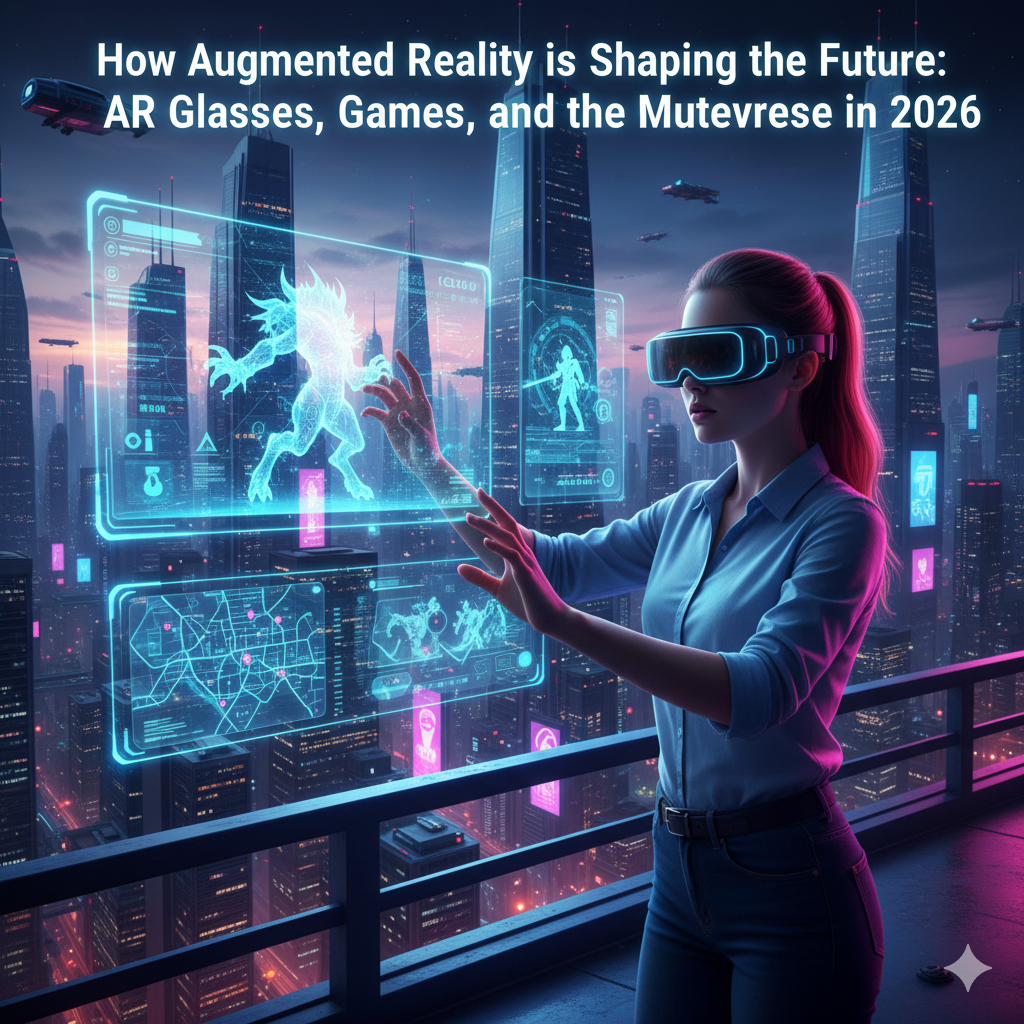
In 2026, augmented reality (AR) is ready to revolutionize how we interact with the digital and physical worlds. From sleek AR glasses to immersive gaming experiences and the metaverse, AR isn’t just a futuristic idea anymore, it’s becoming part of our daily life. This transformation is driven by better hardware, software, and connectivity, making AR more accesible and impactful than ever before.
What is Augmented Reality?
Augmented reality overlays digital information—like images, sounds, or other sensory stuff—onto the real world. Unlike virtual reality (VR), which immerses users in a fully virtual environment, AR enhance the user’s perception of their surroundings by blending digital elements seamlessly. Devices like smartphones, tablets, and special AR glasses deliver these interactive experiences.
The Evolution of AR Glasses
AR glasses has come a long way, moving from bulky prototypes to consumer-friendly, stylish devices. In 2026, tech giants are releasing next-gen AR glasses that are lighter, more comfy, and packed with new features.
For example, Meta’s Ray-Ban Display glasses integrate AI-driven “personal superintelligence,” letting users see notifications and contextual info directly in their sight (reuters.com).
Samsung’s Project Moohan and Google’s Android XR platform are also pushing AR boundaries, offering better hand tracking, real-time translations, and immersive AR apps (androidcentral.com).
Immersive AR Gaming: A New Frontier
Gaming is embracing AR for more interactive experiences. Unlike traditional games on screens, AR games blend digital elements with the real world, letting players interact with their environment in new ways.
Snap’s fifth-gen AR Spectacles now supports GPS for multiplayer games, navigation, and other experiences, making location-based AR games more exciting (theverge.com).
Plus, partnerships like Kojima Productions with Niantic aim to develop AR experiences that get people moving and socializing, blurring the line between digital and physical worlds (techradar.com).
The Metaverse: AR’s Expanding Role
The metaverse—a shared virtual space—uses AR to connect digital and physical worlds. In 2026, AR tech will allow users to interact with avatars, attend virtual events, and work together in real-time, all while staying aware of their surroundings. This makes the metaverse more engaging and easier for people to join.
AR vs VR: Understanding the Differences
| Feature | Augmented Reality (AR) | Virtual Reality (VR) |
|---|---|---|
| Immersion Level | Partial immersion; overlays digital elements on real world | Full immersion; replaces real world with virtual environment |
| Hardware Requirements | Smartphones, tablets, AR glasses | VR headsets, motion controllers |
| Interaction | Works with both digital and physical elements | Only interacts in virtual environment |
| Use Cases | Navigation, education, retail, gaming | Gaming, simulations, training, virtual tours |
While AR adds digital layers to reality, VR offers full immersion. Both have unique uses and can work together for powerful experiences.
The Future of AR: Trends to Watch
- AI Integration: AR is getting smarter with AI giving context-aware info and personalized experiences.
- 5G Connectivity: Faster networks mean smoother AR apps and real-time interactions.
- Wearable Devices: Lighter, stylish AR glasses make it easier for people to adopt.
- Cross-Platform Applications: Web AR is reducing the need for apps, letting users access AR directly in browsers.
Pros and Cons of AR Technology
Pros:
- Better User Experience: Interactive and engaging by blending real and digital worlds.
- Productivity Boost: Helps in remote support, training, and maintenance.
- Learning Enhancement: Immersive learning in education and healthcare.
Cons:
- Privacy Concerns: Cameras and sensors can raise privacy issues if misused.
- Costly Devices: High-end AR hardware is still expensive for some users.
- Technical Limitations: Needs good hardware and stable internet, which may not always be available.
Frequently Asked Questions (FAQs)
1. What are AR glasses?
AR glasses are wearables that overlay digital info on real world, letting users interact with both at same time.
2. How is AR different from VR?
AR enhances reality with digital overlays, VR immerses fully in a virtual environment.
3. Which industries use AR?
Healthcare, education, retail, gaming, and manufacturing use AR to improve experiences and processes.
4. Can consumers buy AR glasses?
Yes, companies like Meta, Snap, and Samsung already sell AR glasses, with more coming in 2026.
5. What is the metaverse?
The metaverse is a shared virtual space that mixes real and digital worlds using AR and VR technologies.