
Google Launches Emergency Location Service for Android Smartphones in India
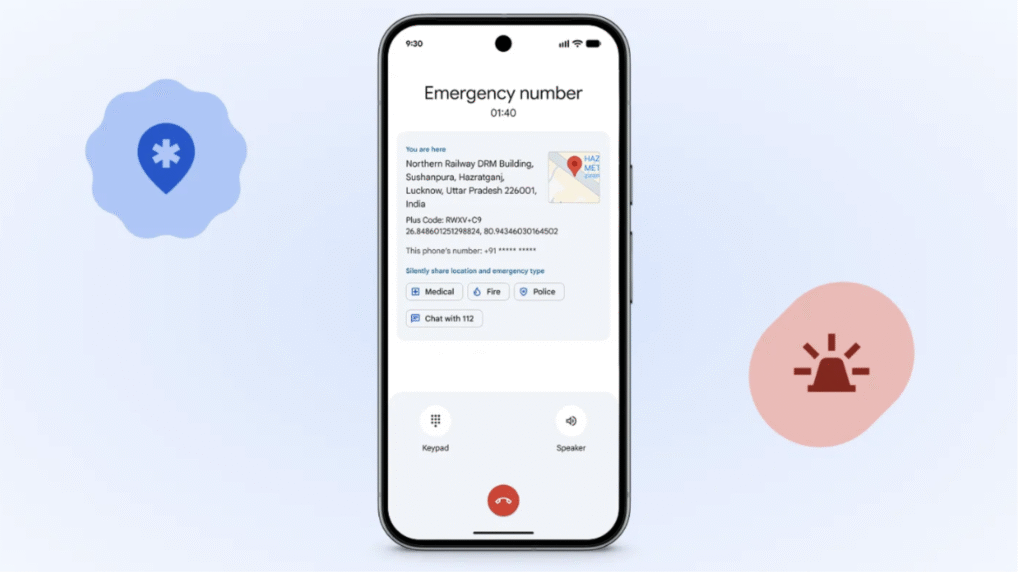
Image credits to Google
Google has officially activated its Emergency Location Service (ELS) for Android smartphones in India, starting with Uttar Pradesh. This built-in safety feature automatically shares a caller’s precise real-time location with emergency responders when dialing 112, India’s unified emergency number.
The goal is simple but powerful: cut response times during emergencies where callers may be confused, injured, or unable to clearly explain their location. For a country as large and diverse as India, this marks a major upgrade in public safety infrastructure.
TLDR
- Google has launched Emergency Location Service for Android in India, starting with Uttar Pradesh
- It automatically shares your precise location when you dial or text 112
- Works on Android 6.0+ phones with no app installation required
- Improves emergency response speed while protecting user privacy
- Google Launches Emergency Location Service for Android Smartphones in India
- What Is Google’s Emergency Location Service
- How the India Rollout Works
- Which Android Phones Support Emergency Location Service
- What Happens When You Call 112 With ELS Enabled
- How ELS Improves on Older Emergency Systems
- ELS vs Satellite Emergency SOS Systems
- How to Enable Emergency Location Service
- Privacy and Data Security Explained
- Why This Matters for Public Safety
- What Comes Next for India
- Final Thoughts
- FAQs
- What Is Google’s Emergency Location Service
What Is Google’s Emergency Location Service
Emergency Location Service (ELS) is an Android feature that sends high-accuracy location data directly from a user’s phone to emergency services when a 112 call or SMS is placed.
Instead of relying on what a caller can verbally explain or on basic mobile network location estimates, ELS uses the phone’s own sensors to determine where the user is.
The system combines data from:
- GPS
- Wi-Fi networks
- Mobile network signals
These inputs are processed through Android’s Fused Location Provider, which intelligently selects the most accurate source depending on whether the user is indoors, outdoors, or moving.
In most cases, ELS can pinpoint a caller’s location within about 50 meters, which is far more precise than traditional network-based tracking.
How the India Rollout Works
Uttar Pradesh Is the First State
Google enabled ELS in India in December 2025, with Uttar Pradesh becoming the first state to fully support the feature. The rollout followed months of testing and infrastructure integration with the state’s 112 emergency response system.
During testing, the system successfully supported tens of millions of emergency calls and messages, including cases where calls disconnected within seconds. Even in those situations, location data was already delivered to emergency responders.
Uttar Pradesh’s 112 system operates through multiple command centers, where dispatcher screens now show the caller’s exact position on digital maps in real time. This allows faster decisions on whether to dispatch police, ambulance, fire, or rescue services.
Which Android Phones Support Emergency Location Service
Wide Compatibility With Minimal Requirements
One of ELS’s biggest strengths is how accessible it is. The feature works on Android 6.0 and newer, covering almost all Android phones currently in use in India.
Basic requirements include:
- Android version 6.0 or higher
- Active SIM card
- Location services enabled (ELS can temporarily enable them during emergencies)
- Mobile network or Wi-Fi access
No additional apps, subscriptions, or hardware are required. ELS is built directly into Android and works automatically once enabled.
Users can check availability by navigating to:
Settings > Location > Location Services > Emergency Location Service
If the option is visible, the feature is supported in that region.
What Happens When You Call 112 With ELS Enabled
Behind-the-Scenes Process
When an Android user dials 112, several actions happen instantly:
- The phone detects an emergency call
- ELS activates automatically
- The device calculates the most accurate possible location
- Location data is sent directly to the emergency control room
- Dispatchers see the caller’s position on a live map
This process typically completes within seconds, even if the call drops early.
This is especially important during:
- Medical emergencies
- Road accidents
- Fires
- Situations involving panic or unconsciousness
The system ensures responders are not dependent on the caller’s ability to explain where they are.
How ELS Improves on Older Emergency Systems
Why This Is a Big Upgrade for India
Before ELS, India’s 112 emergency system relied mainly on mobile network location data. That method is less accurate, often off by several hundred meters, and performs poorly indoors.
ELS improves emergency response by offering:
- Device-based location, not carrier-based
- Much higher accuracy
- Automatic activation without user action
- Better indoor performance
Unlike emergency apps that require manual setup or panic buttons, ELS works quietly in the background. This makes it more reliable during real emergencies, when people may not remember to open an app or press a specific button
ELS vs Satellite Emergency SOS Systems
How Android’s Approach Compares
Some smartphones offer satellite-based emergency services, which are useful in areas with no mobile coverage. However, ELS is optimized for the environments where most emergencies happen.
Emergency Location Service advantages include:
- Works on most Android phones, including budget models
- Functions indoors and in cities
- Sends data instantly
- Does not require specialized hardware
Satellite systems are better for remote areas, but they are slower, weather-dependent, and limited to specific premium devices.
For India’s urban and semi-urban population, ELS offers more practical everyday protection.
How to Enable Emergency Location Service
Quick Setup Guide
Enabling ELS takes less than a minute:
- Open Settings
- Tap Location
- Go to Location Services
- Select Emergency Location Service
- Turn it On
Once enabled, no further action is needed. The feature only activates during 112 calls or messages.
If location services are turned off, ELS can temporarily enable them during an emergency and revert settings afterward.
Privacy and Data Security Explained
What Google Does Not See
Privacy concerns are common with location features, but ELS is designed with strict safeguards.
Important points:
- Location data goes directly to emergency services
- Google does not receive or store your emergency location
- ELS only activates during emergency contact
- It does not track users continuously
After an emergency ends, the system shuts down immediately. Google only receives anonymous technical metrics to improve system reliability, not personal or location data.
Users can disable ELS anytime, but doing so means emergency responders will fall back to less accurate network-based location methods.
Why This Matters for Public Safety
Real-World Benefits
ELS removes one of the biggest barriers in emergency response: finding the person who needs help.
Key benefits include:
- Faster ambulance and police dispatch
- Reduced confusion during emergencies
- Better outcomes in time-critical situations
- Improved safety for people who cannot communicate clearly
In large states with dense populations, even saving a few minutes can mean the difference between life and death.
What Comes Next for India
Expansion to Other States
Right now, ELS is active in Uttar Pradesh only. Other states must integrate their 112 infrastructure before the feature becomes available.
States with modern emergency systems may adopt ELS faster, but timelines will vary based on funding, training, and technical readiness.
As more states come onboard, ELS could become a standard safety feature nationwide, bringing consistent emergency response quality across India.
Final Thoughts
Google’s Emergency Location Service is a quiet but powerful addition to Android in India. It does not change how people call for help, but it dramatically improves what happens after they do.
By delivering accurate location data automatically, ELS removes uncertainty from emergencies and gives responders the information they need when seconds matter most.
For Android users in supported regions, enabling ELS is a small step that could make a life-saving difference one day.
Read Google Opal Comes to Gemini: Build AI Mini Apps Without Coding
FAQs
What is Google’s Emergency Location Service (ELS)?
It’s a built-in Android safety feature that automatically shares your exact location with emergency responders when you call or text 112, helping them reach you faster.
Do I need to install an app to use Emergency Location Service?
No. ELS is already built into Android phones running Android 6.0 and above. There’s nothing to download or set up beyond turning it on in settings.
Which states in India support Emergency Location Service right now?
Currently, the service is live in Uttar Pradesh. Google plans to expand it to more Indian states as local emergency systems complete integration.
How accurate is Google’s Emergency Location Service?
ELS can pinpoint your location within about 50 meters, which is far more accurate than older network-based location methods.
Will Emergency Location Service work if I’m indoors?
Yes. ELS uses a mix of GPS, Wi-Fi, and mobile network signals, so it works indoors, outdoors, and even while you’re moving.
Does Google store or track my location when I use ELS?
No. Your location is sent directly to emergency services, not to Google. Google only receives anonymous technical data to improve system performance.
What happens if my emergency call disconnects?
Even if the call drops within seconds, your location is already shared, allowing responders to reach you without needing a callback.
Can I turn Emergency Location Service off?
Yes. You can disable it anytime from Settings > Location > Location Services. However, keeping it enabled is strongly recommended for emergencies.
Does Emergency Location Service work without mobile data?
Yes. ELS can send location information via emergency SMS or mobile networks, even if you don’t have an active data plan.
Is Emergency Location Service available on iPhones?
No. ELS is an Android-only feature. iPhones use a different system, including Emergency SOS via satellite on supported models.