Japan’s Human Washing Machine: How AI Bathing Pods Are Revolutionizing Personal Hygiene
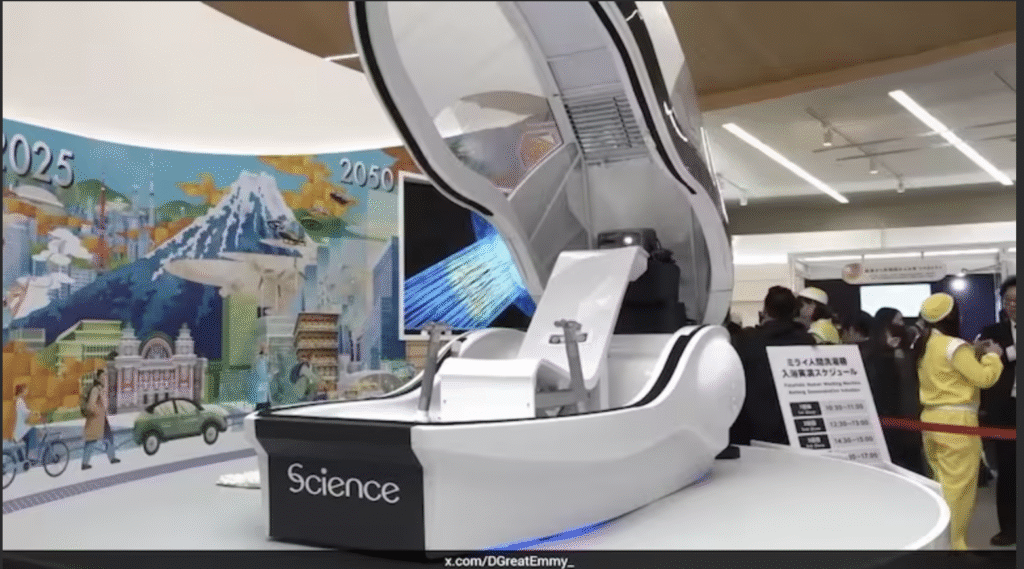
Japan has unveiled a futuristic personal care innovation known as the Mirai Ningen Sentakuki, a human washing machine designed to transform bathing into a fully automated experience. The machine blends robotics, AI, and fine bubble technology to provide a complete wash and dry cycle in around fifteen minutes. It is especially relevant for elderly users, people with disabilities, and luxury wellness facilities. After its public success at Osaka Expo 2025, the machine has now entered commercial production in Japan.
Created by Science Co. Ltd., an Osaka company known for fine bubble shower systems, this new device revives a concept first shown over fifty years ago at the same expo. Modern engineering, biometric sensors, and artificial intelligence now allow the machine to deliver a spa like experience without manual effort.
TLDR
- Japan has launched an AI powered human washing machine that cleans and dries users in about 15 minutes using microbubble technology and biometric sensors.
- It is designed primarily for elderly users, mobility challenged individuals, luxury spas, and premium hotels, not home use.
- The system automatically adjusts water temperature, pressure, and relaxation visuals based on real time user vitals for a safe, personalized experience.
- While highly innovative, the device is extremely expensive, produced in limited quantities, and carries sanitation and safety concerns that need further evaluation.
- Japan’s Human Washing Machine: How AI Bathing Pods Are Revolutionizing Personal Hygiene
- What Is Japan’s Human Washing Machine
- How the Mirai Ningen Sentakuki Works
- Fine Bubble Technology Explained
- Current Status and Availability
- Pricing and Business Model
- Who Benefits Most from the Human Washing Machine
- AI, Sensors, and Personalization
- Benefits
- Limitations and Risks
- Japan’s Demographic Context
- Conclutions
- FAQs — Japan’s Human Washing Machine
- What Is Japan’s Human Washing Machine
What Is Japan’s Human Washing Machine
The inspiration for the modern design comes from Japan’s original Sanyo Ultrasonic Bath, a spaceship like machine displayed at Expo 1970. The original prototype used ultrasonic mist and mechanical massage to wash a person automatically but was never mass produced due to cost and reliability issues.
The story took a new turn when Yasuaki Aoyama, who had seen the prototype as a child, founded Science Co. Ltd. decades later. His team included Eiji Yamaya, an engineer from the original Sanyo project, creating a direct link between the two generations of technology.
The result is the Mirai Ningen Sentakuki, which translates to Human Washing Machine of the Future. It combines modern fine microbubble cleansing, AI personalization, biometric monitoring, and an ergonomic capsule environment to provide hygienic and wellness benefits.
How the Mirai Ningen Sentakuki Works
The machine resembles a transparent capsule similar to a luxury spa pod. The user enters and reclines on a padded seat. Inside the pod, biometric sensors monitor heart rate, body temperature, and physical comfort.
Microbubble and Mist Cleansing
The system uses fine bubble and microbubble cleansing technology rather than scrubbing or soap. Microbubbles are extremely small gas bubbles that collapse on the skin surface, gently removing dirt, sebum, dead skin, and oil from pores. Because microbubbles have enormous surface area relative to their size, they clean more effectively than traditional foam or bath water while remaining gentle on sensitive or aging skin.
The machine fills partially with warm water at a temperature selected by the user. High-speed jets distribute microbubbles across the entire body. Unlike manual bathing, no intense friction or sponge contact is required.
After the immersion phase, the pod transitions to mist rinsing, a fine shower spray that cleans the upper body and face while conserving water.
AI Wellness Integration
The machine’s AI system adjusts temperature, water pressure, and visual or music ambiance based on the user’s biometric data. If the heart rate rises, the system reduces intensity. If relaxation markers appear, the cycle deepens. The capsule’s interior displays calming visuals and ambient audio, promoting a spa like emotional experience.
Automated Drying
After cleansing, the capsule drains and warm air circulates to dry the user. The full experience from start to finish is typically around fifteen minutes.
Fine Bubble Technology Explained
Fine bubbles are microscopic gas bubbles smaller than the width of a human hair. Their physical properties create powerful cleansing benefits:
- Large reactive surface area that lifts dirt and oil
- Low impact cleaning ideal for sensitive or dry skin
- Efficient water use since cleansing is mechanical, not chemical
- Improved skin circulation from micro pressure bursts
Unlike normal bath bubbles, fine bubbles do not simply float and pop. They travel deep into pores and collapse energetically, lifting impurities. Japan has researched this technology for decades across industries such as purification, agriculture, and industrial cleaning.
Current Status and Availability
The machine gained massive attention after its demonstration at Osaka Expo 2025, where thousands applied to try it. Only a small number of daily visitors could experience the pod due to session length and sanitization requirements, which further increased demand.
As of late 2025, commercial sales have begun in Japan. Early units have been purchased by luxury hotels and wellness facilities. A major electronics retailer has announced public trials at select flagship locations. Science Co. currently manufactures these units in limited quantities, with each pod requiring months of assembly. Production is intentionally restricted to preserve exclusivity, ensure quality control, and position the product in a luxury market.
Pricing and Business Model
The human washing machine is priced in the range of high end imported vehicles. Installation costs depend on space, electrical configuration, plumbing, and sanitation systems. Maintenance and servicing require trained technicians from the manufacturer.
This product is not designed for home consumers. Instead, it targets:
- Luxury resorts and hotels
- Premium spas
- Hot spring and wellness centers
- High end medical or geriatric facilities
- Boutique health clubs
Facilities typically charge per use or integrate the machine into membership tiers or premium experiences.
Who Benefits Most from the Human Washing Machine
Elderly Users
Japan has one of the highest elderly populations globally. Traditional bathing is a major safety risk for seniors due to slipping, joint pain, temperature sensitivity, and reduced range of motion. The human washing machine allows seniors to bathe independently and safely without caregiver assistance. This preserves dignity and reduces the chance of injury.
People with Mobility Challenges
Users with conditions such as arthritis, post surgical recovery, spinal cord injuries, or cerebral palsy often struggle with manual hygiene. The pod allows full body cleansing without bending, lifting, or balancing.
Care Facilities and Hospitals
Automated bathing dramatically reduces caregiver labor. Nurses and assisted living staff spend significant time helping residents bathe. The machine reduces physical strain on staff and reallocates labor to more important medical support tasks.
Luxury and Wellness Consumers
Wellness spas and high income private clubs see the machine as an experience product. For clients who value premium relaxation, skin health, or futuristic amenities, the pod offers a distinctive selling point.
AI, Sensors, and Personalization
The Mirai Ningen Sentakuki uses real time biometric data to adapt each bathing session. Sensors measure body temperature, pulse, and posture. The AI engine:
- Adjusts water pressure based on stress signals
- Changes water temperature if discomfort is detected
- Extends the wash cycle for a deeper cleanse
- Displays soothing visual content
Safety controls include temperature limiters, pressure regulators, transparent casing for staff visibility, an interior emergency stop button, and automatic shutdown if biometric readings exceed safe thresholds.
Benefits
Hygiene and Skin Health
The pod can remove impurities more effectively than manual bathing. The absence of intense friction makes it ideal for sensitive skin, eczema, and age related dryness.
Time Efficiency
A complete wash and dry cycle in roughly fifteen minutes conserves time for both users and care facilities.
Fall Risk Reduction
Traditional showers are dangerous environments for seniors. The capsule eliminates slippery floors and standing balance requirements.
Mental Wellness
Relaxing visuals, gentle water motion, and soundscapes create a therapeutic environment that reduces anxiety and promotes calm.
Water and Chemical Reduction
Fine bubble cleansing reduces the need for soap and uses far less water than standard bathing methods.
Limitations and Risks
Even with advanced features, the system has boundaries:
- High cost prevents widespread domestic use
- Limited production slows adoption
- Sanitization protocols must be followed carefully
- Claustrophobia may affect nervous users
- AI system dependence requires strict maintenance
- Technical malfunctions require trained technicians
Long term durability, power consumption, and medical contraindications are still being evaluated.
Read Best Stress Relaxation Ways: Proven Techniques to Reduce Anxiety and Improve Mental Health
Japan’s Demographic Context
With a heavily aging population, caregiver shortages, and rising long term care expenses, Japan is investing aggressively in robotic and automated care technology. Human washing machines fit a broader strategic trend. Rather than replacing human nurses, they automate repetitive physical tasks so staff can focus on medical or emotional care.
Conclutions
The Mirai Ningen Sentakuki is one of the most futuristic and practical wellness devices ever commercialized. It solves real problems in elder care, accessibility, hygiene, and wellness. While expensive and limited in availability, it sets the stage for a new category of automated personal care technology. Future consumer versions could eventually reach residential markets if production scales and costs fall.
FAQs — Japan’s Human Washing Machine
1. What exactly is Japan’s human washing machine?
It is an AI-powered automated bathing pod that uses microbubble cleaning, biometric sensors, and automated drying to wash a person from head to toe without manual scrubbing.
2. Who is this device designed for?
Its primary target users are elderly individuals, disabled people, rehabilitation patients, and premium spa clients. It is not yet meant for typical home use.
3. How long does a full cycle take?
A standard session lasts around 15 minutes, including washing, rinsing, relaxation, and drying.
4. Is it safe for people with medical conditions?
The machine monitors heart rate, temperature, and other vitals. However, people with cardiac conditions, circulatory disorders, or severe anxiety should consult medical professionals before use.
5. Does it use soap or chemicals?
The system primarily relies on fine microbubbles to clean pores, which reduces or eliminates the need for detergents. Some commercial operators may still use mild solutions depending on user needs.
6. Can the machine replace caregiver-assisted bathing?
In many cases yes. It is designed to reduce caregiver workload, increase safety, and allow users to bathe independently and privately, which is especially important in senior care facilities.
7. How much does the human washing machine cost?
The current commercial model costs roughly ¥60 million, similar to a premium luxury car. This is why it is mainly purchased by hotels, spas, and healthcare institutions.
8. Is it already available to the public?
Yes. Units have been sold to hotels and commercial retailers in Japan, with limited public demo installations. International sales may come later.
9. How does the system maintain hygiene between users?
Facilities must perform sanitization cycles, draining, surface cleaning, and sometimes UV or steam disinfection. Proper maintenance is critical to prevent cross-contamination.
10. Will there be a home version in the future?
Developers have expressed interest in smaller and more affordable models, but there is no confirmed timeline. Widespread residential availability may be several years away.