
10 Things to Know Before Buying a Honda Activa – Real Ownership Guide
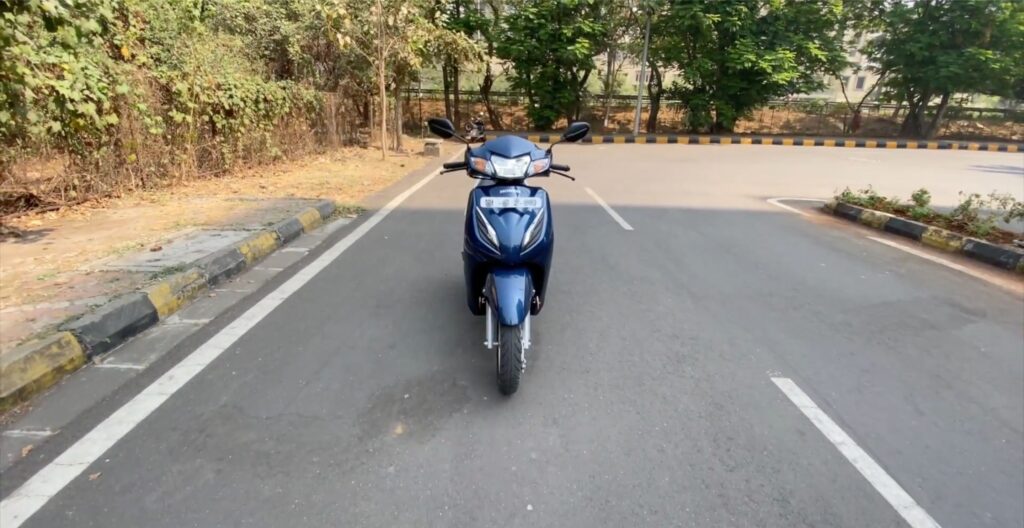
Image credits to Faisal Khan
Honda Activa has been a household name in India’s two-wheeler culture for more than two decades. It is the scooter you will see in every city: from students in Pune and Bengaluru, to families in Delhi, and delivery riders in Chennai. People buy it because it is reliable, predictable, and simple. But while Activa looks like an obvious choice, many first-time buyers overlook the practical realities of ownership—comfort, maintenance, resale, braking performance, long-term durability, and after-service experience.
Here is a real-world, non-marketing breakdown of the Activa, based on actual riding conditions and ownership patterns in India.
TLDR — Quick Summary (Honda Activa Blog)
- Honda Activa is built for dependable daily commuting, not performance—smooth, predictable, and easy to ride in traffic.
- Real-world mileage is strong, maintenance is reasonable, and resale value is among the best in the market.
- Ride comfort is good for short trips, but the seat and braking performance fall short for long rides or heavy loads.
- Massive service network, simple mechanics, and cheap parts make ownership stress-free and cost-effective in the long run.
- 10 Things to Know Before Buying a Honda Activa – Real Ownership Guide
- 1. Honda Activa Engine Performance and Riding Feel
- 2. Honda Activa RealW orld Mileage
- 3. Maintenance and Service Costs
- 4. Honda Activa Resale Value
- 5. Build Quality & Durability
- 6. Comfort and Ride Quality
- 7. Braking & Safety
- 8. Features and Tech
- 9. Parts, Service, and Availability
- 10. Real-World Ownership Challenges
- Pros & Cons Summary
- Conclusion: Who Should Buy a Honda Activa?
- FAQs
1. Honda Activa Engine Performance and Riding Feel
The Activa 6G is designed for calm commuting. Power delivery is smooth, throttle response is predictable, and the scooter rarely struggles in stop-and-go traffic. It won’t thrill enthusiasts, but it is highly refined. The Activa 125 has noticeably stronger acceleration and is better suited for riders carrying a pillion or navigating slopes and flyovers regularly.
Both models use a CVT automatic transmission. There is no clutch to worry about, and the scooter’s balance makes slow-speed manoeuvres easy. However, acceleration with two heavy riders at higher speeds can feel sluggish, especially uphill.
2. Honda Activa RealW orld Mileage
The official fuel efficiency figures are based on laboratory testing. In real daily use, most riders see lower numbers. The Activa 6G typically returns city mileage in the mid-40s to low-50s depending on traffic and riding style. The Activa 125 averages slightly less due to its larger engine.
Aggressive throttle use, frequent pillion riding, under-inflated tyres, and poor service habits reduce mileage. Smooth acceleration, correct tyre pressure, and maintaining the belt and air filter keep the Activa efficient.
3. Maintenance and Service Costs
Many buyers think “Honda means no maintenance.” That is only partly true. The Activa is reliable, but regular service is essential. Service cycles are mileage-based or time-based, whichever comes first. Oil changes, belt checks, brake pad replacements, and occasional filter swaps are routine expenses.
Battery replacement every few years is also common, especially in colder climates. Costs are manageable, but they accumulate across time. Riders who only look at fuel expenses often overlook the maintenance total across five years.
4. Honda Activa Resale Value
Honda Activa has one of the strongest resale values in the scooter market. This is a big reason many commuters choose it. You can sell a well-maintained Activa quickly almost anywhere in India. Service records, original paint, and no accident history push resale much higher. Rough condition, aftermarket parts, or missing paperwork reduce value significantly.
The Activa 125 generally holds value slightly better among serious buyers because premium scooter buyers tend to maintain their vehicles better.
5. Build Quality & Durability
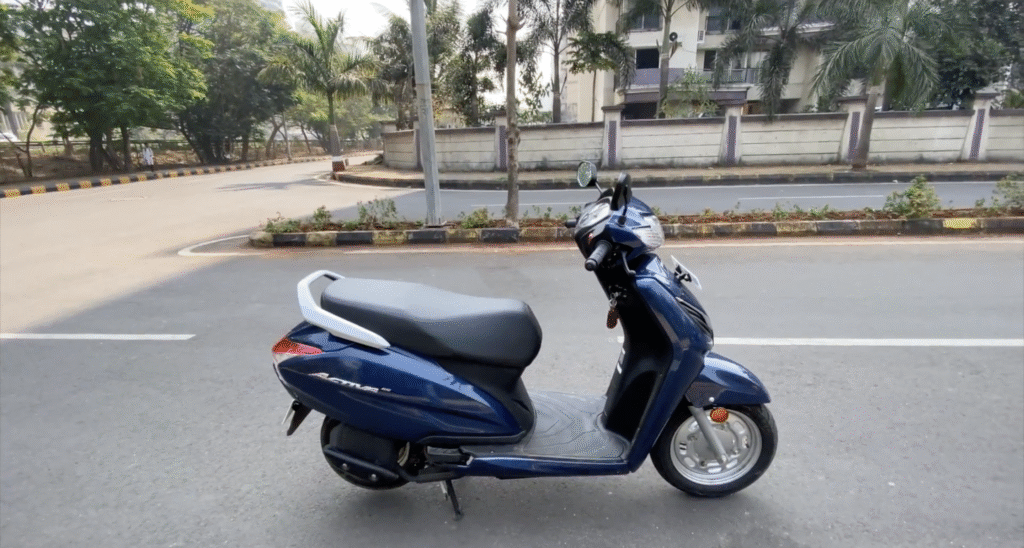
Image credits to Faisal Khan
Unlike most scooters that use plastic panels, the Activa uses steel bodywork. This creates a solid, sturdy feel on rough roads. Minor dents can be repaired easily, and the body handles daily abuse better. Paint quality is good, though not immune to scratches or fading when parked outdoors.
The frame is strong, the fuel tank position keeps weight low, and panel alignment is usually neat. You may see some cosmetic imperfections from factory assembly, but nothing that affects long-term durability. A well-maintained Activa regularly crosses very high mileage numbers without structural issues.
6. Comfort and Ride Quality
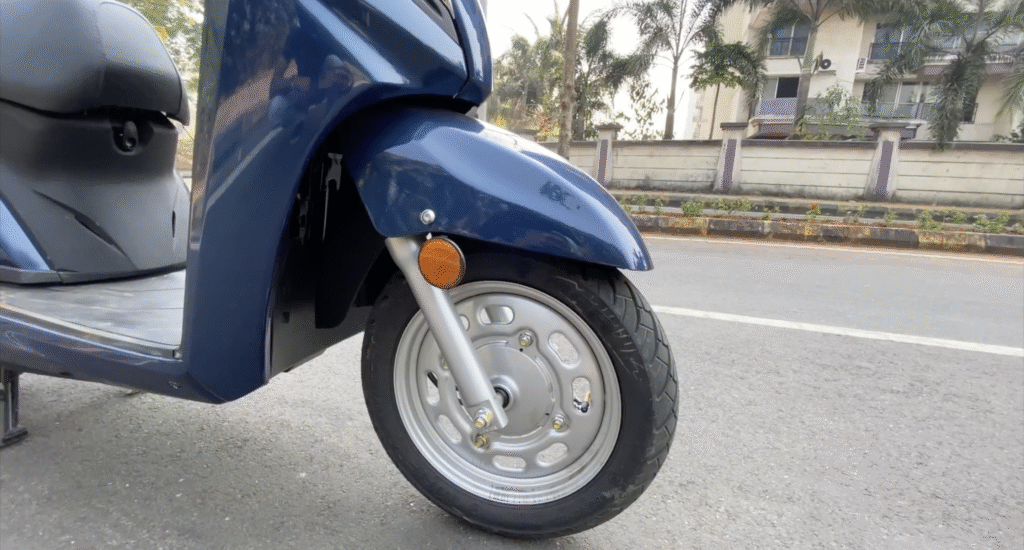
Image credits to Faisal Khan
The telescopic front suspension improves ride stability significantly compared to older generations. Daily commuting over potholes, drain covers, and speed breakers feels manageable. The rear suspension is adjustable, but may feel stiff with two riders unless tuned correctly.
Seat height is friendly for shorter riders, and the scooter feels well-balanced. The seat itself is moderately soft for short rides, but long rides over one hour usually result in discomfort. Many owners add cushioned seat covers to extend comfort.
Ground clearance is generous enough for Indian roads, and the tyres offer acceptable grip for city conditions. Tubeless tyres are a big plus for puncture management.
7. Braking & Safety
The standard braking setup uses drum brakes with Honda’s linked braking system. It distributes braking force between front and rear wheels to prevent skidding during sudden stops. It is solid for daily city use.
The Activa 125 offers a front disc brake which most riders find more reassuring, especially on slopes, wet surfaces or when carrying heavy loads.
The H-Smart variant includes an anti-theft alarm and remote locking features. LED lights and better reflectors improve visibility. However, the Activa still lacks ABS, which many of its competitors now offer.
8. Features and Tech
The digital or semi-digital display provides basic information such as fuel, trip, service alerts, and distance to empty. The H-Smart variant adds Bluetooth connectivity, phone alerts, and navigation support. These features are genuinely useful, especially for young riders and urban commuters.
Though modern, the Activa takes a conservative approach to tech. It prioritizes reliability over novelty, so you don’t get flashy features like traction control or full touchscreen displays seen in premium scooters.
9. Parts, Service, and Availability
This is where Honda dominates. Honda’s service network is everywhere—from metros to tier-3 towns. Spare parts are affordable and widely available. Even in smaller areas, roadside mechanics can fix the Activa easily.
Unlike niche brands, you won’t have long waiting periods for spares. Consumable parts like brake pads and filters are cheap and widely stocked. Mechanically simple, the Activa has fewer electronics that can go wrong, which translates to fewer unpredictable expenses.
10. Real-World Ownership Challenges
The scooter is not perfect. Owners frequently report mild vibrations at higher speeds, occasional battery failures, and CVT belt noise with aging. Check-engine light glitches occasionally occur due to moisture or sensor dust. The seat is not ideal for long rides. Performance with full load can feel dull, and braking power is only average on steep terrain.
None of these are deal-breakers, but they are important realities many first-time buyers don’t expect.
Pros & Cons Summary
| High real-world mileage | Seat becomes uncomfortable beyond an hour |
| Very reliable engine | Acceleration feels weak with two riders |
| Steel body and strong frame | No ABS option |
| Massive service network | Basic tech on cheaper variants |
| High resale value | Brake performance is average at high speeds |
| Easy to ride in heavy traffic | Stiff suspension |
Conclusion: Who Should Buy a Honda Activa?
If your riding is mostly city commuting—office runs, college trips, grocery errands—the Activa 6G is the safest and most predictable choice. It is efficient, cheap to maintain, easy to fix, and has the best resale value.
If you often ride with a pillion or want better braking confidence, the Activa 125 is worth the extra money. If security and navigation matter, the H-Smart variant adds practical modern features.
What makes Activa great isn’t fancy technology—it’s consistency. It starts every morning, handles bad roads, lasts years, and sells easily when you upgrade. For many Indian riders, that reliability is worth more than aggressive looks or performance bragging rights.
FAQs
1. Who should buy the Honda Activa 6G?
Daily city riders, students, and families who want low running costs and long-term reliability.
2. Is Activa comfortable for long distances?
It is ideal for short to medium city rides. Long rides become uncomfortable due to seat firmness.
3. Does Activa handle speed bumps well?
Yes, ground clearance and suspension handle Indian speed breakers with ease.
4. Is Activa expensive to service?
Regular servicing is affordable. Major parts replacement becomes costlier but predictable.
5. Should I choose Activa 6G or Activa 125?
Choose the 125 if you frequently carry a pillion or drive over flyovers or hilly areas.
6. Are Honda spare parts easy to find?
Yes, spare parts are widely available in both metro and rural markets.
7. How long does an Activa engine last?
With proper service, it can run very long distances without major repairs.
8. Is Activa a good option for delivery riders?
Yes. It is reliable, easy to repair, and retains resale value, which matters for commercial use.
9. Does the Activa have Bluetooth or a display?
Only the H-Smart and higher trims have connectivity and digital features.
10. Can Activa handle monsoon riding?
It performs well in rain, but avoid deep water and keep tyres properly inflated.