Hyundai Verna Turbo DCT vs Volkswagen Virtus GT TSI: Which Turbo Sedan Is Better for India?
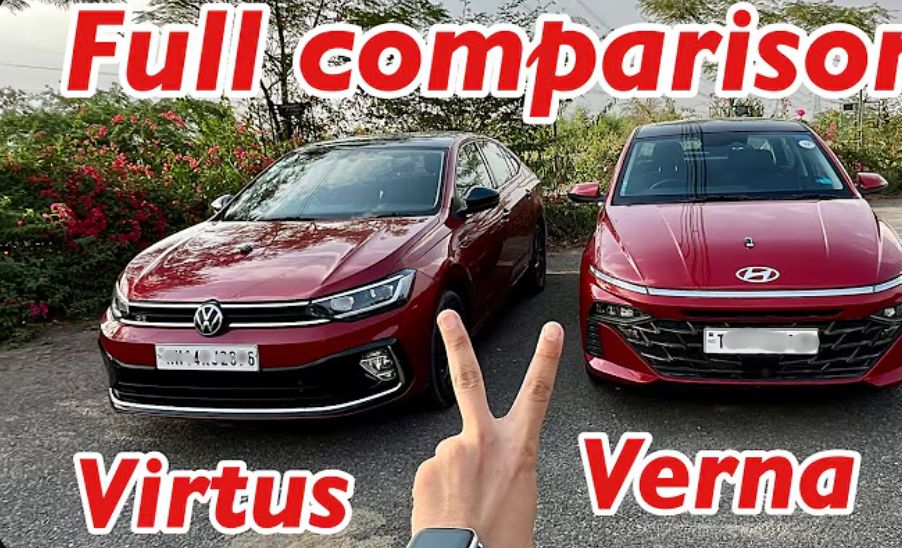
Image credits to Aayush ssm
Hyundai Verna Turbo DCT and Volkswagen Virtus GT TSI stand at the top of India’s performance sedan segment. These turbo-petrol sedans have transformed the category, offering enthusiast-grade acceleration, powerful engines, dual-clutch automatic transmissions, and everyday usability in a market dominated by compact SUVs. The Verna Turbo DCT appeals with segment-leading power, advanced features, and modern comfort, while the Virtus GT TSI brings a German-engineered driving experience, sharp handling, and proven highway stability.
In a space where buyers weigh turbocharged performance against practicality, fuel efficiency, maintenance, and long-term ownership cost, both cars approach the equation with distinct philosophies. This comparison goes beyond brochure numbers and test-track stats—focusing on how these sedans perform in real Indian road conditions, traffic, highways, and mixed driving. If you’re choosing between the Verna Turbo DCT and the Virtus GT TSI, this guide covers real-world drivability, safety, comfort, reliability, and long-term value to help you make the right decision.
Real-World Performance: Verna Leads Where it Counts
On paper the Verna is quicker, but numbers don’t tell the full story. In everyday driving, it is easier to launch, easier to overtake, and more responsive in traffic gaps. Turbo lag is minimal and the DCT upshifts with grace.
The Virtus is not slow by any means, but its acceleration curve is gentler. Turbo boost arrives slightly later and the DSG favors smoothness until the driver goes full throttle. DSG kickdowns are quick, though some hesitation shows in crawling traffic—particularly at speed breakers or half-throttle inputs.
At triple-digit speeds, the Virtus stabilizes beautifully. The chassis feels planted and linear, with steering that becomes heavier in a confident way. The Verna is stable too, but its softer suspension transmits more vertical movement on uneven highways. The Hyundai is more exciting off the line; the VW is more satisfying at sustained speeds.
Performance takeaway:
Verna for punch and responsiveness.
Virtus for highway composure and flow.
Core Differences at a Glance
The Verna Turbo DCT is the more powerful car, and it shows. Its turbo petrol engine offers stronger low-end torque and noticeably faster acceleration. The Virtus GT TSI counters with its mature German tuning, sharper steering feel, and balanced chassis that thrives on highways.
Both cars offer a 1.5L turbocharged petrol engine paired with 7-speed dual-clutch transmissions. However, Hyundai tunes its setup for immediate punch and smoothness, while Volkswagen aims for response and engagement.
Gearbox Behavior: Smooth DCT vs Sharp DSG
Both transmissions are dual-clutch systems, but they feel different.
- Extremely smooth shifts in city traffic.
- Little to no jerkiness.
- Sport mode is quick and decisive.
- Rarely struggles with overheating or reliability concerns.
- The “comfort bias + power” combination makes the car feel effortless.
Volkswagen DSG
- Snaps through gears aggressively when driven hard.
- Downshifts are faster than the Verna’s.
- Brilliant when cruising or overtaking.
- Can be jerky in bumper-to-bumper conditions.
- Long-term service and mechatronic reliability remain a topic of debate among enthusiasts.
If you daily commute in dense traffic, the Verna’s gearbox is the friendlier companion.
If you enjoy paddle shifts and sudden throttle jabs, the Virtus DSG feels more alive.
Turbo Delivery: The Character Is Different
The Verna’s 1.5 GDI turbo is tuned for usable torque from low RPM. The power comes in early and stays linear across the rev band. It feels like a sedan built for Indian roads—little hesitation, immediate response, and a quick surge when you tap the pedal.
Volkswagen’s TSI engine wakes up around mid-range. The power curve is smoother, more mature. Enthusiasts who appreciate a build-up of boost may prefer this, but daily users will notice the Verna feels more eager with less effort.
Fuel Efficiency: Virtus Wins at Highway Speeds
The Verna’s turbo prefers performance. Drive it hard and mileage drops into single digits. Gentle driving returns respectable figures—but the turbo always wants a little fuel.
The Virtus uses Active Cylinder Technology (ACT), which shuts off two cylinders during light cruising. At stable speeds, especially on flat highways, mileage improves noticeably. Drivers often see high-teens or low-twenties at steady speeds.
Fuel economy summary:
- City: Both similar when driven calmly.
- Highway: Virtus gains advantage thanks to ACT.
- Aggressive driving: Verna drinks more; Virtus slightly better.
Ride Quality & Handling: Comfort vs Control
This is where philosophy diverges.
Hyundai Verna Turbo DCT
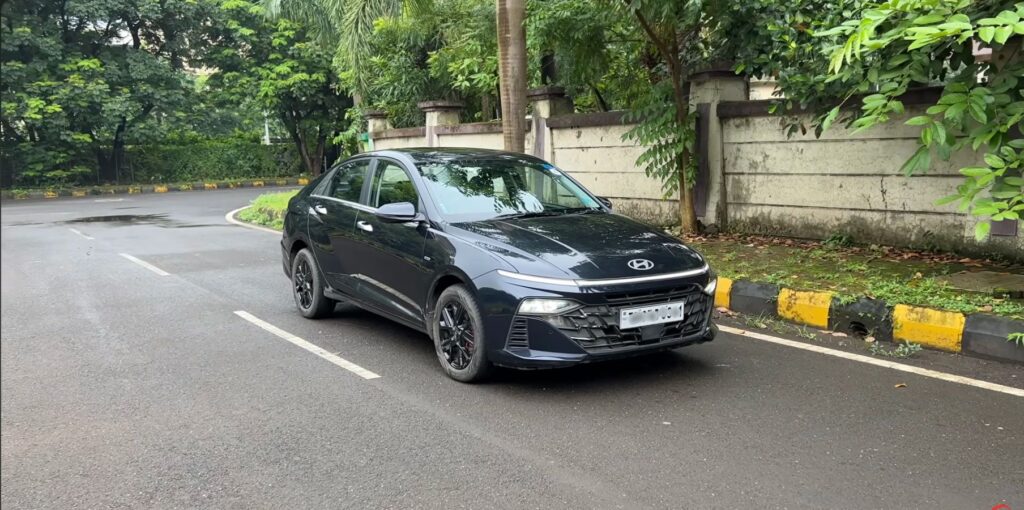
Image credits to Faisal Khan
- Softer suspension.
- Filters small potholes and speed breakers beautifully.
- Back-seat comfort is excellent.
- Slight vertical bounce at high speeds on uneven roads.
- More body roll in fast corners.
This is a sedan tuned primarily for Indian urban roads and family comfort.
Volkswagen Virtus GT TSI
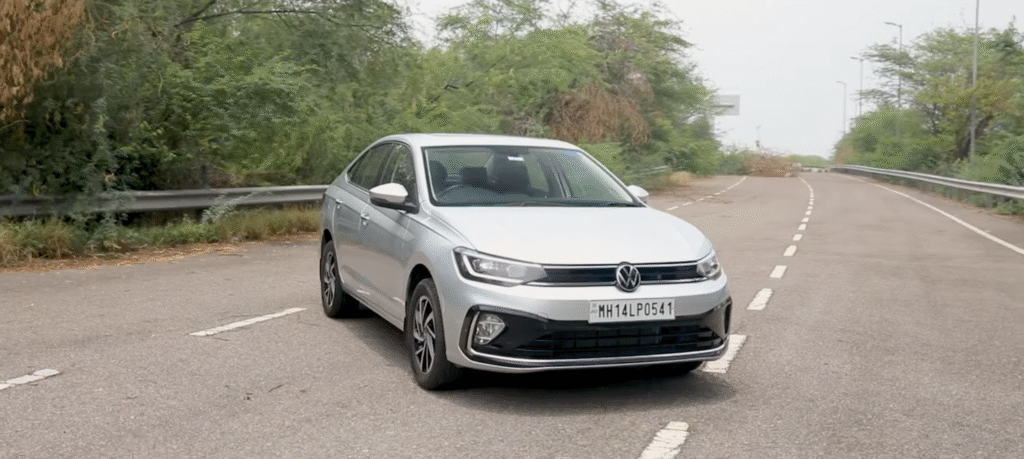
Image credits to AutoX
- Firmer suspension setup.
- Communicates road texture clearly.
- Corners flatter and cleaner.
- Superb highway composure.
- Slightly harsher over sharp edges at low speed.
Virtus feels like it was designed with European driving in mind, then adapted to India.
Ride conclusion:
Choose Verna if passengers matter.
Choose Virtus if driving matters.
Steering Feel: VW is the Driver’s Sedan
The Verna’s steering stays light almost everywhere. This makes it brilliant for city use, tight parking, and U-turns. But it lacks communication; at high speeds it doesn’t tell you much about the road.
The Virtus’s steering weights up naturally. The sedan feels more connected, more predictable, more engaging. Even moderate drivers will notice the difference.
Interiors and Features: Verna Dominates
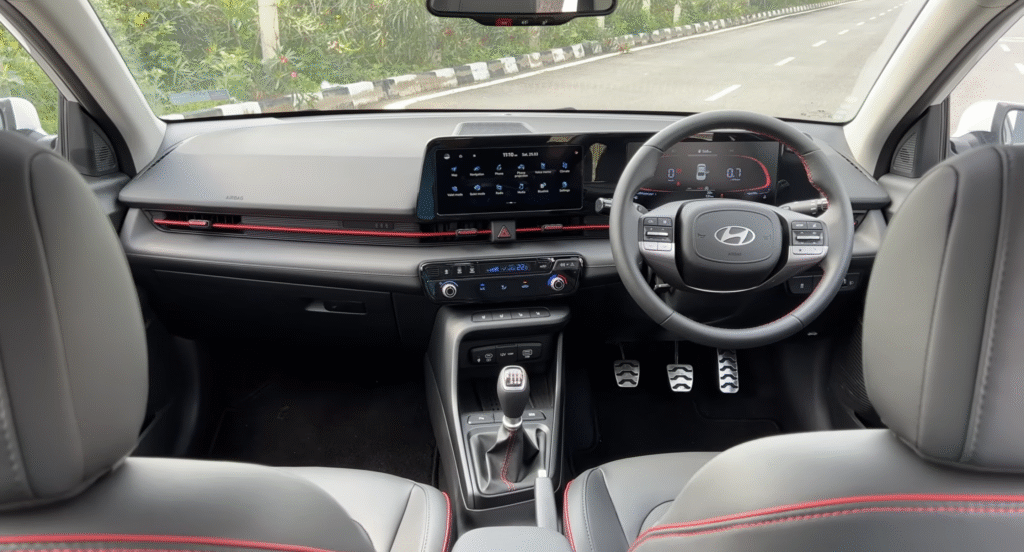
Image credits to Faisal Khan
Hyundai knows how to impress Indian buyers. Its cabin feels expensive and loaded with creature comforts.
Highlights:
- Ventilated + heated seats
- Dual-zone climate control
- Larger integrated displays
- Premium Bose audio
- Ambient lighting
- Better seat ergonomics
The interior layout is cohesive and futuristic. Everything feels designed to make life easier.
The Virtus is solid and classy, but minimalistic. Materials are sturdy, but the cabin is understated, closer to German businesslike philosophy.
Volkswagen focuses on durability and seriousness, not drama.
Safety: Structure vs Tech
Both sedans are very safe, but in different ways.
Volkswagen Virtus
- Built solid, stable frame.
- Among the highest safety ratings in its class.
- Excellent crash performance.
- Feels like a tank at speed.
Hyundai Verna
- Strong crash structure.
- Six airbags standard.
- Offers Level 2 ADAS on higher trims:
- Forward collision avoidance
- Lane keep assist
- Rear cross-traffic alerts
- Blind spot warnings
Verdict:
Virtus wins on intrinsic structural confidence.
Verna wins on modern accident-prevention tech.
Ownership Costs: Hyundai Wins Easily
This matters more than specs for ordinary buyers.
Hyundai Verna
- Cheaper to service
- Parts widely available
- Service centers in every city and tier-2/3 town
- Lower consumable costs
- Long-term running is predictable
Volkswagen Virtus
- More expensive per service
- Rounder maintenance intervals, but pricier
- Parts sometimes harder to source in smaller cities
- DSG repairs can be expensive if issues occur
If you plan to keep the car for 5–8 years, the Verna is clearly more economical.
Reliability Trends
Verna Turbo
- Engine + DCT combo is well sorted.
- Electrical and suspension systems mature.
- Owners rarely report major mechanical failures.
- Slight jerks can appear in heavy traffic, but manageable.
Virtus GT
- DSG reliability continues improving, but skepticism exists.
- More sensitive to driving style and maintenance quality.
- Excellent build quality.
- Known occasional electronics quirks.
- Long-term ownership confidence improves with warranty.
For people who simply want peace of mind, Hyundai is easier to live with.
Read Mahindra BE Rall-E: India’s First Electric Off-Road SUV – Full Specs, Design, Range & Launch Details
Which Sedan Fits Your Use Case?
Pick the Hyundai Verna Turbo DCT if:
- You want the fastest acceleration in the segment.
- You primarily drive in the city.
- You value comfort, space, and convenience.
- You care about features more than chassis sharpness.
- You want predictable ownership and maintenance costs.
- You want ADAS and tech-oriented safety systems.
Pick the Volkswagen Virtus GT TSI if:
- You enjoy spirited highway driving.
- Steering feel and chassis balance matter to you.
- You want a strong, stable, minimalistic platform.
- You accept higher service cost for driving enjoyment.
- You plan to add warranty extensions.
- You prefer a more mature, German driving experience.
Final Verdict
Both cars are excellent.
Both deliver real performance.
But they speak to different buyers.
The Hyundai Verna Turbo DCT is the better all-rounder.
It’s quicker, richer in features, easier to maintain, safer in city use, and built for Indian road reality. For most buyers, it represents the smarter long-term investment.
The Volkswagen Virtus GT TSI is the driver’s sedan.
It shines on highways, feels balanced at speed, and rewards people who enjoy driving. If performance to you means chassis feel, not just horsepower, the Virtus remains deeply satisfying.
Bottom line:
Verna wins for everyday India.
Virtus wins for enthusiasts.
FAQ
1. Which car accelerates faster — Verna Turbo DCT or Virtus GT TSI?
The Hyundai Verna Turbo DCT is quicker off the line and delivers stronger mid-range performance. Its higher power output and lighter feel give it an edge in real-world acceleration.
2. Which sedan is better for highway driving?
The Volkswagen Virtus GT TSI is more planted at triple-digit speeds. Its firmer suspension and predictable steering make it the better long-distance highway performer.
3. Does the Verna’s DCT or Virtus’s DSG last longer?
Both transmissions are dual-clutch systems, but Hyundai’s DCT generally has fewer reliability complaints. The DSG offers faster shifts but has historically shown sensitivity in heavy traffic and heat.
4. Which car is more fuel efficient?
In city driving, both cars deliver similar mileage. On highways, the Virtus GT TSI is marginally more efficient thanks to its cylinder deactivation system, especially at steady cruising speeds.
5. Which sedan has better features for daily use?
The Hyundai Verna offers more comfort-oriented features like ventilated/heated seats, a premium sound system, dual displays, and advanced ADAS safety. It feels more luxurious inside.
6. Which is safer — Verna or Virtus?
Both hold strong crash ratings. The Virtus is one of the most structurally secure cars in its segment, while the Verna offers ADAS assistance that helps prevent accidents proactively. Your preference depends on passive vs. active safety.
7. What about service and maintenance costs?
Hyundai maintenance is significantly cheaper and parts are widely available. Volkswagen service costs are higher and some components are more expensive, especially for DSG-related parts.
8. Which sedan is better for city driving?
The Verna Turbo DCT is more comfortable in traffic and broken urban roads. Its steering is lighter, ride quality is softer, and the transmission is smoother at low speeds.
9. Which car has better resale value?
Volkswagen vehicles tend to hold their value well due to brand appeal and enthusiast demand. However, Hyundai vehicles are easier to resell thanks to wider popularity and market reach.
10. Who should choose Verna Turbo DCT and who should choose Virtus GT TSI?
Choose the Verna Turbo DCT if you want the fastest acceleration, more features, lower ownership cost, and city comfort.
Choose the Virtus GT TSI if you want sharper handling, long-distance highway stability, German build quality, and a more connected driving feel.